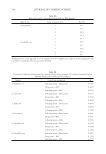
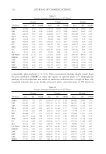
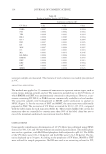
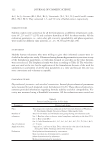
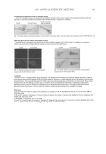
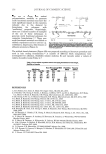
JOURNAL OF COSMETIC SCIENCE 100 Table IIb Melting Points (Tm) Determined with DSC for Wax Samples * Type of wax Conc. of wax (w/w%) Tm (°C) Carnauba wax 1 57.1 2 57.2 3 60.0 4 58.4 5 67.2 Candelilla wax 1 55.9 2 57.1 3 56.0 4 61.0 5 61.1 *Composed of 5 w/w% glycerol, 5 w/w% lanolin, 60 w/w% sunfl ower oil, and 0–5 w/w% appropriate wax (carnauba or candelilla) the rest was yellow beeswax. Table III Correlation Coeffi cients Determined for Characterization of the Strength of Correlation between Various Thermal Parameters for Oily and Wax Samples Sample Correlating parameters R2 1. Sunfl ower oil Softening point—Drop point 0.9339 Drop point—DSC 0.9825 Softening point—DSC 0.8705 2. Castor oil Softening point—Drop point 0.8373 Drop point—DSC 0.7650 Softening point—DSC 0.4562 3. Jojoba oil Softening point—Drop point 0.9853 Drop point—DSC 0.8049 Softening point—DSC 0.7476 4. Coconut oil Softening point—Drop point 0.9841 Drop point—DSC 0.9287 Softening point—DSC 0.9530 5. Carnauba wax Softening point—Drop point 0.8760 Drop point—DSC 0.5098 Softening point—DSC 0.4300 6. Candelilla wax Softening point—Drop point 0.4167 Drop point—DSC 0.3370 Softening point—DSC 0.2757

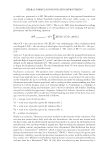
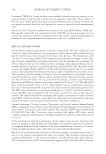
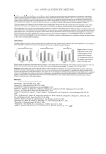
NATURAL OILS AND WAXES IN STICK BASES 101 of stick formulations than do softening point and drop point determination combined without DSC measurements (Table III). CONCLUSION It can be concluded that among the natural oils and waxes studied, coconut oil, jojoba oil, and carnauba wax seem to have the greatest infl uence on the thermal parameters of the stick bases. Furthermore, upon taking into consideration the softening point and drop point determinations and DSC measurements, strong correlations are observed between the softening point and drop point measurements. ACKNOWLEDGMENTS This project was supported by the János Bolyai Research Scholarship of the Hungarian Academy of Sciences (M. B.). The authors thank Ágnes Szabó and Mária Labancz for their help during the measurements. REFERENCES (1) R. Kleiman, D. A. Ashley, and J. H. Brown, Comparison of two seed oils used in cosmetics, moringa and marula, Ind. Crop. Prod., 28, 361–364 (2008). (2) R. Buchwald, M. D. Breed, and A. R. Greenberg, The thermal properties of beeswaxes: Unexpected fi ndings, J. Exp. Biol., 211, 121–127 (2008). (3) M. Rajin, A. Bono, and H. C. Mun, Optimisation of natural ingredient based lipstick formulation by using mixture design, J. Appl. Sci., 7, 2099–2103 (2007). (4) S. Shaikh and K. Bhise, Formulation and evaluation of medicated lipstick of allantoin, Asian J. Pharm., 2, 91–95 (2008). (5) D. S. Ogunniyi, Castor oil: A vital industrial raw material, Biores. Technol., 97, 1086–1091 (2006). (6) Y. L. Dréau, N. Dupuy, V. Gaydou, J. Joachim, and J. Kister, Study of jojoba oil aging by FTIR, Anal. Chim. Acta, 642, 163–170 (2009). (7) A. O. Barel, M. Paye, and H. I. Maibach, Handbook of Cosmetic Science and Technology (Marcel Dekker, New York, Basel, 2001), pp. 157. (8) C. P. Tan and Y. B. C. Man, Differential scanning calorimetric analysis of palm oil, palm oil based prod- ucts and coconut oil: Effects of scanning rate variation, Food Chem., 76, 89–102 (2002). (9) European Pharmacopoeia, Ed. 5.0 (Council of Europe, Strasbourg Cedex, France, 2004). (10) European Pharmacopoeia, Ed. 3.0 (Council of Europe, Strasbourg Cedex, France, 2001).
Purchased for the exclusive use of nofirst nolast (unknown)
From: SCC Media Library & Resource Center (library.scconline.org)