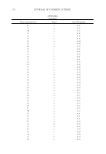
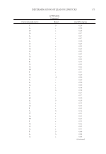
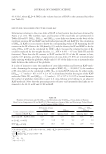
JOURNAL OF COSMETIC SCIENCE 176 G a 0.08 G c 0.07 G c 0.07 T a 0.07 G e 0.06 G e 0.06 L a 0.06 L a 0.05 U a 0.05 G a 0.05 X a 0.05 G a 0.04 G a 0.03 X a 0.03 G c 0.026 A b 0.026 W a 0.026 APPENDIX Continued Parent (manufacturer) Brand Lead (Pb) mg/kg

J. Cosmet. Sci., 63, 177–196 (May/June 2012) 177 Intermolecular disulfi de cross-linked structural change induced by permanent wave treatment of human hair with thioglycolic acid KAZUYUKI SUZUTA, SATOSHI OGAWA, YASUFUMI TAKEDA, KATSUMI KANEYAMA, and KOZO ARAI, Central Research Institute, Milbon Co. Ltd., 2-3-35 Zengenji, Miyakojima, Osaka 534-0015 (K.S., S.O., Y.T., K.K.), and KRA Wool Research Laboratory, 1-498-13 Aioi, Kiryu, Gunma 376-0011 (K.A.), Japan. Accepted for publication November 15, 2011. Synopsis Permanent wave treatment for hair has been used for many decades. However, certain aspects of the treatment involved are still not well understood. Reduction of disulfi de (SS) bonds and their subsequent oxidation are essential for inhibiting fi ber degradation. We attempted to elucidate scission and reformation mechanisms of SS cross-links by treating them with a reducing agent, thioglycolic acid (TGA), and an oxidizing agent, so- dium bromate. In order to estimate the change in the cross-link density of hair before and after treatment, a rubber elasticity theory was applied to the force–extension curve for rubber-like swollen hair fi bers treated in a specifi c diluent mixture. A two-phase structural model was assumed that corresponds to the globular matrix of keratin-associated proteins (KAP) dispersed in a swollen network of intermediate fi lament (IF) proteins. Important structural parameters were obtained by fi tting the force–extension curve to the theoretically de- rived relationship between elastic forces originating from the non-uniform network and extension ratios. The three parameters extracted are the number of intermolecular SS bonds in IF, the volume fraction of matrix protein in the fi ber, and the shape of the matrix domain. It was found that TGA attack on the SS bonds be- tween globular matrix proteins occurs preferentially as compared with those between IF proteins and induces the shape change of the matrix domain from an ellipsoidal to a near-spherical form. INTRODUCTION The setting process for permanent waving and straightening of hair is important in the cos- metic industry. Although setting reactions including reduction and oxidation have been stud- ied for many years by various researchers, certain aspects of the setting process are still not well understood. Various mechanisms have been proposed to explain permanent waving achieved by chemical treatment (1–9) and a combination of chemical and heat treatments (10). This paper was presented in part at the 24th Congress of the International Federation of Societies of Cosmetic Chemists, Osaka, 2006, and in proceedings of the IFSCC Congress as “Application of Rubber Elasticity Theory to Swollen Hair for Elucidating the Disulfi de Cross-linked Structure of Cosmetically Treated Hair.”
Purchased for the exclusive use of nofirst nolast (unknown)
From: SCC Media Library & Resource Center (library.scconline.org)