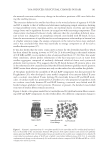
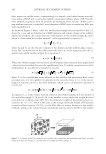
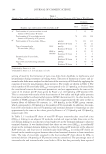
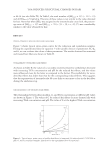
JOURNAL OF COSMETIC SCIENCE 178 Human hair consists of two major morphological components: the cuticle and the cortex. The cortex is a complicated disulfi de (SS) cross-linked system comprised of intermediate fi lament (IF) proteins and globular matrix proteins (KAP). The stabilization of curled conformation in permanent waving is accomplished through the cleavage of the cystine SS bonds by reduction and their subsequent recombination by oxidation. In order to under- stand the change in the hair structure induced by permanent wave treatment, it is impor- tant to assess the number, type, and location of SS cross-links in the hair cortex. A few reports assessing the type of cross-links in keratins have been published to date (11,12). Concerning the nature of cross-links in hair and wool, Naito and Arai (13) found that fi - bers pretreated with a concentrated aqueous LiBr solution containing N-ethylmaleimide, which serves as a blocking agent for free thiol (SH) groups, show typical rubber elasticity in a mixed solution of aqueous 8 M LiBr and diethylene glycol mono-n-butyl ether. Therefore, they proposed a semi-quantitative method for determining the SS cross-link density of various keratin fi bers. They attempted to evaluate the number of SS cross-links by using a method of Gaussian chain statistics for untreated and thioglycolic acid (TGA)- reduced hair samples in various degrees of reduction and concluded that SS linkages are divided into two groups: the intermolecular linkages group (SS1 and SS2) and the intra- molecular linkages group (SS3). SS1 linkages may be located in water-accessible terminal regions of IF proteins, and SS2 linkages are located on the surface region of the KAP do- main, while SS3 linkages exist in the hydrophobic inner region of the KAP domain. A quantitative method for analyzing the number, type, and location of SS cross-links in the keratin cortex has been developed by applying a non-Gaussian elastic equation of state to the stress–strain curve for swollen fi bers (14–16). The difference in the reactivity of SS bonds in keratin structures was determined by comparing the analytical results obtained from both chemical and mechanical tests. The difference in the reactivity of SS bonds under fi ber extension and non-extension states was utilized for the assignment of bonds existing in water-accessible or inaccessible regions, allowing detailed cross-linked structures in microdomains to be determined. It was found that 13.8% and 86.2% of all SS cross-links of hair (i.e., SS content in hair was 627 μmol/g) were located in IF and KAP components of hair proteins, respectively. In addition, the percentage ratios of intermolecular and intramolecular cross-links were found to be 66:34 for IF and 12:88 for the KAP component. Qualitative distribution of SS1, SS2, and SS3 in the hair cortex structures showing different reactivities with TGA were quantifi ed using this method. Important information concerning the cross-links within and between KAP domains was also obtained, i.e., the number of SS cross-links within a KAP molecule (average molecular weight of 20,000) was evaluated as 17 moles and the number of SS cross-links between KAP molecules was 2.3 moles, corresponding to approximately only 12% of the SS cross-links in the KAP molecule (15). An important conclusion was that the cross-linking sites of 4.6 moles were distributed on the surface region of an individual globular matrix protein. The objectives of the present study are as follows: (i) to clarify the number, type, and loca- tion of cross-links in the microstructure of keratin fi bers by using data from previous studies, (ii) to elucidate the network structure change on IF and KAP induced by reduc- tion and oxidation treatments, (iii) to clarify the number and type of reactive SS cross- links existing in the region accessible to the reducing agent, and (iv) to better understand the mechanical properties relating to intermolecular SS cross-links in the microstructure.

TGA-INDUCED STRUCTURAL CHANGES IN HAIR 179 MATERIALS AND METHODS PURIFICATION OF HAIR FIBERS An aqueous ammonium solution of 50% (w/v) TGA was used as supplied commercially. Other chemicals used were of reagent grade. Chemically unmodifi ed human hair samples (approximately 25 cm in length) collected from a Japanese female were subjected to pu- rifi cation after removing lengths of approximately 1 cm at the root and approximately 2 cm at the tip. A tress consisting of 20 hair fi bers (approximately 20 cm in length) was purifi ed by immersing it in a 5% (w/v) 50-ml solution of Laureth-9 containing 20 mM EDTA for 1 h at 33°C and then washing it thoroughly with distilled water before drying it in air. Purifi ed hair fi bers were used for reduction and oxidation treatments. The SS and SH contents in the hair fi bers were 636 and 34 μmol/g, respectively. REDUCED HAIR FIBERS Reduction was performed by winding the hair fi bers around a 12-mm-diameter rod and dipping in an aqueous solution (400 ml) containing 0.3, 0.5, 0.75, 1.0, and 1.5 M TGA for 20 min at room temperature at pH 8.7 and 9.3. This was followed by immersing them four times in deionized water (400 ml) for 5 min each at room temperature. Reduced hair fi bers thus obtained were subjected to either oxidation or N-ethylmaleimide (NEM) treatment by immersing the rod in the NEM solution. REDUCED AND OXIDIZED (REOXIDIZED) HAIR FIBERS Reduced hair fi bers prepared under the aforementioned conditions were subsequently im- mersed in a 0.5 M sodium bromate solution (400 ml) at room temperature for 20 min at pH 6.35, followed by immersing them four times in water (400 ml) repeatedly for 5 min each. Finally, the reoxidized hair fi bers were blotted and air dried. The reoxidized hair fi bers thus obtained represent the so-called permanent-waved hair that would be obtained cosmetically. REDUCED AND NEM-TREATED HAIR FIBERS The reduced fi bers were treated with a 0.05 M NEM solution for 24 h at pH 8.0 and room temperature to block the free SH groups. The reduced and NEM-treated fi bers thus obtained were washed thoroughly with water and air dried. Blocking the free SH groups is necessary at this stage to stabilize the network structure through inhibiting SH/SS in- terchange reactions during swelling and extension (17,18). PREPARATION OF SWOLLEN HAIR FIBERS AND MEASUREMENT OF THE CROSS-SECTIONAL AREA The untreated and permanent waved hair fi bers were immersed in an 11 M LiBr solution containing 10−2 M NEM at 90°C for 1 h and then immersed and equilibrated in a mixed solution of 8 M LiBr and diethylene glycol mono-n-butyl ether, i.e., butyl carbitol (BC), in a 55:45 volume ratio. Equilibrium was reached by immersion for 1 h at room tem- perature. The swollen fi ber samples thus obtained were selected for their uniformity and medulla freedom before the cross-sectional area and mechanical properties were measured.
Purchased for the exclusive use of nofirst nolast (unknown)
From: SCC Media Library & Resource Center (library.scconline.org)