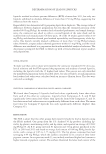
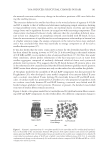
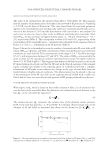
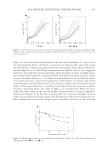
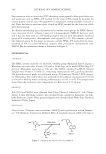
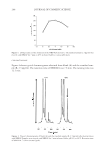
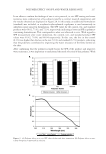
JOURNAL OF COSMETIC SCIENCE 206 Derivatization with an ultraviolet (UV)-absorbing agent generally offers good selectivity and sensitivity, and an HPLC–UV method for the assay of KA would be desirable for routine quality control, since the equipment is inexpensive, widely available, and easy to use. There has been no previous report of such an HPLC method for the detection of KA after derivatization. As a fl uorescent labeling agent of primary and secondary amino groups for HPLC-fl uores- cence detection (8–12), 4-fl uoro-7-nitro-2,1,3-benzoxadiazole (NBD-F) has been used, and it has also been used as a UV-labeling reagent reactive with the phenolic hydroxyl group of N-acetyltyrosine, chlorophenols, and eugenol (13–15). KA contains a phenol- like hydroxyl group. In this paper, we present a simple HPLC–UV method for the deter- mination of KA in a skin-whitening cosmetic after pre-column derivatization with NBD-F. The derivatization scheme is illustrated in Figure 1. EXPERIMENTAL APPARATUS The HPLC system consisted of a model LC-10ATvp pump (Shimadzu, Kyoto, Japan), a Rheodyne injection valve (Cotati, CA) with a 20-μl loop, and a model SPD-10Avp UV detector (Shimadzu) operating at 380 nm. The HPLC column (C18-MS-II, Nacalai Tesque) was 150 mm × 3.0 mm i.d., containing 5 μm particles of C18 packing material. The quantifi cation of peaks was performed using a Chromatopac Model C-R8A integra- tor (Shimadzu). The mobile phase was prepared by the addition of acetonitrile (550 ml) to 450 ml of Milli-Q water containing trifl uoroacetic acid (0.1 v/v%). The samples were eluted from the column at room temperature at a fl ow rate of 0.35 ml/min. REAGENTS KA (99%) and NBD-F were obtained from Tokyo Chemical Industry Co., Ltd. (Tokyo, Japan). A skin-whitening cosmetic was purchased from a market in Kanazawa city, Ishi- kawa Prefecture, Japan. Other general reagents were obtained from Wako Pure Chemical Industries (Osaka, Japan). PROCEDURES Derivatization. Ultrapure water was from a Milli-Q water purifi cation system (Simplic- ity® UV, Millipore Corporation, Bedford, MA). A standard solution of KA (100 mg) in Figure 1. Scheme of KA derivatization with NBD-F.

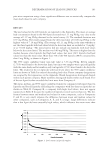
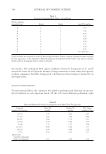
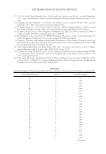
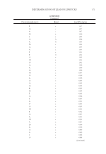
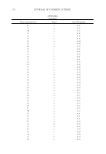
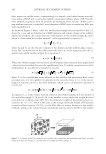
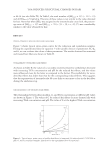
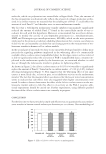
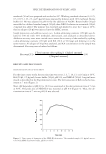
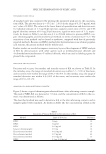
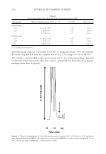
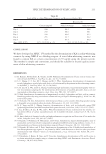
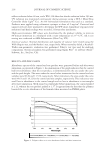
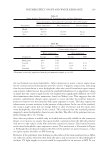
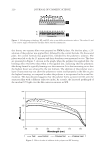
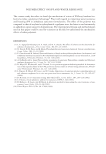
HPLC DETERMINATION OF KOJIC ACID 207 methanol (50 ml) was prepared and stocked at 4°C. Working standard solutions (0, 0.25, 0.5, 0.875, 1.25, 2.5, and 5 μg/ml) were prepared by dilution with 10% methanol. Borate buffer (0.1 M) was adjusted to pH 9.0 by the addition of NaOH. Borate buffer (50 μl) was added to a diluted standard sample (50 μl) then NBD-F solution in acetonitrile (50 μl, 2 mg/ml) was added. The mixture was vortexed and allowed to react for 7 min at 40°C then an aliquot (20 μl) was injected into the HPLC system. Sample preparation and addition-recovery tests. A skin-whitening cosmetic (150 μl) was di- luted to 100 ml with 10% methanol, derivatized, and analyzed as described above. Addition-recovery tests were carried out to assess the accuracy of the method by spiking a skin-whitening cosmetic (150 μl) with KA (30.0 or 50.0 μg) and diluting it in the same manner. An aliquot of 50 μl was analyzed, and KA concentration in the sample was determined. Recovery was calculated as follows: u100 Total amount after spiking – Spiked amount Recovery % Original amount RESULTS AND DISCUSSION DERIVATIZATION OF KA WITH NBD-F For the time course study, the reaction time was set at 2, 4, 7, 10, 13, or 16 min at 40°C. KA (50 μl, 2.5 μg/ml), borate buffer (50 μl, pH 9.0), and NBD-F (50 μl, 2 mg/ml) were mixed as described in the Experimental section. The derivatization of KA reached a max- imum at 7 min (Figure 2). Next, pH dependency (pH 8.0 to 10.0) was examined at the derivatization time of 7 min at 40°C. The peak area of NBD-KA was maximal at pH 9.0 (Figure 3). Thus, the de- rivatization time of 7 min at pH 9.0 was selected. Figure 2. Time course of formation of the NBD-KA derivative. The standard sample (2.5 μg/ml) was re- acted with NBD-F in borate buffer, pH 9.0, at 40°C.
Purchased for the exclusive use of nofirst nolast (unknown)
From: SCC Media Library & Resource Center (library.scconline.org)