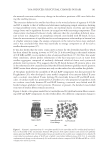
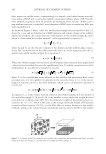
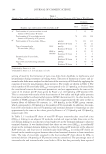
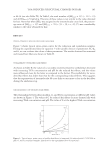
J. Cosmet. Sci., 63, 205–212 (May/June 2012) 205 Determination of kojic acid in a skin-whitening cosmetic by high-performance liquid chromatography coupled with ultraviolet detection after pre-column derivatization with 4-fl uoro-7-nitro-2,1,3-benzoxadiazole YASUHIKO HIGASHI and YOUICHI FUJII, Department of Analytical Chemistry, Faculty of Pharmaceutical Sciences, Hokuriku University, Ho-3, Kanagawa-machi, Kanazawa 920-1181, Japan. Accepted for publication November 8, 2011. Synopsis Various methods for the determination of kojic acid (KA), a skin-whitening agent, have been reported by high-performance liquid chromatography (HPLC). In this study, the concentration of KA in a skin-whitening cosmetic was analyzed by HPLC with ultraviolet detection (380 nm) after pre-column derivatization with 4-fl uoro-7-nitro-2,1,3-benzoxadiazole (NBD-F) in order to improve the sensitivity. The HPLC column was 150 mm × 3.0 mm i.d., containing 5 μm particles of C18 packing material. The mobile phase was prepared by the addition of acetonitrile (550 ml) to 450 ml of Milli-Q water containing trifl uoroacetic acid (0.1 v/v%). The samples were eluted from the column at room temperature at a fl ow rate of 0.35 ml/min. The retention time of NBD-KA was 7.8 min. A standard curve was obtained after derivatization with NBD-F in borate buffer (pH 9.0) at 40°C for 7 min. The calibration plot was linear, in the range of 0.25–5 μg/ml with an r2 value of 0.9982, and the lower limit of detection was 0.06 μg/ml (at a signal-to-noise ratio of 3:1 ab- solute amount of 0.4 ng/20 μl injection). The coeffi cient of variation was less than 9.6%. It was found that the amount of KA in a skin-whitening cosmetic was 237 ± 14 μg/ml (range: 219–255 μg/ml). Recovery in addition-recovery tests was within the range of 83.4% to 98.1%. INTRODUCTION Various methods for the determination of kojic acid (KA, 5-hydroxy-2-hydroxymethyl- 4-pyrone, a skin-whitening agent) have been reported, including high-performance liquid chromatography (HPLC) (1–3), ion-pair liquid chromatography (4), and electrochemis- try (5,6). In addition, Liu et al. (7) recently reported a method of determination of KA by using a carbon nanotubes/alizarin red S composite fi lm-modifi ed electrode this method has a lower limit of detection of KA of 0.014 μg/ml, and was applied for the determination of KA levels in vinegar and sauce. However, this system is expensive and complicated. Address all correspondence to Yasuhiko Higashi at y-higashi@hokuriku-u.ac.jp.
Purchased for the exclusive use of nofirst nolast (unknown)
From: SCC Media Library & Resource Center (library.scconline.org)