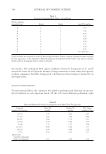
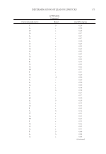
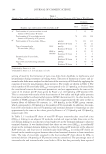
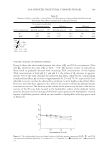
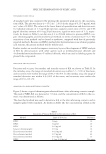
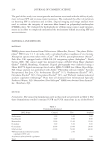
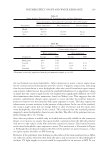
JOURNAL OF COSMETIC SCIENCE 214 The goal of this study is to investigate the mechanism associated with the ability of poly- mers to boost SPF and increase water resistance. We evaluated the effect of polymers on boosting SPF in solutions and in fi lms. Digital imaging and image analysis were used to evaluate the integrity of sunscreen fi lms formed on polymethyl methacrylate (PMMA) plates. We evaluated the hydrophobicity of fi lms using contact angle measure- ments in an effort to completely understand the mechanisms behind increasing SPF and water resistance. MATERIALS AND METHODS MATERIALS PMMA plates were obtained from Helioscience (Marseilles, France). The plates (Helio- plates® HD 6) are 5 × 5 cm wide, with a calculated surface roughness of six microns. Absorption spectra were taken with a Cary® 300 UV/Vis spectrophotometer (Varian®, Palo Alto, CA) equipped with a DRA-CA-30I integrating sphere (Labsphere®, North Sutton, NH). The contact angle was measured using a DSA10 Drop Shape Analyzer (Krüss® GmbH, Hamburg, Germany). Digital photography was conducted using a Hirox KH770 digital microscope fi tted with a MXG-5040RZ lens (Hirox, River Edge, NJ). Image analysis was performed with Adobe® Photoshop software (Adobe® Systems Incorporated, San Jose, CA). Avobenzone (Escalol® 517), Oxybenzone (Escalol® 567), Octisalate (Escalol® 587), Octocrylene (Escalol® 597), and VA/butyl maleate/isobornyl acrylate copolymer (Advantage® Plus) were all obtained from International Specialty Products (Wayne, NJ). Homosalate (Neo Heliopan® HMS) was obtained from Symrise® Inc. (Teterboro, NJ). METHODS Formulations. The sunscreen formulations used in this study are presented in Table I. The three formulations studied contained UVB and UVA sunscreens in an alcohol-based Table I Formulations Evaluated INCI Name Control Test Standard Avobenzone 3.00 3.00 3.00 Oxybenzone 6.00 6.00 6.00 Homosalate 15.00 15.00 15.00 Octisalate 5.00 5.00 5.00 Octocrylene 10.00 10.00 10.00 Ethyl alcohol 61.00 59.00 60.00 VA/butyl maleate/isobornyl acrylate copolymer (50% sol.) 2.00 Acrylates/octylacrylamide copolymer 1.00 Total 100.00 100.00 100.00

POLYMER EFFECT ON SPF AND WATER RESISTANCE 215 formulation. The control formula did not contain a polymer, whereas the test formulation and the standard contained VA/butyl maleate/isobornyl acrylate copolymer and acrylates/ octylacrylamide copolymer, respectively. Since the VA/butyl maleate/isobornyl acrylate copolymer is supplied as a 50% solution, the actual percentage of polymer solids in the formula was 1%. Absorption measurement. Films of sunscreen formulations were spread on PMMA plates at an application rate of 1.20 mg/cm2. The sunscreen product was deposited on the PMMA plate by weight, and spread evenly using the index fi nger covered with a fi nger cot. The fi lm was allowed to dry at room temperature for 15 minutes for the fi lm to set up before any measurements were taken Absorption spectra were acquired for each plate from 290 to 400 nm at 1-nm increments, and the areas under the curve were calculated. Four mea- surements were taken per plate by rotating the plate on each side. Three plates were evaluated per formulation. Image capturing. Digital images of the plates were taken using a digital microscope. The images were taken at 100× magnifi cation at multiple spots on each plate. Images were taken before and after absorption at the same exact area. This was achieved by marking certain areas on the plates with permanent ink to enable repositioning on the same spot. Image analysis. All images were fi rst converted to a gray scale, and further analysis was done by generating pixel histograms. The area under the curve was calculated and was used as a means to quantify differences in fi lms properties between plates. Contact angle measurements. Contact angles were measured by the sessile drop method, us- ing a manual disposable syringe with a 1-mm-diameter needle. Several substrates, namely, porcine skin, silicone fi lms, Vitro skin®, porcine stratum corneum, human cadaver skin, and PMMA plates were screened as substrates. All the data collected showed similar trends, and so for simplicity, only PMMA values were reported. PMMA plates with and without products were used as substrates onto which the water droplets were deposited. Reported surface tension values represent the average of 20 trials. Measurements were conducted at room temperature. In vitro water-resistance measurements. An updated version of the method used by Markovic et al. (9), which was developed by this laboratory, was used to measure water resistance. The initial UV absorbance of sunscreen fi lms deposited on PMMA plates was measured with a UV-Vis spectrophotometer, and the area under the curve (290–400 nm) was calcu- lated. The samples were then submerged in a 25°C water bath, with circulation for 80 minutes. The water bath was equipped with a mixing blade that rotated at 50 rpm, and the PMMA plates were positioned so that the surface with the fi lm faced the current. After immersion, the plates were removed from the water bath, were placed on their sides, and allowed to dry at room temperature, after which absorbance was measured and the area under the curved calculated. The percent water resistance is calculated from the following equation: Percent water resistance = (Abs. after immersion / Initial Abs.) × 100 In vivo static SPF and high-water-resistance testing. Testing was conducted as outlined in a US monograph (10) on a fi ve-subject panel with Fitzpatrick skin types between I and III. A 150-watt Xenon arc solar simulator (Solar Light® Co., Philadelphia, Model 14S) was used as the artifi cial light source. The device is equipped with a dichroic mirror, which
Purchased for the exclusive use of nofirst nolast (unknown)
From: SCC Media Library & Resource Center (library.scconline.org)