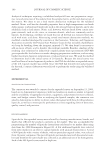
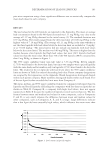
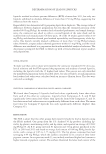
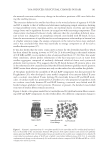
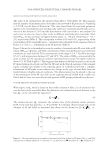
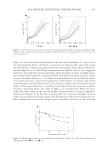
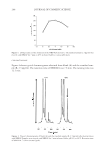
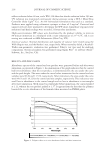
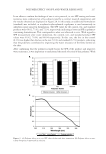
JOURNAL OF COSMETIC SCIENCE 216 refl ects radiation below 40 nm, and a WG-320 fi lter that absorbs radiation below 290 nm. UV radiation was monitored continuously during exposure using a DCS-1 Meter/Dose Controller (Solar Light® Co.). An 8% homosalate formulation was used as a standard. Products were applied using volumetric syringes at doses of 2 mg/cm2. Protected and unprotected sites were irradiated to determine the SPF values. Immediate responses were monitored and fi nal readings were recorded 24 hours after irradiation. High-water-resistance SPF values were determined by the product’s ability to resist an 80-minute immersion in a whirlpool with a water temperature of 23°–32°C. All in vivo testing was conducted at AMA Laboratories (New City, NY). Statistical analysis. Normal distribution and equality of variance were tested using the Wilk-Shapiro test, and the Bartlet’s test, respectively. When normality failed, a Kruskall- Wallis non-parametric evaluation was performed. Tukey’s test was used for multiple comparisons. Statistical analysis was performed using Sigma Plot® 11 software (Systat® Software, Inc., San Jose, CA). RESULTS AND DISCUSSION Absorbance spectra of the control and test product were generated before and after water immersion, as presented in Figure 1. An examination of the graph indicates that the control had lower absorbance than the test product, as demonstrated by the area under the curve and the peak height. The areas under the curve before immersion for the control and test samples were 98.49 and 117.09, respectively. After immersion, the areas under the curve were 94.63 and 118.22 for the control and test samples, respectively. This indicates a very small loss in absorbance in the control sample and no loss in absorbance in test samples after water immersion. With regard to peak height before immersion, the control peaked at 1.11, whereas the test product peaked at 1.37. It appears from the data that the polymer boosted the in vitro absorbance of the formula when measured on PMMA plates. Figure 1. Polymer effect on in vitro absorbance before and after immersion.

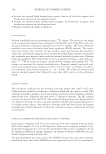
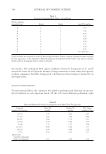
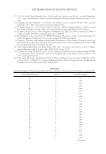
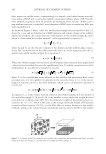
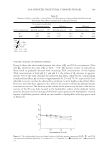
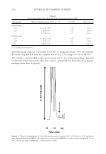
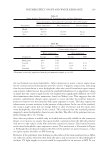
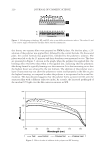
POLYMER EFFECT ON SPF AND WATER RESISTANCE 217 In an effort to confi rm the fi ndings of our in vitro protocol, in vivo SPF testing and water resistance were conducted on a fi ve-subject panel by a contract research organization and the results obtained are displayed in Figure 2A. In this study, an additional formulation (standard) was included, as acrylates/octylacrylamide copolymer is used extensively in anhydrous spray sunscreen formulations. The SPF values for the control, test, and standard products were 69.02, 73.92, and 72.94, respectively, indicating a boost in SPF in polymer- containing formulations. This corresponds to what was observed in vitro. With regard to SPF measurement after water immersion, the control, test, and standard product SPF values were 63.42, 70.00, and 68.04 respectively. In this case, the loss in the control (8.1%) was higher than the loss in the test (5.3%) and standard (6.7%) products, indicating that the polymers contributed to improving the water resistance of the fi lms formed on the skin. After confi rming that the polymer actually boosts the SPF of the product and improves water resistance, it was important to understand the mode of action of this polymer. With Figure 2. (A) Polymer effect on in vivo SPF values before and after immersion. (B) Polymer effect on sun- screen absorption as measured in solution.
Purchased for the exclusive use of nofirst nolast (unknown)
From: SCC Media Library & Resource Center (library.scconline.org)