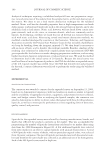
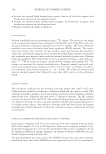
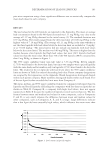
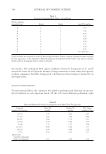
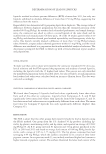
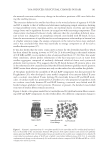
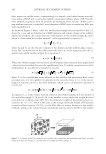
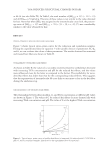
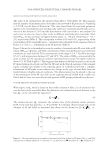
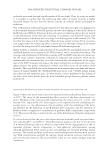
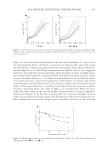
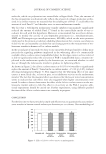
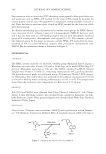
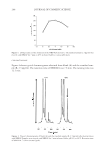
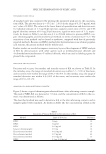
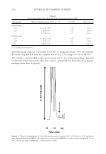
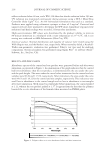
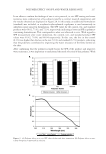
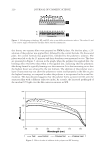
JOURNAL OF COSMETIC SCIENCE 220 this theory, two separate fi lms were prepared on PMMA plates. On the fi rst plate, a 2% solution of the polymer was applied fi rst, followed by the control formula. On the second plate, the control formula was applied fi rst, followed by the polymeric solution. The plates were left to dry for 15 minutes and their absorbance was measured in vitro. The data are presented in Figure 5. As seen in the graph, when the polymer was applied fi rst, the boosting effect was lower than when it was applied last, indicating that the polymeric fi lm being formed is typically forming over the sunscreen. It is also interesting to see that the highest boost was achieved by the test formula. The addition of the polymer over a layer of sunscreen may not allow the polymer to orient itself properly in the fi lm to give the highest boosting, as compared to when the polymer is incorporated in the actual for- mulation. The data obtained suggests that the polymer forms a protective fi lm over the sunscreen fi lm with a different refractive index. As a result, the increased pathlength of the incident UV light over the fi lm causes an increase in SPF. Figure 4. Self-adapting technology. RF1 and RF2 refer to two different refractive indices. The values 63 and 72 are contact angles obtained for the fi lms before and after immersion. Figure 5. Effect of order of addition of the polymer on SPF boosting.

POLYMER EFFECT ON SPF AND WATER RESISTANCE 221 The current study describes in detail the mechanism of action of VA/butyl maleate/iso- bornyl acrylate copolymer (Advantage® Plus) with regard to imparting water resistance and boosting SPF in anhydrous sunscreen formulations. The effect of the polymer was compared to that of acrylates/octylacrylamide copolymer since the latter is used extensively in anhydrous spray sunscreen formulations. The experimental design and methodologies used in this paper could be used by scientists in the fi eld to understand the mechanistic effects of other polymers. REFERENCES (1) L. E. Agrapidis-Paloympis, R. A. Nash, and N. A. Shaath, The effect of solvents on the ultraviolet ab- sorbance of sunscreens., J. Soc. Cosmet. Chem., 38, 209–221 (1987). (2) N. Shaath, H. M. Fares, and K. Klein, Photodegradation of sunscreen chemicals: Solvent considerations, Cosmet. Toiletr., 105, 41–44 (1990). (3) E. Chatelain and B. Gabard, Photostabilization of butyl methoxydibenzoylmethane (Avobenzone) and ethylhexyl methoxycinnamate by Bis-ethylhexyloxyphenol methoxyphenyl triazine (Tinosorb S), a new broad fi lter, J. Photochem. Photobiol., 74, 401–406 (2001). (4) A. Defl andre and G. Lang, Photostability assessment of sunscreens: Benzylidene camphor and dibenoyl- methane derivatives, Int. J. Cosmet. Sci., 10, 53–62 (1998). (5) D. Moyal, K. Wichrowski, and C. Tricaud, In vivo persistent pigment darkening method: A demonstra- tion of the reproducibility of the UVA protection factors results at several testing laboratories, Photoder- matol. Photoimmunol. Photomed., 22, 124–128 (2006). (6) L. Fageon, D. Moyal, M. Coutet, and D. Candau, Importance of sunscreen products spreading protocol and substrate roughness for in vitro sun protection factor assessment, Int. J. Cosmet. Sci., 31, 405–417 (2009). (7) R. M. Sayre, In vitro sunscreen testing: The vehicle effect, Cosmet. Toiletr., 107, 105–110 (1992). (8) C. F. Jones, A new polymeric additive for sunscreen, SÖFW J., 121 (1995). (9) B. Markovic, D. Laura, and M. Rerek, A laboratory method for measuring the water resistance of sun- screens, Cosmet. Toiletr., 116, 61–68 (2001). (10) Federal Register Vol. 64, No. 98: 27690 (1999).
Purchased for the exclusive use of nofirst nolast (unknown)
From: SCC Media Library & Resource Center (library.scconline.org)