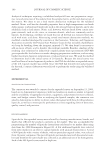
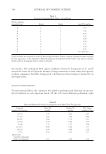
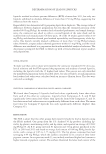
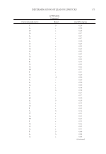
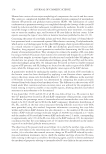
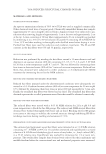
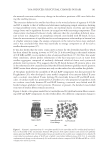
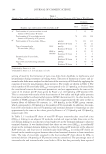
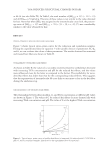
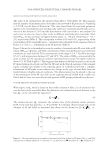
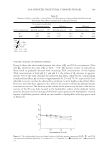
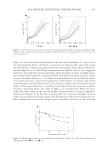
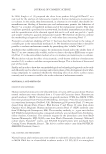
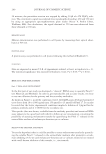
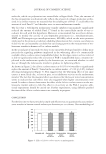
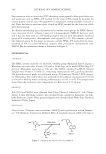
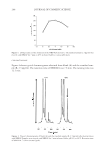
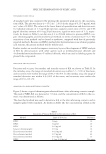
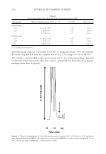
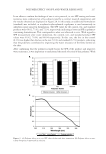
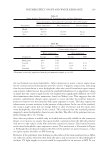
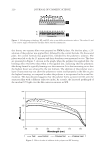
JOURNAL OF COSMETIC SCIENCE 218 regard to boosting SPF, it is fundamental to determine whether the polymer is chemically interacting with a particular sunscreen moiety (or several ones), leading to an increase in absorbance and thus an increase in SPF. Since such interactions will take place mainly in solution rather than in fi lms, the test and control formulations as well as a 2% solution of the polymer in alcohol were prepared and tested for their absorbance in a cuvette (1-cm path length). The data generated showed no increase in absorbance in the presence of the polymer, indicating that the effect of the polymer was mainly a surface effect rather than a chemical one. This data is displayed in Figure 2B. Since the effect of the polymer is mostly based on its surface properties, fi lms of the two formulations were prepared on PMMA plates and studied under a digital microscope. Digital images of these fi lms were captured and are presented in Figure 3. The hills and valleys are clearly depicted in the pictures, the hills being white and the valleys being black. The images were converted into grayscale, and image analysis was used to quantify the fi ndings. The results obtained are displayed in Table II. These results confi rm that the fi lm properties of the control changed (92.44%) much more than those of the test prod- uct (16.73%) after water immersion. In other words, the polymer offers some protection with regard to exposure to water. Contact angle measurements were performed on the control, test, and standard fi lm for- mulations prepared on PMMA plates, and the results are presented in Table III. Contact angles of a water droplet on a blank plate and control, test, and standard fi lms were 68.9, 67.1, 62.7, and 74.9 degrees, respectively. This indicates that the blank plate was as hy- drophobic as the plate covered with the control formula, whereas the plate covered with Figure 3. Digital micrographs of PMMA plates.

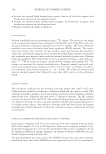
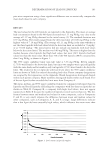
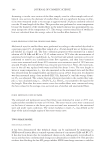
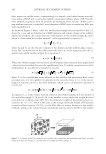
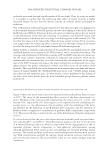
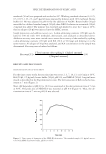
POLYMER EFFECT ON SPF AND WATER RESISTANCE 219 the test formula was more hydrophilic. After immersion in water, contact angle values for the control and test formulations were 68.1 and 71.9 degrees, respectively, indicating that the test formulation is more hydrophobic than the control formulation upon immer- sion in water, which was not the case for the standard formulation. It is important to keep in mind that the contact angle for the test formula was signifi cantly different (p0.05) after immersion than before immersion, based on Tukey’s test. This suggests that the polymer conformation changes upon exposure to water and that the polymer formed a protective barrier over the sunscreen fi lm upon exposure to water. This may explain the enhancement in water resistance in the presence of the polymer. In the case of the standard, the contact angle values did not change before or after immersion and the values were more hydrophobic than those of the control. This indicates that the standard polymer imparted a more hydrophobic character onto the fi lm. The effect of the polymer was con- fi rmed during the in vivo testing. Since the test polymer is soluble only in alcohol and not really soluble in oils (sunscreen phase), it is intuitive to assume that upon alcohol evaporation from the fi lm the polymer will move to the surface of the fi lm and form a protective barrier. This barrier becomes much more hydrophobic upon exposure to water. This mechanism is illustrated in Figure 4. Although this mechanism explains the effect of the polymer on water resistance, it does not quite explain the effect on SPF boosting. However, if the polymeric layer forming on the surface of the sunscreen layer has a differ- ent refractive index, refraction may then take place and an increase in the pathlength of incident UV light might occur and would be responsible for an increase in SPF. To test Table II Image Analysis Performed on All Treatments before and after Immersion Treatments Grayscale analysis—Area under the curve from 150 to 250 (pixels) Before immersion After immersion Percent change Blank 480,374 Control 60,558 116,539 92.44 Test 283,793 331,263 16.73 Table III Contact Angles Measured on Sunscreen Films on PMMA Plates before and after Immersion Treatments Contact angles (degrees) Before immersion After immersion Average STD Average STD Blank plate 68.9 3.46 Control 67.1 0.85 68.13 0.74 Test 62.7 0.53 71.9* 0.40 Standard 74.87 0.52 75.8 0.51 *Treatment statistically signifi cant from the pre-immersion sample at p 0.05.
Purchased for the exclusive use of nofirst nolast (unknown)
From: SCC Media Library & Resource Center (library.scconline.org)