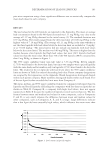
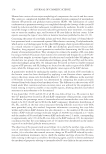
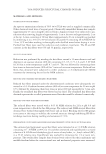
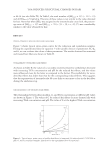
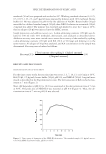
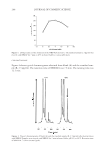
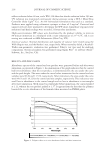
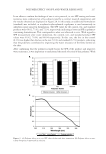
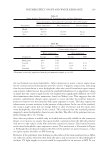
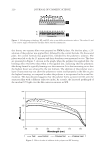
JOURNAL OF COSMETIC SCIENCE 166 lip glosses by plotting lead content versus product type. The curve for lip glosses fell about 1 mg Pb/kg below the curve for lipsticks. The E.U. group looked for trends relating lead content to lipstick shade and found that the lead content in the pink shades was highest, followed by purple, and then red. The authors did not provide an explanation for this trend, but it is possible to understand the trend for higher lead in shades with higher levels of mineral pigments acting as lighten- ing toners for the darker red shades. We found it diffi cult to categorize the lipstick shades we surveyed because the hues blend from one color to another, and we did not attempt to fi nd associations between lead content and shade. Lipsticks with lead content greater than 3.36 mg Pb/kg had a variety of shades. The E.U. group also compared lead content to lipstick price but did not fi nd any trend. We made no attempt to associate lead content with price, in part because the same shades are available at multiple prices. The higher mean lead values for Companies C and D may be a refl ection of the source of raw materials, but this would need further investigation and proprietary information from the lipstick manufacturers. It is interesting to note that one manufacturer (Company G) was able to attain signifi cantly lower lead values than the other companies (See Table II and the sta- tistical analyses). Both the U.S. and E.U. groups found an average lead content in lipsticks that is consistent with the average of 1.11 mg Pb/kg determined in this study. The E.U. group also concluded that lip products in the E.U. normally contain lead in the range of 1–2 mg Pb/kg. Our results are consistent with this fi nding, as is evident from Figure 1, which shows that nearly 90% of the lipsticks we surveyed contain less than 2 mg Pb/kg. CONCLUSIONS The mean lead content found in lipsticks from the initial (1.07 mg Pb/kg) and expanded (1.11 mg Pb/kg) surveys was approximately the same. The median lead content from the expanded survey was 0.89 mg Pb/kg. Only ten lipsticks (2.5%) in the expanded survey, and none in the initial survey, were found to contain lead above the 99% upper confi dence limit of 3.36 mg Pb/kg. Some statistically signifi cant associations between lead level and parent company were found. ACKNOWLEDGMENTS I thank the FDA’s William Mindak for his guidance and advice on analytical aspects, Dennis Ruggles for performing statistical calculations, Beth Meyers for editing the large table of lipstick and lead results, Julie Barrows for signifi cant editorial advice, Patricia Hansen for contract advice, and John Gasper for coordinating efforts between the FDA and the contractor. REFERENCES (1) N. M. Hepp, W. R. Mindak, and J. Cheng, Determination of total lead in lipstick: Development and validation of a microwave-assisted digestion, inductively coupled plasma-mass spectrometric method, J. Cosmet. Sci., 60, 405–414 (2009).

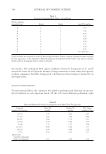
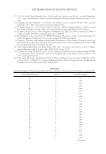
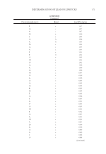
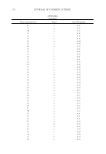
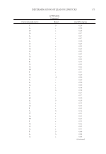
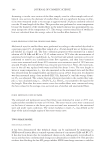
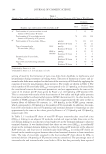
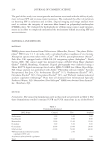
DETERMINATION OF LEAD IN LIPSTICKS 167 (2) U.S. Food and Drug Administration, Lipstick and Lead: Questions and Answers, accessed September 2011, http://www.fda.gov/cosmetics/productandingredientsafety/productinformation/ucm137224. htm (3) Campaign for Safe Cosmetics, A Poison Kiss: The Problem of Lead in Lipstick, October 2007, accessed September 2011, http://safecosmetics.org/article.php?id=327 (4) R. Paige, Dangerous Levels of Lead in Lipstick, Lip Gloss? CBS Los Angeles, May 17, 2006, accessed July 2008, no longer accessible, http://cbs2.com/consumer/Lipstick.Lip.Gloss.2.516979.html (5) A. Meyer, Pretty Little Lie, News Channel 4, Oklahoma City, May 19, 2006, accessed July 2008, no longer accessible, www.kfor.com/global/story.asp?s=4908398 (6) B. Thompson, Is Lead Inside Lipstick? WPXI, Pittsburgh, PA, July 24, 2006, accessed September 26, 2008, no longer accessible, http://www.wpxi.com/print/9566833/detail.html (7) Cosmetics, Toiletries, and Fragrances Association, Determination of Lead Content of Finished Cosmetics and Raw Materials by Closed-Vessel Microwave Digestion Graphite Furnace Atomic Absorption Spectrometry, CTFA Lead Analysis Task Force, November 19, 1997. (8) “Lip Products Brand Shares by Retail Value 2004–2007,” in Cosmetics and Toiletries in the U.S. (Euro- monitor International Ltd, London, May 2008), Table 64, pp. 78–79. (9) P. Atkins, H. Lang, W. Driscoll, and L. Ernyei, Analysis of lipstick for toxic elements using ICP-MS, 2011 Pittsburgh Conference on Analytical Chemistry and Applied Spectroscopy, Atlanta, Georgia, March 13–18, 2011 (poster presentation). (10) P. Piccinini, M. Piecha, and S. Fortaner Torrent, Results of European survey on lead in lipsticks, Techni- cal Note LB-NA-24886-EN-N, European Commission, Joint Research Centre, Institute for Health and Consumer Protection (European Union, August 2011). APPENDIX Lead (Pb) Results for 400 Lipsticks from 24 Parent Companies, Purchased between February and July 2010 Parent (manufacturer) Brand Lead (Pb) mg/kg A a 7.19 A b 7.00 B a 4.93 C a 4.92 B a 4.89 A b 4.45 A b 4.41 C b 4.28 A a 4.23 F a 4.12 F a 4.06 D a 3.32 J a 3.12 E a 3.08 A b 2.87 D a 2.84 K a 2.81 D a 2.81 J a 2.80 D a 2.77 C b 2.74 F a 2.71 L a 2.68 E a 2.59 (Continued)
Purchased for the exclusive use of nofirst nolast (unknown)
From: SCC Media Library & Resource Center (library.scconline.org)