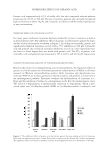
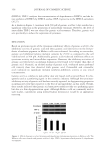
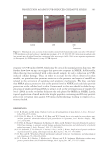
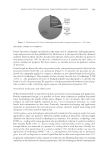
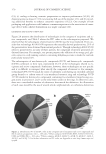
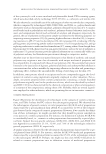
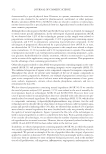
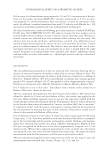
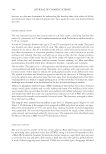
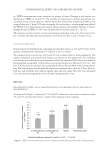
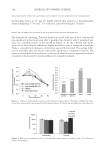
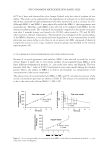
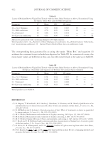
PROTECTION AGAINST UVB-INDUCED OXIDATIVE STRESS 363 response to UVB-induced ROS, which may be critical for normal protein function. We further show how an mp can trigger this protective response in NHEK. Additionally, when this mp was incubated with a skin model sample, we saw a reduction in UVB- induced cellular damage. Thus, in order to account for the effects observed in skin models, we postulate that proteins sensitive to the presence and repair of metSO are related to the activation of signaling and apoptotic mechanisms. We thus conclude that MSRA plays a protective role at the protein level in NHEK and could also provide protection at the cellular level in skin. Future work in this area should include the ap- plication of small interfering RNA to silence msrA or the overexpression of transfected msrA cDNA in order to further delineate the role played by MSRA in NHEK. Lastly, topical application of small molecular weight peptides containing metSO may provide protection to human skin against UV-induced photodamage leading to improved cu- taneous health. REFERENCES (1) D . R. Bickers and M. Athar, Oxidative stress in the pathogenesis of skin disease, J. Invest. Dermatol., 126, 2565–2575 (2006). (2) E . Pelle, D. Maes, G. A. Padulo, E. K. Kim, and W. P. Smith, An in vitro model to test relative anti- oxidant potential: ultraviolet-induced lipid peroxidation in liposomes, Arch. Biochem. Biophys., 283, 234–240 (1990). (3) E. Pelle, X. Huang, T. Mammone, K. Marenus, D. Maes, and K. Frenkel, Ultraviolet-B-induced oxidative DNA base damage in primary normal human epidermal keratinocytes and inhibition by a hydroxyl radical scavenger, J. Invest. Dermatol., 121, 177–183 (2003). (4) E. R. Stadtman, C. N. Oliver, R. L. Levine, L. Fucci, and A. J. Rivett, Implication of protein oxidation in protein turnover, aging, and oxygen toxicity, Basic Life Sci., 49, 331–339 (1988). (5) N. Brot and H. Weissbach, Peptide methionine sulfoxide reductase: biochemistry and physiological role, Biopolymers, 55, 288–296 (2000). (6) R. L. Levine, B. S. Berlett, J. Moskcovitz, L. Mosoni, and E. R. Stadtman, Methionine residues may protect proteins from critical oxidative damage, Mech. Ageing Dev., 107, 323–332 (1999). Figure 4. Histological cross-sections of skin models stained with hematoxylin and eosin after 100 mJ/cm2 UVB irradiation with and without 1 mg/ml mp treatment. A 31.1% (±10.0% S.E.) reduction in sunburn cells (see arrows) was calculated from fi ve contiguous light microscopic fi elds (40x) in two separate experiments. (a) Unexposed, (b) UVB-exposed, (c) mp + UVB-exposed.

JOURNAL OF COSMETIC SCIENCE 364 (7) J. Moskovitz, S. Bar-Noy, W. M. Williams, J. Requena, B. S. Berlett, and E. R. Stadtman, Methionine sulfoxide reductase (MsrA) is a regulator of antioxidant defense and lifespan in mammals, Proc. Natl. Acad. Sci. U S A, 98, 12920–12925 (2001). (8) E. Pelle, T. Mammone, D. Maes, and K. Frenkel, Keratinocytes act as a source of reactive oxygen species by transferring hydrogen peroxide to melanocytes, J. Invest. Dermatol., 124, 793–797 (2005). (9) E. Pelle, J. McCarthy, H. Seltmann, X. Huang, T. Mammone, C. C. Zouboulis, and D. Maes, Identifi ca- tion of histamine receptors and reduction of squalene levels by an antihistamine in sebocytes, J. Invest. Dermatol., 128, 1280–1285 (2008). (10) J. A. Parish, “Responses of Skin to Visible and Ultraviolet Radiation,” in Biochemistry and Physiology of the Skin, L. A. Goldsmith, Ed. (Oxford University Press, New York, 1983), Vol. 2, p.724.
Purchased for the exclusive use of nofirst nolast (unknown)
From: SCC Media Library & Resource Center (library.scconline.org)