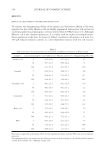
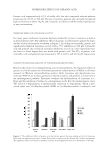
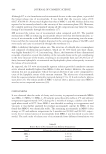
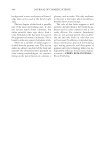
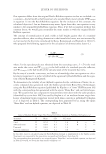
NICOTINAMIDE MICROEMULSION-BASED GELS 401 0 0 Q Q k t (2) 0 ln lnQ f Q k (3) 1/2 H Q k t (4) where Q is the cumulative amounts of active compound released in time t Q0 is initial amounts of active compound in the preformed preparations and k0, kf, and kH are release rate constants of zero order, fi rst order, and Higuchi model, respectively (18). HPLC ASSAY The concentrations of nicotinamide remained in MBG-1 after stability study and released from the investigated samples into the receptor fl uid were quantitatively analyzed by HPLC as described by Xu and Trissel (19) with some modifi cations. The HPLC system (Agilent 1100, Santa Clara, CA) connected with an HPLC column, 5-μm particle size, 150 × 4.6 nm (Chrompack Inertsil ODS, Middelburg, The Netherlands). A mixture of 0.1% triethylamine in 0.067 M monobasic potassium phosphate buffer (pH 6.7) and acetonitrile (100:4 v/v) was used as the mobile phase. The injection volume was 20 μl. The samples were detected at 260 nm and integrated with the RF 10A (version 1.1) LC software program. The calibration curve was constructed by running standard solutions of nicotinamide in extraction solvent and in IPB for every series of samples. Validation of the method was performed to ensure that chromatogram of the standard solution of nico- tinamide could be separated from chromatogram of the blank MBG extract and that of receptor fl uid incubated with cellulose membrane. The calibration curve between 2.5 and 40 μg/ml of nicotinamide was in the linearity range (r2 0.999) and coeffi cients of varia- tion were less than 2%, both intraday and interday. RESULTS AND DISCUSSION CHARACTERISTICS OF NICOTINAMIDE MICROEMULSION-BASED GELS According to optical observation, the rank order of clarity of the prepared MBGs was MBG-1 MBG-3 MBG-2. It was found that using colloidal silica provided a transpar- ent gel. The result can be explained that during the gel formation, H+ ions of water at- tached to some of the small particles of colloidal silica, resulting in the hydrophilic surface and capability of hydrogen bonding. This structure formed into a three-dimensional net- work through the branched interaction of hydrogen bonding of hydroxyl groups on silica surface (20,21). Although the water in the system was low, the water cores of ME might serve as compartmentalized media for this reaction due to their dynamic characteristics (22). Colloidal silica was previously reported that it converts sodium ascorbyl phosphate

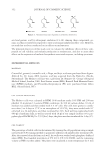
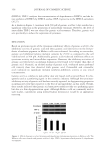
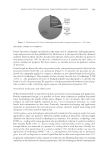
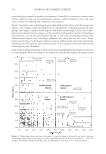
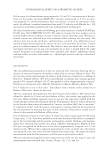
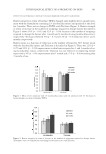
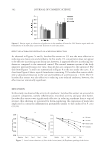
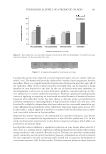
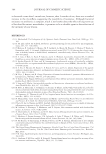
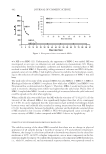
JOURNAL OF COSMETIC SCIENCE 402 w/o ME to an MBG (11). Unfortunately, the appearance of MBG-2 was turbid. ME was investigated as w/o type via dilution test and conductivity measurement (16). Hence, incompatibility between hydrophilic carbomer and hydrophobic external phase of ME resulted in turbid MBG-2. Expectably, adding mixture of carbomer and PEG-40 hydro- genated castor oil into MBG-3 had slightly achieved to stabilize the formulation, result- ing in the reduction of turbid appearance. However, the appearance of MBG-3 was still hazy. The rank order of viscosity of the prepared MBGs was also MBG-1 MBG-3 MBG-2. Rheological behavior of MBG-1 was plastic fl ow while that of MBG-2 and MBG-3 was Newtonian fl ow as demonstrated in Figure 1. Therefore, MBG-1 would not begin to fl ow until it received a shearing stress which was higher than the yield value. Plastic fl ow of MBG-1 implied that MBG-1 acted as a semisolid gel at stresses below the yield value and could be spread on the skin when applying. When colloidal silica was added into the ME with the viscosity of 74.44 ± 0.31 cP, the viscosity of the obtained MBG-1 was signifi cantly higher than that of its counterpart (p 0.05). It can be explained that the interconnected gel network via hydrogen bonds between water and colloidal silica resulted in strong interactions between ME droplets (23,24). Incompatibility between hydrophilic carbomer and hydrophobic external phase of ME resulted in low viscosity of MBG-2. PEG-40 hydrogenated castor oil might in- crease viscosity of MBG-3 when compared with MBG-2 due to its lipophilicity. STABILITY OF NICOTINAMIDE MICROEMULSION-BASED GELS The stability testing of the three MBGs revealed that there was no change in physical appearance of all samples during 2 months of storage at 4°C and ambient temperature. However, the change in color from yellowish to brownish was observed in the stored for- mulations at 60°C. At 60°C or higher temperature, one or more components in the for- mulations might decompose. To confi rm this assumption, each component in ME formulation, i.e., oleth-10, soybean oil, and nicotinamide aqueous solution, was separately stored at Figure 1. Rheograms of three nicotinamide MBGs.
Purchased for the exclusive use of nofirst nolast (unknown)
From: SCC Media Library & Resource Center (library.scconline.org)