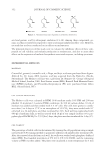
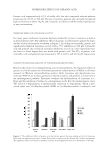
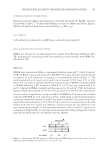
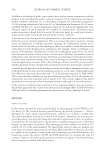
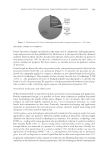
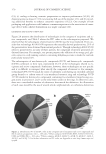
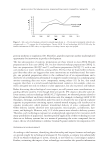
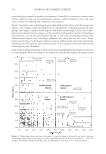
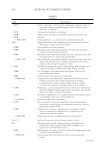
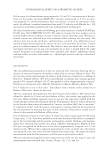
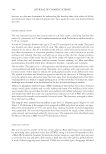
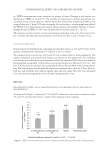
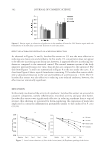
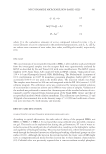
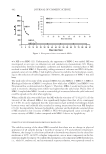
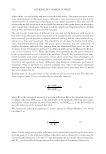
HOW COULD TECHNOLOGICAL FORECASTING HELP COSMETIC CHEMISTS 369 PROCESSES APPLIED TO COSMETICS Patent literature is highly specialized in the many uses of compounds, although prepara- tions and processes are also published (10). However, it is also reported that the chemical industry will less likely disclose detailed descriptions of processes, whether in patent or non-patent literature (10). In this case, industrial secrecy is usually the fi rst choice to protect intellectual property. For these reasons, we decided to focus on products instead of processes. Even though we fi ltered for skin care products only, some patents presented claims for the processes involved with the core innovation (Figure 1). In general, the processes we ob- served are commonly applied to cosmetics, whether or not adapted from food and phar- maceutical technologies. One example in this category was the use of technology C12P 21/04, i.e., the preparation of cyclic or bridged peptides or polypeptides, to describe the bond of a self cell-penetrating Tat peptide to a human parathyroid hormone-derived pep- tide in order to offer a slimming agent superior cell-penetration properties (15). FUNCTIONAL PACKAGING AND APPLICATORS Other elements liable to innovation in skin care products are packaging and applicators. Besides ornamental design, it is possible to devise these elements to perform functional roles. Considering the results of this survey (Figure 1), we can observe that such tech- nologies are still only slightly explored. In fact, even in non-patent literature, we could barely fi nd information on this issue. Certainly, functional packaging and applicators represent an opportunity for innovation and cosmetic chemists should work along with designers to elucidate possible approaches. At fi rst glance, some technologies observed and included in this category might not seem applicable to skin care products. However, further analysis of the patent contents might illustrate the function of such technologies in cosmetics. For instance, technology class F25D, i.e., cooling or freezing apparatus, has no immediate relation to cosmetic products. But subclass F25D 3/00, i.e., devices using other cold materials or devices using cold- storage bodies, was observed in a patent of a cooling device with the aim of locally im- proving the skin penetration of a cosmetic product (16). Another similar case was the application of technology B43K 7/10, i.e., arrangements for feeding ink to ball-point pens, in a roll-on dispenser to control liquid fl ow and to offer more equivalent doses (17). In general, technologies in this category are related to the following functions: (a) avoiding oxidation or deterioration of cosmetic preparations (18), (b) avoiding microbial contamination Figure 1. Distribution (%) of the technologies in the main categories proposed. n = 876 codes.

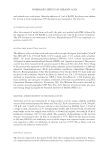
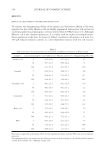
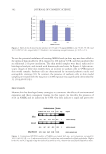
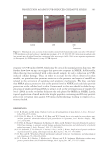
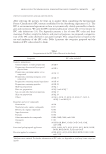
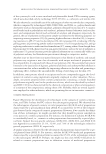
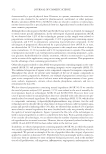
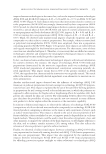
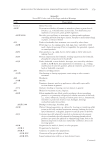
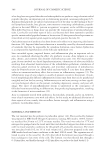
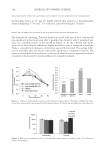
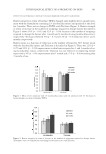
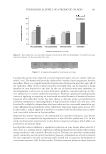
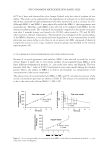
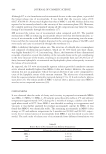
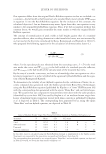
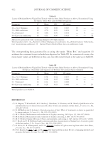
JOURNAL OF COSMETIC SCIENCE 370 (19), (c) cooling or heating cosmetic preparations to improve performance (16,20), (d) dispensing precise doses (17,18), (e) ensuring full use of the product (21), and (f) provid- ing additional benefi ts to enhance consumer experience (16,22). One example of how packaging and applicators could enhance consumer experience is the association of a mas- sage device with a shower formulation in a single container (22). EXCIPIENTS AND ACTIVE COMPOUNDS Figure 2A presents the distribution of technologies in the category of excipients and ac- tive compounds, and Table I relates the IPC codes to the subcategories proposed. We observed that the subcategory of preservatives (A01N) was the most explored. If we con- sider that technology A01N 65/00 represents the naturally derived preservatives, 25% of the preservatives were obtained from natural products. Though technology A01N 65/00 refers to preservatives, in some of these patents, the compound of interest presented ad- ditional functions. For example, one patent proposes the addition of an orange peel gly- colic extract to a self-tanning cosmetic containing dihydroxyacetone to make the tan look particularly natural (23). The subcategories of non-heterocyclic compounds (C07C) and heterocyclic compounds (C07D) combined, in their turn, represented 26.1% of the technologies related to ex- cipients and active compounds. Sometimes, however, these technologies are not specifi c and it is diffi cult to interpret what exactly the compound of interest is. For example, technology C07C 69/76 stands for esters of carboxylic acids having an esterifi ed carboxyl group bound to a carbon atom of a six-membered aromatic ring and technology C07D 317/08 stands for heterocyclic compounds containing fi ve-membered rings having oxy- gen atoms in positions 1 and 3 as the only hetero atoms in the rings. In these two cases, there are a considerable number of substances that match the defi nition. An illustration of such cases would be the use of several amide, sulphonamide, or carbamate derivatives Figure 2. Distribution (%) of the IPC codes in the categories (A) of excipients and active compounds and (B) of cosmetic preparations. (A) n = 188 codes. *Others comprise A61P, B32B, B60C, C01B, C07F, C07G, C08J, and C08K. (B) n = 644 codes. *Others comprise A61K 6, A61K 35, A61K 39, A61K 47, A61L 9, A61Q 3, and A61Q 15. For further information on IPC codes, see Appendix or visit http://www. wipo.int/ ipcpub.
Purchased for the exclusive use of nofirst nolast (unknown)
From: SCC Media Library & Resource Center (library.scconline.org)