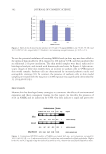
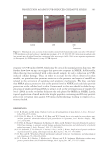
J. Cosmet. Sci., 63, 359–364 (November/December 2012) 359 Protection against UVB-induced oxidative stress in human skin cells and skin models by methionine sulfoxide reductase A EDWARD PELLE, DANIEL MAES, XI HUANG, KRYSTYNA FRENKEL, NADINE PERNODET, DANIEL B. YAROSH, and QI ZHANG, Estee Lauder Research Laboratories, Melville, NY 11747 (E.P., D.M., N.P., D.B.Y.), Environmental Medicine, New York University School of Medicine, New York, NY 10987 (E.P., X.H., K.F.), and ImClone Systems/Eli Lilly, Branchburg, NJ (Q.Z.). Accepted for publication March 28,2012. Synopsis Environmental trauma to human skin can lead to oxidative damage of proteins and affect their activity and structure. When methionine becomes oxidized to its sulfoxide form, methionine sulfoxide reductase A (MSRA) reduces it back to methionine. We report here the increase in MSRA in normal human epidermal keratinocytes (NHEK) after ultraviolet B (UVB) radiation, as well as the reduction in hydrogen peroxide levels in NHEK pre-treated with MSRA after exposure. Further, when NHEK were pre-treated with a non- cytotoxic pentapeptide containing methionine sulfoxide (metSO), MSRA expression increased by 18.2%. Additionally, when the media of skin models were supplemented with the metSO pentapeptide and then exposed to UVB, a 31.1% reduction in sunburn cells was evident. We conclude that the presence of MSRA or an externally applied peptide reduces oxidative damage in NHEK and skin models and that MSRA contributes to the protection of proteins against UVB-induced damage in skin. INTRODUCTION Skin is the fi rst line of defense against environmental trauma in humans. When skin is exposed to ultraviolet B (UVB, 295–320 nm), the production of reactive oxygen species (ROS) can lead to cellular disruption and various skin pathologies including photo aging (1). At the cellular level, UV-induced ROS target unsaturated membrane lipids to form lipid peroxides (2), as well as DNA to form oxidative lesions, such as 8-oxo-deoxyguanosine (3). Proteins are also susceptible to oxidative stress due to the formation of carbonyl moieties and sulfhydryl oxidation forming disulfi de bonds (4). Another form of protein oxidation that has received less attention is the formation of methionine sulfoxide (metSO) (5). Address all correspondence to Edward Pelle at epelle@estee.com.

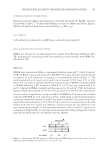
JOURNAL OF COSMETIC SCIENCE 360 Methionines may act like free radical sinks by reacting with ROS to form metSO on the periphery of a protein and thus protect the protein (6). Although methionine is oxidized in the process, the reactive intermediate is disarmed and the overall integrity of the pro- tein is preserved. metSO may then be regenerated back to methionine by methionine sulfoxide reductase A (MSRA) using thioredoxin as a cofactor (7). This strategy may be advantageous to a cell because the time for repair to occur may be a critical factor for cell maintenance or it may be energetically more favorable for the cell to repair itself rather than to resynthesize a new protein. In this study, MSRA levels were evaluated in normal human epidermal keratinocytes (NHEK) before and after UVB exposure. MSRA’s protective effect was also determined by a direct addition of this enzyme to cells before irradiation. Further, NHEK were pre- treated with a metSO-containing pentapeptide (mp) in order to determine if MSRA could be induced in a non-cytotoxic manner and provide an enhanced antioxidant defense mechanism. Lastly, this peptide was added to the media of skin models and tested for its ability to inhibit sunburn cell production after UVB treatment. MATERIALS AND METHODS CELL CULTURE NHEK were obtained from Cascade Biologics (Portland, OR) as primary culture male cells. Cells were maintained in EpiLife (calcium-free) medium containing 1% supplemented serum (Cascade). SKIN MODELS EFT 400 skin models were obtained from MatTek (Ashland, MA) and maintained with a transwell membrane air/liquid interface as per the manufacturer’s instructions. After treatment, histological examination was carried out by hematoxylin and eosin staining (Paragon Bioservices, Baltimore, MD). REVERSE TRANSCRIPTION POLYMERASE CHAIN REACTION Conventional reverse transcription polymerase chain reaction (RT-PCR) was performed on RNA extracts for msrA transcription using primers obtained from Invitrogen (Carlsbad, CA): GTGGTGTTCCAGCCCGAGCACAT (sense) and ATGTCGGTGGTGATCAG GCCGAA (antisense). β-Microglobulin or gapdh was used as housekeeping genes. Fol- lowing annealing, reverse transcription, and amplifi cation, amplicons were separated on 2% agarose gels. Gels were stained with SYBR Gold (Invitrogen) and visualized by UV transillumination. Images were captured with a charge-coupled device (CCD) camera and quantitated with UnScanIt imaging software (Silk Scientifi c, Orem, UT).
Purchased for the exclusive use of nofirst nolast (unknown)
From: SCC Media Library & Resource Center (library.scconline.org)