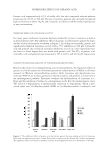
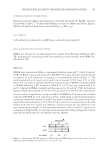
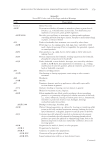
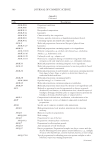
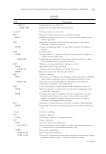
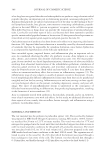
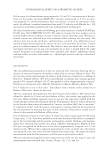
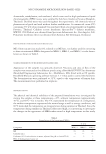
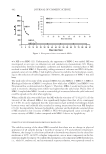
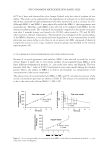
HOW COULD TECHNOLOGICAL FORECASTING HELP COSMETIC CHEMISTS 373 protein synthesis or regulation (40). Therefore, peptides represent another underexplored opportunity for innovation in product development. The last subcategories of cosmetic preparations are those related to class A61Q. Besides preparations for skin care (A61Q 19), we also observed makeup preparations (A61Q 1), hair care preparations (A61Q 5 and 7), and barrier preparations (A61Q 17), such as sun care products or insect repellents, among others. The fact that we found other technolo- gies other than skin care suggests that some innovations are multifunctional. For exam- ple, one patented preparation refers to the combined use of an organosiloxane and a derivative of cyclohexanetricarboxamide to improve transfer resistance in a makeup prep- aration containing skin care active compounds, among others (41). In fact, this result suggests that there is a trend toward multifunctional cosmetics, for example, color cos- metics designed not only to enhance or alter appearance, but also to protect and hydrate. Before discussing the technological cross impact, we will present some considerations re- garding delivery systems. Even though there are specifi c IPC classes to describe some de- livery system, such as technology A61K 9/127 (liposomes), we observed patents related to these systems without an obvious classifi cation code. For example, technology A61F 13/00 (bandages, dressings, and absorbent pads) was used to describe the use of patch or plaster supports in preparations containing aquatic animals named stinging cells (cnidocytes) or capsules (cnidocysts), which promote transdermal delivery of active compounds (42). Other delivery systems observed were nanocapsules, microcapsules, cyclodextrins, lipo- somes, and hydrogels. However, only 5.1% of the patents were related to delivery systems. Therefore, such technologies represent an underexplored opportunity for innovation with many possibilities of application. Another possible application of these technologies is not their use as delivery systems but as a means of preserving the active compound, for in- stance, the use of cyclodextrins to stabilize vitamin F against oxidative decomposition (43). TECHNOLOGICAL CROSS IMPACT According to the literature, identifying the relationship and impact between technologies can provide insight for technological strategies (9). For example, a company may substantially decide on which technology to invest, research, or use based on a cross-impact analysis. Further, estimating the impact of one technology over another also provides information Figure 3. Life cycle of technologies related to natural ingredients. n = 45 patents for primarily related tech- nologies and n = 72 patents for all technologies. *Series A61K 36 and technology A01N 65/00 only. For further information on IPC codes, see Appendix or visit http://www. wipo.int/ipcpub.

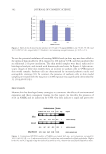
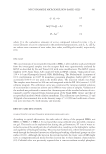
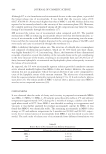
JOURNAL OF COSMETIC SCIENCE 374 on technological trends for product development. Generally, it is not easy to obtain infor- mation related to the use of technologies however, patents represent a free and open source of data for studying and evaluating cross impacts. Figure 4 presents some technological pairs identifi ed in this survey and their respective impacts. According to previous reports (9), we classifi ed the technological pairs in three groups: low impact, unidirectional impact, and bidirectional impact. First, the techno- logical pairs classifi ed as low impact can be considered independent of other technologies and, therefore, are not discussed further. Second, in the cases of technological pairs with unidirectional impact, one technology infl uences the other, but not vice versa. Third, bidirectional impact technologies infl uence and are infl uenced by the paired technology. Following, we will present and comment some of the unidirectional and bidirectional technological pairs identifi ed. Some of the unidirectional impacts observed are not meaningful from the perspective of prod- uct development. First, for example, we observed a considerable number of unidirectional Figure 4. Technological pairs and their cross impact. A specular image is obtained if one traces a diagonal line from the upper right to the lower left. Some technological pairs (A, B) were identifi ed. n = 109 tech- nologies. For further information on IPC codes, see Appendix or visit: http://www. wipo.int/ipcpub.
Purchased for the exclusive use of nofirst nolast (unknown)
From: SCC Media Library & Resource Center (library.scconline.org)