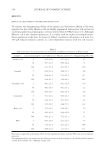
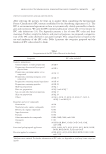
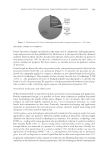
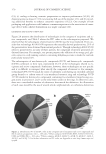
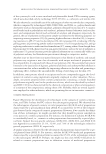
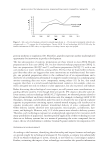
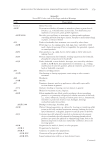
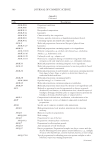
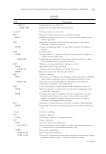
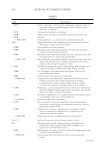
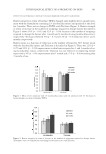
HOW COULD TECHNOLOGICAL FORECASTING HELP COSMETIC CHEMISTS 371 of the cyanoacrylic acid as new uncolored and photostable broad-UVA screening agents, which were described only by technology C07C 255/00, i.e., carboxylic acid nitriles (24). We also observed a considerable use of the subcategory of other macromolecular compounds, which is comprised by technologies C08B, C08F, C08G, and C08L, i.e., polysaccharides and derivatives (such as chitosan-thio-amidine), polymers obtained by reaction of C–C unsatu- rated bonds (such as polyethylene and acrylates), polymers obtained otherwise (such as silox- anes), and compositions thereof (such as blends of acrylates and siloxanes), respectively. In general, the use of polymers in this patent sample was related to the following purposes: (a) improving sensory properties (25), (b) granting higher adhesion to the skin (26), (c) improv- ing resistance to pH (27) and to electrolytes (28), (d) increasing (29) or reducing (30) the gelling power, (e) promoting powder surface treatments (31), (f) encapsulating (32), and (g) replacing surfactants in surfactant-free formulations (27), among others. Even though these functions may be well-characterized in non-patent literature, such as the use of polymers as surfactants (33), patent literature provides updated information on economically viable uses of polymers and may lead formulation practitioners through a competitive market. Another issue we know from non-patent literature is that blends of synthetic and natural polymers may originate a new class of materials with unique mechanical properties and biocompatibility, if compared with those of neat polymers (34). One example from patent literature is the association of alginate, poly(vinyl alcohol), and carboxymethylcellulose in concentrations that reduce wrinkles by improving adhesion to the skin and promoting a tightening effect, without the uncomfortable feeling of stretching out the skin (35). In addition, some patents related to excipients and active compounds suggest the devel- opment of cosmetics using ingredients originally employed in other industries. For ex- ample, one patent proposed some cosmetic preparations containing a volatile branched polysiloxane originally used in the production of tires, which was described by technol- ogy B60C 1/00 (tires characterized by the chemical composition or physical arrangement, or a mixture of the composition), among others (36). Probably, there are several ingredi- ents employed in other industries, which are promising for use in innovative cosmetics. COSMETIC PREPARATIONS Figure 2B presents the distribution of technologies in the category of cosmetic prepara- tions, and Table I relates the IPC codes to the subcategories proposed. We observed that the subcategories of general cosmetic or toilet preparations (A61K 8) and of preparations characterized by a special physical form (A61K 9) accounted for 41.9% of the technolo- gies observed in the category of cosmetic preparations. However, if we consider the defi ni- tion of these technologies, we might conclude that they should be present somehow in every patent of a cosmetic preparation. For instance, the defi nition of subclass A61K 8/02 is considerably broad, i.e., cosmetic or toilet preparations characterized by a special phys- ical form. Indeed, the non-specifi c subclasses A61K 8/00, A61K 8/02, and A61K 8/18 (see Appendix) accounted for 23.1%, 32.9%, and 7.8% of the technologies related to general preparations (A61K 8), respectively. A similar situation is observed for the subcategory of preparations characterized by a spe- cial physical form (A61K 9). For instance, subclass A61K 9/00 (medicinal preparations characterized by a special physical form) accounted for 25.9% of the technologies related to this subcategory (A61K 9). Perhaps, one might say that class A61K 9 should not be related to cosmetic preparations once its defi nition consists of medicinal preparations

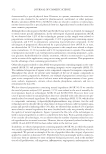
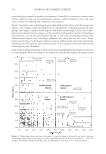
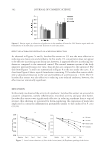
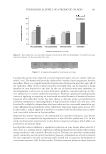
JOURNAL OF COSMETIC SCIENCE 372 characterized by a special physical form. However, in a patent, sometimes the core inno- vation is also claimed to be useful for pharmaceutical, nutritional, or other purposes. Besides, subclasses A61K 8/02 to A61K 8/14 that are related to cosmetic or toilet prepa- rations characterized by a special physical form (see Appendix) may be rather limited for some cosmetic preparations. Although these subcategories (A61K 8 and A61K 9) may not be so detailed, we managed to extract more specifi c information. In the subcategory of general preparations (A61K 8), we observed that 4.2% of the technologies present in this sample were related to preparations containing inorganic compounds, 13.4% to preparations containing organic compounds, and 9.3% to preparations containing macromolecular compounds. In the subcategory of preparations characterized by a special physical form (A61K 9), in turn, we observed that 16.7% of the technologies present in this sample were related to disper- sions or emulsions, 33.3% to powders and 9.3% to preparations in capsules. One example of preparation in powder is an extemporaneous preparation containing propionyl L -carni- tine glycinate hydrochloride for cellulite treatment, which is reconstituted to a gel form on the occasion of the application, using or not using special containers. This preparation has the advantage of not containing preservatives (37). Other subcategories related to class A61K were preparations containing organic active com- pounds (A61K 31) and preparations containing inorganic active compounds (A61K 33). We confi rmed a larger use of organic active compounds compared to inorganic compounds. Throughout this article, we present some examples of the use of organic compounds in patented cosmetic preparations. However, one example of preparations containing an inor- ganic active compound is the use of volcanic water with adequate amounts of iron, potas- sium, sodium, magnesium, calcium, silicon dioxide, phosphorus, selenium, and zinc to remineralize the skin (38). We also observed preparations containing natural ingredients (A61K 36). If we consider the total of patents analyzed (333 patents), 13.5% were related to the use of naturally de- rived products based on technologies A61K 36 and A01N 65/00. However, there were cases of patents related to natural products that were classifi ed with codes that are not pri- marily related to natural ingredients. For example, technology A61K 31/56, which refers to compounds containing cyclopenta[a]hydrophenanthrene ring systems, was the only technology used to describe the use of an extract of Ajuga turkestanica able to regulate aqua- porins and provide a hydrating effect (39). Also, we observed that another 8.1% of patents were related to natural ingredients but were classifi ed with codes not primarily related to the quality of natural ingredients. Figure 3 presents the life cycle of the technologies re- lated to natural ingredients in order to complement these data. From a general perspective, if we consider all technologies, we can observe that the number of patents related to natu- ral ingredients has increased over time. However, the use of primarily related technologies (A61K 36 and A01N 65/00) has been rather stable in the last four years. In addition, we observed preparations containing peptides (A61K 38), in which the peptide was usually responsible for the biological activity or for the intracellular delivery of active compounds. We present an example of the use of peptides when the category of processes applied to cosmetics is discussed (15). Peptides have been increasingly used in cosmeceu- ticals once they are inherent to some cutaneous biological processes, such as the modula- tion of cell proliferation, cell migration, infl ammation, angiogenesis, melanogenesis, and
Purchased for the exclusive use of nofirst nolast (unknown)
From: SCC Media Library & Resource Center (library.scconline.org)