J. Cosmet. Sci., 63, 365–383 (November/December 2012) 365 A patent survey case: How could technological forecasting help cosmetic chemists with product innovation? IVAN DOMICIO DA SILVA SOUZA, BÁRBARA JULIANA PINHEIRO, and VANIA PASSARINI TAKAHASHI, Department of Pharmaceutical Sciences, Faculty of Pharmaceutical Sciences of Ribeirão Preto, University of São Paulo, Av. do Café s/n, 14.040-903Ribeirão Preto, SP, Brazil. Accepted for publication March 28, 2012. Synopsis Patents represent a free and open source of data for studying innovation and forecasting technological trends. Thus, we suggest that new discussions about the role of patent information are needed. To illustrate the relevance of this issue, we performed a survey of patents involving skin care products, which were granted by the United States Patent and Trademark Offi ce (USPTO) between 2006 and 2010, to identify opportunities for innovation and technological trends. We quantifi ed the use of technologies in 333 patents. We plotted a life cycle of technologies related to natural ingredients. We also determined the cross impact of the technologies identifi ed. We observed technologies related to processes applied to cosmetics (2.2%), functional packaging and applicators (2.9%), ex- cipients and active compounds (21.5%), and cosmetic preparations (73.5%). Further, 21.6% of the patents were related to the use of natural ingredients. Several opportunities for innovation were discussed throughout this paper, for example, the use of peptides as active compounds or intracellular carriers (only 3.9% of the technologies in cosmetic preparations). We also observed technological cross impacts that suggested a trend toward multifunc- tional cosmetics, among others. Patent surveys may help researchers with product innovation because they allow us to identify available and unexplored technologies and turn them into whole new concepts. INTRODUCTION A few decades ago, in 1953, Cifelli Jr. (1) published a paper in this journal discussing the need of scientifi c tests to support the claims of cosmetic patents. From that time on, the cosmetic industry has acquired considerable knowledge on how to prepare a patent ap- plication. In fact, a great deal has evolved in the cosmetic industry and the need of scien- tifi c data to support claims is already common sense. Therefore, it is time for new discussions about the role of patents in this sector. Following, we present some mottos to study and discuss patent information. Address all correspondence to Vania Passarini Takahashi at vptakahs@usp.br.

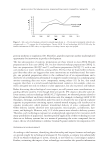
JOURNAL OF COSMETIC SCIENCE 366 In different technological fi elds, some authors have studied patent information with the purpose of (a) estimating the market value of a company (2), (b) monitoring convergence between different industries (3), (c) developing strategies for technology management (4), (d) plotting technological life cycles (5), (e) identifying new businesses (6), (f) assess- ing R&D effi ciency (7), (g) benchmarking companies (8), and (h) determining the tech- nological impact of one technology over another (9), among others. Obviously, patent analysis represents a broad fi eld of research. On the other hand, we could barely fi nd sci- entifi c patent analysis specifi cally devised for the cosmetic industry. A peculiarity of the data reported in granted patents is that they are not found elsewhere before the occasion of patent application. This is one reason why patents represent a unique source of information to develop innovative thinking (8). Furthermore, patents are so closely related to the life cycle of technologies, that it is possible to study innovation and technological trends through patent information. For example, when a technology is in process of development, fundamental scientifi c and technological issues have to be solved and risks must be taken in order to achieve an innovation. Therefore, the number of patent applications is low and increases slowly. Afterward, as technological and market uncertain- ties fade, many innovations based on the initial technology are developed and the number of patent applications increases. Then, the technology reaches its maturity period, and the number of patents decline, though some incremental innovations may remain constant (5). Certainly, patents play the role of providing scientifi c and technical information. In fact, one study showed that in most areas of chemistry, patents are a rich source of fi rst publications (10). Moreover, this study shows that only 7% of the polymers patented in 1980 (1980– 2003) were ulteriorly published in non-patent literature and that 43% of all polymers de- veloped that year were published only in patents (10). This scenario suggests that patent information is more dynamic than non-patent literature, although it is not well explored. In this context, our objective was to perform a survey of patents related to skin care products, which were granted by the United States Patent and Trademark Offi ce (USPTO) between 2006 and 2010, to identify opportunities for innovation as well as technological trends. METHODS DATA COLLECTION In this survey, we used the search tools available on the homepage of the USPTO to col- lect data (11). We searched patents granted during the period of January 1, 2006 to December 31, 2010, which contained the words “cosmetic” or “cosmetics” in their title. This search procedure resulted in a total of 1036 patents. Afterward, we read and ana- lyzed the patents, selecting only those that claimed for application in skin care products. Consequently, we excluded patents related only to manufacturing processes, ornamental designs, or other types of products. This fi ltering procedure resulted in a total of 335 patents (32.3% of the initial number). We limited this survey to skin care products be- cause there is a common expectation of even more effi cient products in this area, once they are capable of, for example (a) reducing the risk of acquiring age-related skin diseases (b) preserving against the effects of UVA and UVB radiations (c) avoiding the urge for cosmetic surgeries (d) reducing the psychosocial impact of aging on the human being and (e) keeping a youthful and healthy aspect.
Purchased for the exclusive use of nofirst nolast (unknown)
From: SCC Media Library & Resource Center (library.scconline.org)