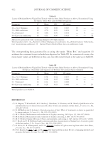
JOURNAL OF COSMETIC SCIENCE 364 (7) J. Moskovitz, S. Bar-Noy, W. M. Williams, J. Requena, B. S. Berlett, and E. R. Stadtman, Methionine sulfoxide reductase (MsrA) is a regulator of antioxidant defense and lifespan in mammals, Proc. Natl. Acad. Sci. U S A, 98, 12920–12925 (2001). (8) E. Pelle, T. Mammone, D. Maes, and K. Frenkel, Keratinocytes act as a source of reactive oxygen species by transferring hydrogen peroxide to melanocytes, J. Invest. Dermatol., 124, 793–797 (2005). (9) E. Pelle, J. McCarthy, H. Seltmann, X. Huang, T. Mammone, C. C. Zouboulis, and D. Maes, Identifi ca- tion of histamine receptors and reduction of squalene levels by an antihistamine in sebocytes, J. Invest. Dermatol., 128, 1280–1285 (2008). (10) J. A. Parish, “Responses of Skin to Visible and Ultraviolet Radiation,” in Biochemistry and Physiology of the Skin, L. A. Goldsmith, Ed. (Oxford University Press, New York, 1983), Vol. 2, p.724.

J. Cosmet. Sci., 63, 365–383 (November/December 2012) 365 A patent survey case: How could technological forecasting help cosmetic chemists with product innovation? IVAN DOMICIO DA SILVA SOUZA, BÁRBARA JULIANA PINHEIRO, and VANIA PASSARINI TAKAHASHI, Department of Pharmaceutical Sciences, Faculty of Pharmaceutical Sciences of Ribeirão Preto, University of São Paulo, Av. do Café s/n, 14.040-903Ribeirão Preto, SP, Brazil. Accepted for publication March 28, 2012. Synopsis Patents represent a free and open source of data for studying innovation and forecasting technological trends. Thus, we suggest that new discussions about the role of patent information are needed. To illustrate the relevance of this issue, we performed a survey of patents involving skin care products, which were granted by the United States Patent and Trademark Offi ce (USPTO) between 2006 and 2010, to identify opportunities for innovation and technological trends. We quantifi ed the use of technologies in 333 patents. We plotted a life cycle of technologies related to natural ingredients. We also determined the cross impact of the technologies identifi ed. We observed technologies related to processes applied to cosmetics (2.2%), functional packaging and applicators (2.9%), ex- cipients and active compounds (21.5%), and cosmetic preparations (73.5%). Further, 21.6% of the patents were related to the use of natural ingredients. Several opportunities for innovation were discussed throughout this paper, for example, the use of peptides as active compounds or intracellular carriers (only 3.9% of the technologies in cosmetic preparations). We also observed technological cross impacts that suggested a trend toward multifunc- tional cosmetics, among others. Patent surveys may help researchers with product innovation because they allow us to identify available and unexplored technologies and turn them into whole new concepts. INTRODUCTION A few decades ago, in 1953, Cifelli Jr. (1) published a paper in this journal discussing the need of scientifi c tests to support the claims of cosmetic patents. From that time on, the cosmetic industry has acquired considerable knowledge on how to prepare a patent ap- plication. In fact, a great deal has evolved in the cosmetic industry and the need of scien- tifi c data to support claims is already common sense. Therefore, it is time for new discussions about the role of patents in this sector. Following, we present some mottos to study and discuss patent information. Address all correspondence to Vania Passarini Takahashi at vptakahs@usp.br.
Purchased for the exclusive use of nofirst nolast (unknown)
From: SCC Media Library & Resource Center (library.scconline.org)