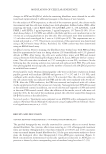
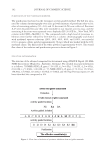
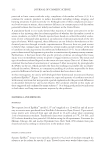
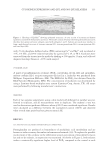
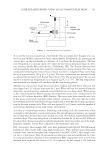
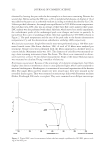
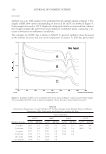
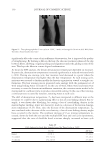
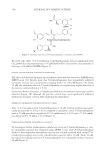
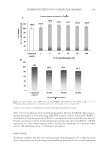
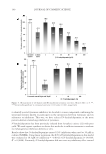
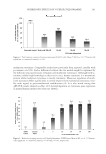
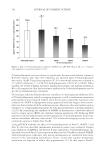
JOURNAL OF COSMETIC SCIENCE 120 related to an irreversible physical modifi cation of the microfi lament keratin conformation induced by the coupled action of heat, strain, and water (4). More recently, differential scanning calorimetry (DSC) analyses of human hair have shown that thermal denaturation of α-keratin occurred between 140°C and 200°C depending on the water content of the samples (5–8). The denaturation is characterized by an endotherm corresponding to a transition from a crystalline to a more amorphous state. Although hair can reach those high temperatures during ironing, there are signifi cant differences between the heat transfer processes in an iron versus a hermetic DSC pan. The hair iron involves multiple heating and cooling cycles, and the heating rate in the iron is usually much faster than in a DSC experiment. In addition, in an iron, the moisture content around the heated portion of hair decreases with time and hair fi bers undergo deformation and stress. Here the objective was to develop a controlled iron experiment to study the effect of mul- tiple iron cycles on the straightening permanency of curly hair. Since holding the fi bers straight is key to straightening, another aim of this study was to elucidate the contribu- tion of silicones to the process. Silicones are often used in hair thermal treatment because of their thermal stability (9). Because of their low surface tension, silicones form fi lms reducing iron gliding force they condition the hair and produce increased fi ber–fi ber interaction with an anti-frizz effect (10). An automated iron was built with which the hair temperature, contact force of the iron against the hair tress, and gliding speed were controlled. The stretching force was re- corded by a load cell. Fiber alignment could be monitored by a camera mounted on a stereomicroscope. The changes in keratin were characterized by several techniques in- cluding DSC, birefringence measurements, and wet tensile tests. The initial moisture of the hair tress was controlled. All tests were performed without the use of chemical relax- ers or cross-linking agents. EXPERIMENTAL MATERIALS We purchased 2 g undamaged naturally curly hair tresses and ethnic Afro hair swatches from International Hair Importers & Products (Glendale, NY). The silicone emulsion used in the study was made by Momentive (Columbus, OH). The silicone was an alkyl-modifi ed amodimethicone from Momentive, trade named Silsoft* AX® conditioning agent with International Nomenclature of Cosmetic Ingredients (INCI) name Bis-cetearyl amodimethicone. The silicone was emulsifi ed with nonionic emulsifi ers to form a stable emulsion with a particle size of around 350 nm. METHODS Automated iron. In a manual iron experiment, the heat transfer process controlling the hair alteration is quite variable since it depends on manual factors, including gliding speed of the heating elements, contact pressure, and the amount of hair between heating plates. An automated iron was built to control those variables (Figure 1).

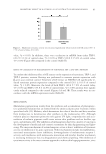
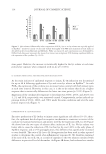
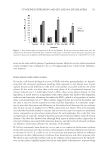
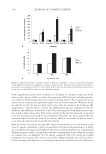
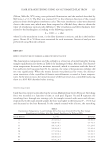
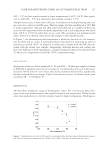
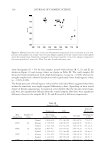
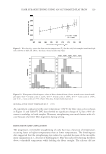
HAIR STRAIGHTENING USING AN AUTOMATED FLAT IRON 121 A 1-inch fl at iron was mounted on a fi xed holder. Two iron plates were brought into con- tact by a rigid holder connected to a force sensor (Imada, Northbrook, IL), measuring the contact force on the iron handle at a distance of 2 cm from the heating plates. The hair tress was pulled at a constant speed of 15 mm/s by the vertical motorized stage of a Tex- ture Analyzer (Stable Micro Systems Inc, Godalming, UK). The Texture Analyzer load cell measured the stretching force exerted on the hair tress during ironing. The study was conducted by keeping the contact force constant to achieve a tangential force (stretching force) of approximately 100 g for a 2 g tress. The hair temperature was measured using an infrared thermometer from Raytek (Santa Cruz, CA). The temperature of the iron was varied to achieve hair temperatures in a range of 122°C to 175°C. The hair temperature was measured at a distance of 1 cm above the fl at iron heating plates. Multiple iron cycles protocol. Curly hair tresses were washed and blow-dried. The hair was then dipped in 0.2% silicone dispersion for 1 min. When the hair was removed from the dispersion, excess liquid was squeezed out and the hair tress was blow-dried. Water served as the control treatment. Before ironing, the treated hair tresses were conditioned for 30 min in a 90% relative humidity (RH) chamber. The tresses were then ironed for one cycle of fi ve passes and stored overnight under ambient conditions. The next day, the tresses were washed and blow-dried before being conditioned at 90% RH for 30 min in prepara- tion for the next ironing cycle. This cycle was repeated 2 to 10 times, with the number of cycles being dependent on the temperature of treatment. Assessment of straightening permanency. Following each ironing cycle, the tresses were stored overnight in the laboratory at room temperature. The straightening permanency was assessed the next day when the hair tresses were washed once with 10% Sodium Laureth Sulfate (SLES) and blow-dried. They were then placed in a humidity chamber for 30 min at 90% RH with forced air fl ow. Tresses were photographed immediately after being taken out of the high- humidity chamber. Tresses were compared to the nonironed curly tress. DSC measurement. Hair sample DSC tests were performed with Q1000 TA Differential Calorimeter (New Castle, DE), using high-volume pans. These hermetic pans maintained constant water content throughout the temperature scan (80°C–250°C). Hair samples were cut into 1–2 mm pieces. Then 10 mg sample was placed in a pan and equilibrated for 2 days in a constant humidity chamber at room temperature. RHs ranging from 20% to 97% were obtained with saturated salt solutions (11). A completely dry hair sample (~0% RH) was Figure 1. Automated hair iron apparatus.
Purchased for the exclusive use of nofirst nolast (unknown)
From: SCC Media Library & Resource Center (library.scconline.org)