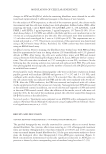
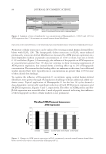
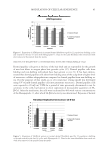
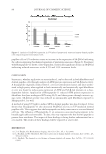
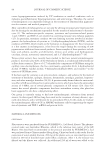
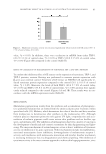
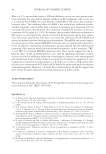
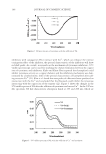
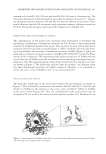
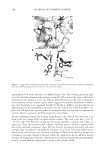
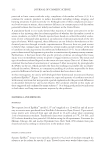
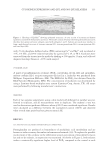
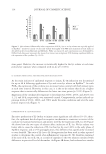
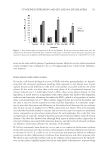
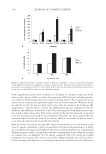
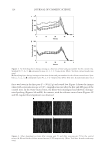
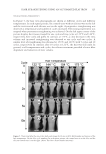
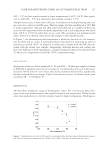
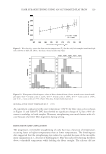
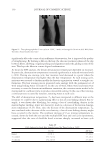
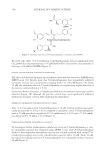
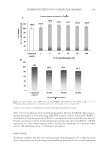
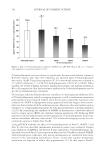
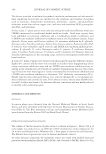
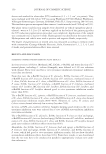
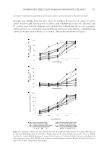
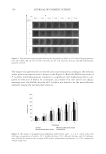
JOURNAL OF COSMETIC SCIENCE 156 The degree of pigmentation on treated areas was measured according to the melanin index with a mexameter and is shown in the Figure 6. Both the EtOAc fractions of P. lactifl ora and hydroquinone resulted in a signifi cant skin-lightening effect com- pared to vehicle at 6 weeks. In conclusion, as a result of in vitro and in vivo depig- menting tests, the EtOAc fraction of P. lactifl ora was found to be the most effective substrate among the natural plant extracts. Figure 5. Representative photographs showing the depigmenting effect on UV-induced hyperpigmenta- tion: (A) vehicle, (B) 2% of P. lactifl ora fraction, (C) 2% of E. offi cinalis fraction, and (D) hydroquinone (positive control). Figure 6. The degree of depigmentation (Δmelanin index) before and 1, 2, 3, 4, 5, and 6 weeks after daily topical application of vehicle, 2% P. lactifl ora fraction, 2% E. offi cinalis fraction, and 2% hydroqui- none. Results are shown as the averages ± SD of three independent experiments. *p 0.05 compared to vehicle using t-test.

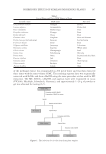
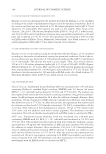
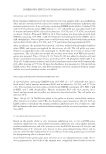
INHIBITORY EFFECTS OF KOREAN INDIGENOUS PLANTS 157 CONCLUSIONS In this study, we investigated the evaluation methods for screening of natural depig- menting substances and searched for depigmenting substances from 17 natural plants, including S. china. To screen potential depigmenting substances, an in vitro tyrosinase inhibition test using mushroom tyrosinase, in vitro L -DOPA auto-oxidation inhibition test, in vitro melanin synthesis inhibition test, intracellular tyrosinase inhibition test, and intracellular melanin synthesis inhibition test were conducted. In addition, a cyto- toxicity study was performed. Finally, we conducted an in vivo depigmentation study of candidate depigmenting plant extracts with brown guinea pigs. Results from such tests can be summarized as follows: (1) A total of 85 samples (extraction and fractionation of 17 natural substances with MeOH, MC, EtOAc, n-BuOH, and H2O) were tested for tyrosinase inhibition and in vitro L -DOPA auto-oxidation inhibition with mushroom tyrosinase. From these tests, 10 fractions, including the EtOAC fraction of S. china, were selected as candidate de- pigmenting substances. (2) Ten candidate depigmenting substances at various concentrations were subjected to an in vitro tyrosinase inhibition test, in vitro L -DOPA auto-oxidation inhibition test, and in vitro melanin synthesis inhibition test. In addition, cytotoxicity tests (NR50 and MTT50) were conducted to evaluate safety. From these tests, four extracts with good effi cacy and low toxicity were selected, and included the EtOAc fraction of S. china, EtOAc fraction of P. lactifl ora, BuOH fraction of E. offi cinalis, and EtOAc fraction of P. umbellatus. (3) The four selected plant fractions showed concentration-dependent inhibitory ef- fects of intracellular tyrosinase activity and intracellular melanin biosynthesis in the B16 melanoma cell line. More specifi cally, the EtOAc fraction of P. lactifl ora showed a signifi cant, excellent depigmenting effect in both the intracellular tyrosinase inhi- bition test and the intracellular melanin biosynthesis inhibition test compared to arbutin, which is a depigmenting substance widely used in Korea. The IC50 values were 19.9 μg/ml for P. lactifl ora, 43.8 μg/ml for E. offi cinalis, 43.5 μg/ml for P. umbel- latus in the intracellular tyrosinase inhibition test and 16.6 μg/ml for P. lactifl ora, 26.7 μg/ml for E. offi cinalis, 32.1 μg/ml for P. umbellatus in the intracellular melanin inhibition test. (4) The melanin index was measured with the artifi cially pigmented skin of brown guinea pigs to measure the fi nal depigmenting effects of the EtOAc fraction of P. lactifl ora and the BuOH fraction of E. offi cinalis, which showed a good result in the in vitro test. The EtOAc fraction of P. lactifl ora also showed signifi cant skin-lightening effects compared to the vehicle. In this study, the EtOAc fraction of P. lactifl ora was found to be the most effective substrate. It was particularly effective depigmenting agent compared to arbutin in the in vitro test and showed a similar effect to that of hydroquinone in the in vivo test. However, the cytotoxicity of EtOAC fraction of P. lactifl ora is still higher than arbutin. There needs to be a better search for active components from specifi c fraction of P. lactifl ora without any cytotoxicity. For further study, gallic acid, methyl gallate, and pentagalloyl glucose, major components in the P. lactifl ora, need to be purifi ed through an activity-guided isolation and identifi ed by spectroscopic analysis from the EtOAC fraction of P. lactifl ora.
Purchased for the exclusive use of nofirst nolast (unknown)
From: SCC Media Library & Resource Center (library.scconline.org)