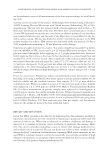
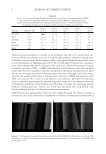
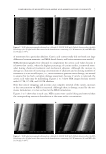
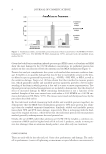
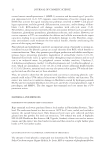
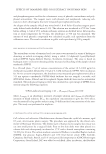
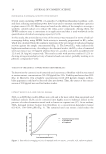
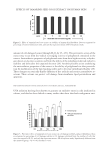
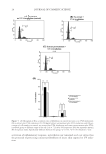
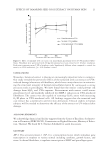
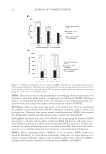
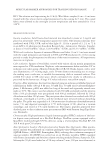
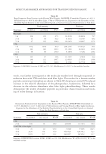
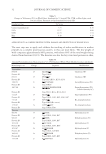
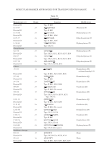
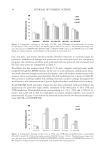
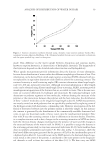
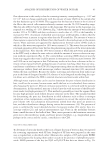
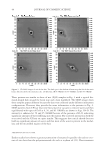
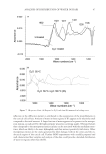
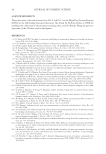
JOURNAL OF COSMETIC SCIENCE 16 FREE RADICAL SCAVENGING ACTIVITY OF THE EXTRACT Several assays including DPPH, 2,2-azinobis (3-ethylbenzothiazoline-6-sulfonic acid), and ferric reducing antioxidant power have been used to measure antioxidant capacities in plant extract (20–22). Most assays are based on the ability of the sample to scavenge a synthetic colored radical or to reduce the redox-active compounds. Among them, the DPPH oxidative assay is convenient in its application and thus is used worldwide in the quantifi cation of radical-scavenging capacity (23,24). In this study, the antioxidant activity of the extract was measured in terms of radical- scavenging ability, using DPPH. Such activity is inversely proportional to EC50 value, which was calculated from the nonlinear regression of the percentage of radical-scavenging activity against the sample concentration (Fig. 1). The lower EC50 value indicates the higher antioxidant activity. According to the obtained results, the EC50 value of tamarind seed coat extract was 12.9 μg/ml whereas those of L-ascorbic acid and α-tocopherol were 22.9 and 29.3 μg/ml, respectively. This result accords with previous studies (13,25) in- dicating strong antioxidant activity of tamarind seed coat extract, probably residing in its phenolic compounds (14,26). TOXICITY OF THE EXTRACT TOWARD HUMAN SKIN FIBROBLASTS To determine the cytotoxicity of tamarind seed coat extract, fi broblast viability was tested at various extract concentrations (50–200 μg/ml) for 24 h. Viability was better than 90% (Fig. 2). Moreover, even at highest concentration tested (200 μg/ml), changes in fi bro- blast appearance could not be detected (data not shown). Thus, the extract at the concen- tration of 200 μg/ml was used for further studies. EXTRACT REDUCES H2O2-INDUCED CELL DAMAGE H2O2 is an ROS that readily diffuses into cells and is far more stable than superoxide and hydroxyl radicals. H2O2 can be converted into highly reactive hydroxyl radical in the presence of reduced transition metal such as ferrous or cuprous ions (27). As an oxidant, H2O2 damaged primary human skin fi broblasts in a concentration-dependent manner (62–92%, 100–1000 μM) (Fig. 3). The tamarind seed coat extract could reduce the Figure 1. Free radical scavenging activity of tamarind seed coat extract, L-ascorbic acid, and α-tocopherol.

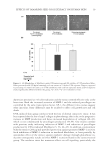
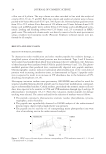
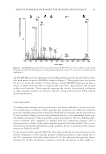
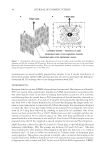
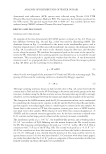
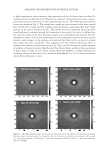
EFFECTS OF TAMARIND SEED COAT EXTRACT ON HUMAN SKIN 17 amount of cell damaged caused through H2O2 by 25–45%. The preventive action of the extract may occur from free-radical scavenging activity of polyphenols contained in the extract. Antioxidative properties of polyphenols arise from their high reactivity as hydro- gen donors or electron acceptors and from the ability of the polyphenol-derived radical to stabilize and delocalize the unpaired electron (28). Another possible action underlying the antioxidative properties of the extract is the ability of polyphenols to alter peroxida- tion by modifi cation of the lipid packing order and to decrease membranes fl uidity (29). These changes can sterically hinder diffusion of free radicals and restrict peroxidative re- actions. These actions can protect cell damage from membrane lipid peroxidation and apoptosis. PREVENTIVE EFFECT OF THE EXTRACT TO UVA-INDUCED CELL ALTERATIONS UVA radiation has long been known to generate an oxidative stress in cells irradiated in culture, and this has been linked to many studies that show that both endogenous anti- Figure 2. Effect of tamarind seed coat extract on viability of human skin fi broblasts. Data are expressed as percentage of control (untreated cells), and each bar represents mean ± SD of triplicate study. Figure 3. Preventive effect of tamarind seed coat extract on cell damage in H2O2-induced fi broblasts. Data are expressed as percentage of cell damage relative to 0% damage calculated from the number of cells that were not exposed to H2O2, and each bar represents mean ± SD of triplicate study. Signifi cantly different from the untreated group **p 0.01 (Student’s t-test).
Purchased for the exclusive use of nofirst nolast (unknown)
From: SCC Media Library & Resource Center (library.scconline.org)