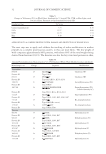
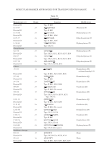
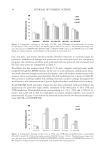
JOURNAL OF COSMETIC SCIENCE 2 achieved for the fi rst time with a high level of MEA in Clairesse® (Proctor & Gamble, Stamford, CT), which was launched by Clairol in 1981. Later, Herbal Essences® Hair Color from Clairol (Proctor & Gamble) used a lower level of monoethanolamine (MEA) to achieve many Level 3 shades, and achieved the higher lift shades by adding a small amount of ammonia. MEA also was used successfully in Level 2 products such as Cast- ing® from L’Oréal (Clichy CEDEX France) and Natural instincts® from Clairol, in which less lift is required than for a Level 3 hair colorant. One of the challenges of using MEA in hair color formulations is that an increased per- centage (relative to ammonia) is required to generate the same level of lightening (bleach- ing, lift) of the hair’s melanin (2). This is of particular concern, because Seo et al. (3) have observed synergistic causality of dermatitis and hair loss by higher levels of MEA and hydrogen peroxide. In addition to smell, one of the key concerns with Level 3 colorants is the amount of dam- age that is done to the hair fi ber, either during a single use or repetitive uses as the hair is re-colored. This is particularly true in the salon environment where consumers tend to use the same colorant product for extended periods rather than switching among prod- ucts. Damage can be masked or repaired with hair treatment agents for both MEA- and ammonia-based products, or mitigated in ammonia-based products with radical scaven- gers (4) or chelants (5), but starting with ingredients that cause the least damage makes damage mitigation easier. Among other components, hair is composed of proteins and lipids that are susceptible to a variety of chemical reactions such as oxidation and nucleophilic attack. Of course, the observed rates of these attacks are dependent on a variety of factors such as concen- trations, pH, and the individual rate constants. Ammonia is nucleophilic, but less so than MEA. For example, MEA is well known to be nucleophilic enough to be a key reagent in the synthesis of dyes through SNAr reactions (6) and the removal of ester- protecting groups from air-sensitive coloring agents (7). Whereas excess ammonia quickly leaves the hair because of its volatility, MEA is not volatile under atmospheric conditions, so there is the potential for damage to be exacerbated over time if signifi - cant amounts of MEA remain in the hair after rinsing. Our interest was whether there are any differences between ammonia and MEA in the extent of damage to hair fi bers when they are used at the concentrations needed to get enough bleaching for Level 3 oxidation dye products. GENERAL EXPERIMENTAL MATERIALS Chemicals used in the bleaching chassis were of the grades commonly used in cosmetic products and were used as received. Cetearyl alcohol was purchased from Cognis Corp. (Monheim, Germany), Crodafos CES® and steareth-200 from Croda Chemicals Europe Ltd. (East Yorkshire, England), xanthan gum from CP Kelco (Atlanta, GA), sodium hy- droxide from Brenntag GMBH (Mulheim, Germany), sodium sulfate from Cordenka GmbH (Obernburg, Germany), sodium sulfi te from Esseco SRL (Novara, Italy), ascorbic acid from DSM Nutritional (Kaiseraugst, Switzerland), ethylenediaminetetraacetate di- sodium salt from Akzo Nobel Surface Chemistry Inc. (Amsterdam, Netherlands), propylene

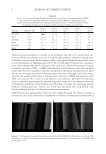
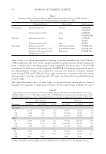
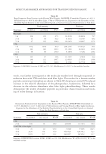
COMPARISON OF MONOETHANOLAMINE AND AMMONIA HAIR COLORANTS 3 glycol from Lyondell Chemical Co. (Houston, TX), trisodium ethylenediamine disucci- nate from Innospec CTD (Littleton, CO), ammonia from EMD (Darmstadt, Germany), and monoethanolamine from Huntsman Corp. (The Woodlands, TX). Deionized water was used to prepare the chassis. Hair (blended source light brown virgin hair) was purchased from International Hair Importers & Products. Hair treatments were performed with Pantene® Fine Hair Solu- tions Flat to Volume shampoo and Pantene® Classic Conditioner (Procter & Gamble, Cincinnati, OH). The developer used 20 volume Welloxon® (Procter & Gamble, Cincin- nati, OH), which corresponds to 6% by weight hydrogen peroxide. METHODS Preparation of Chassis Part 1. To a 10 l vessel was added Crodafos CES® (847.5 g), cetearyl alcohol (45.5 g), and steareth-200 (81 g). The mixture was heated to 85°C. Water (3.63 kg) and sodium hydroxide (34 g) were added during heating and the mixture was homoge- nized for 1 min at 15 m/s. After the mixture is completely homogenized, agitation was performed for 10 min at 1.1 m/s while heating was continued. To a separate beaker was added xanthan gum (15 g) and propylene glycol (49 g), which was mixed until it was homogeneous. The gum–glycol mixture was then added to the Crodafos CES® mixture, which was 80°C. The combined mixture was then homogenized for 1 min at 20 m/s and then agitated for 10 min at 1.1 m/s. The batch was transferred to large mixing vessel once the temperature reached 85°C. The batch was thoroughly homogenized at 20 m/s for 5 min. Hot water (500 g) was then added to the batch, which then was subjected to cooling under vacuum with stirring at 0.6 m/s. When the temperature decreased to 50°C, cool- ing was stopped. Preparation of ammonia and monoethanolamine bleaching chassis. To a dry 2 l Griffi n beaker was added Chassis Part 1 (257.5 g). To a separate 450 ml beaker was added sodium sulfate (5.0 g), sodium sulfi te (2.0 g), ascorbic acid (1.5 g), ethylenediaminetetraacetate diso- dium salt (0.5 g), propylene glycol (37.5 g), and water (amount indicated in Table I). The mixture was heated and stirred at 55°C until all salts were dissolved. The solution was then added slowly with stirring (overhead stirrer with 4 paddles ∼270 rpm) to the beaker containing Chassis Part 1. On complete addition, trisodium ethylenediamine disuccinate Table I Amounts of Formulation Ingredients Required to Prepare the NH3 and Monoethanolamine (MEA) Bleaching Chassis. Ingredients That Do Not Vary in Concentration Are Given in the Experimental Procedure Alkalizer after mixing with H2O2 developer 25% Aqueous NH3 (g) MEA (g) Water (g) pH after mixing 1:1 with H2O2 0.27 M NH3 18.18 0 155.75 10.11 ± 0.02 0.54 M NH3 36.41 0 139.2 10.35 ± 0.02 0.82 M NH3 55.76 0 117.9 10.47 ± 0.02 0.27 M MEA 0 16.3 155.75 10.24 ± 0.02 0.54 M MEA 0 32.65 146.6 10.42 ± 0.02 0.82 M MEA 0 50 129.25 10.6 ± 0.02
Purchased for the exclusive use of nofirst nolast (unknown)
From: SCC Media Library & Resource Center (library.scconline.org)