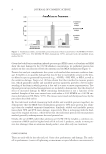
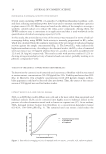
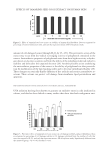
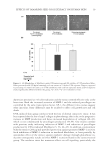
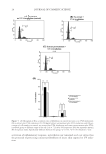
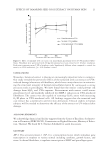
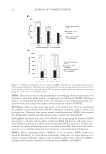
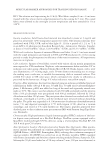
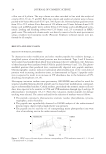
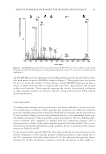
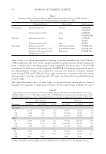
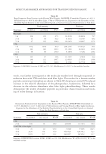
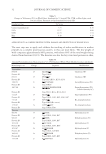
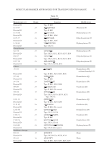
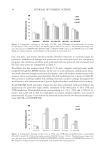
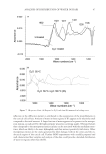
JOURNAL OF COSMETIC SCIENCE 34 hair, and nails, and keratin marker peptides therefore represent an excellent target for proteomic evaluation of damage and protection at the molecular level. For comparison purposes, the yellowness of whole wool irradiated with our protocols was evaluated, and the Y-Z color scores are summarized in Table V. Wool fabric was fi rst irradiated with UVA for 72 h, and a complete redox proteomic profi le compiled through LC-MS/MS analysis. In the case of wool irradiation, modifi cations associ- ated with coloration changes are of particular interest, and so all oxidative modifi cations to the aromatic amino acid residues were identifi ed. The full modifi cation list is shown in Table VI. This proteomic profi ling enabled full profi ling of protein oxidative damage throughout the wool keratins, with characterization of specifi c higher abundance modifi cations for tracking. An ESI-MS/MS-based proteomic evaluation was then performed with and without the application of a protective solgel surface treatment to the wool prior to 48 h UVA and UVB irradiation. Photomodifi cations corresponding to [+O], [+2O], and [+3O] for ty- rosine, and [+O] and [+2O] for tryptophan in keratin marker peptides were tracked proteomically. Figures 3 and 4 show the observed results for the two keratin marker pep- tides, SFGYR and DVEEWYIR. Figure 3. Comparative tracking of the levels of UVA- and UVB-induced modifi cations to tyrosine (Y→[Y+O], [Y+2O], and [Y+3O]) in the marker peptide SFGYR (m/z 629.3). The relative percentage indi- cates the peak area of SFG[Y+O]R, SFG[Y+2O]R, or SFG[Y+3O]R relative to the SFGYR peak area in MS. Triplicate technical repeats were performed, with standard deviation indicated. Figure 4. Comparative tracking of the levels of UVA- and UVB-induced modifi cations to tryptophan (W→[W+O] and [W+2O]) in the marker peptide DVEEWYIR (m/z 1109.6). The relative percentage indi- cates the peak area of DVEEW[W+O]YIR or DVEEW[W+2O]YIR relative to DVEEWYIR peak area in MS. Triplicate technical repeats were performed, with standard deviation indicated.

MOLECULAR MARKER APPROACHES FOR TRACKING REDOX DAMAGE 35 Both wool damage marker peptides, SFGYR and DVEEWYIR, underwent signifi cant photooxidative modifi cation under UVA and UVB irradiation, evidenced by decreases in the abundance of MH+ ions at m/z 629.3 and 1109.6, and corresponding increases in the relative abundance of their oxidized products. The relative increases of SFGY*R Y+O, Y+2O, and Y+3O and of DVEEYW*IR W+O and W+2O provided an indication of the level of specifi c protection conferred by the treatment. Oxidation of the two native marker peptides was minimized in the samples with solgel surface treatment. In addition to demonstrating the UV-protective effect of a silicon-based solgel matrix surface coating for wool at the molecular level, this evaluation validated the utility of marker peptides for characterizing and tracking redox damage and the effects of protec- tive treatments on these factors, even within a complex proteinaceous system. CONCLUSIONS This study has demonstrated and validated the utilization of marker peptides for profi ling and tracking redox modifi cation, as well as evaluating and validating protection or repair treatments. These are two valuable goals for hair and skin research and development. Six marker peptides, fi ve containing tyrosine and one containing tryptophan, were identi- fi ed and validated through the evaluation of light-induced oxidative damage in an en- riched keratin preparation. A full redox proteomic evaluation of UVA photomodifi cation to aromatic residues in whole wool was successfully performed, with mapping of a wide range of modifi cations through the wool proteome. Subsequently, two selected keratin marker peptides, SFGYR and DVEEWYIR, were utilized both to track oxidative modi- fi cation in whole wool through a range of UV irradiation protocols and to demonstrate the UV-protective effect of a prior solgel surface treatment of wool at the molecular level. The utilization of such marker peptides has the potential for a range of cosmetic applications in hair, skin, and nails, in addition to applications tracking redox modifi cation in protein foods and biomaterials. We anticipate that further development of this redox proteomic marker ap- proach will allow more targeted design and evaluation of protection and repair treatments for protein systems, through mapping the type and location of damage at the molecular level. ACKNOWLEDGMENTS We gratefully acknowledge support for this work from Wool Research Inc. (05WRCN03/08WRAG01) and the New Zealand Foundation for Research Science and Technology (C10X0710). REFERENCES (1) D. S. Fudge, T. Winegard, R. H. Ewoldt, D. Beriault, L. Szewciw, and G. H. McKinley, From ultra-soft slime to hard {alpha}-keratins: The many lives of intermediate fi laments, Integr. Comp. Biol., 49, 32–39 (2009). (2) C. Popescu and H. Höcker, “Chapter 4: Cytomechanics of Hair: Basics of the Mechanical Stability,” in International Review of Cell and Molecular Biology, W. J. Kwang. Ed. (Academic Press, London, 2009), pp. 137–156.
Purchased for the exclusive use of nofirst nolast (unknown)
From: SCC Media Library & Resource Center (library.scconline.org)