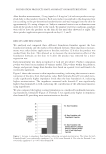
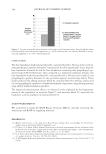
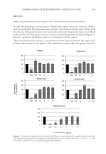
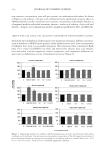
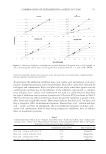
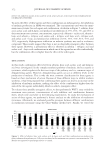
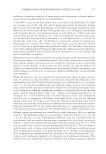
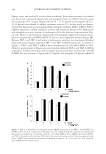
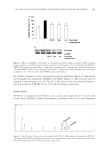
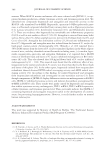
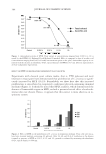
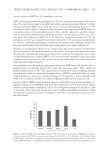
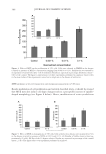
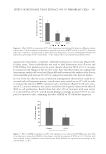
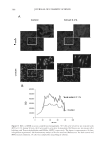
JOURNAL OF COSMETIC SCIENCE 374 results can be due to the fact that there is not always a perfect correspondence between these values because mushroom tyrosinase and human tyrosinase are different in some aspects (7,16). Also, when evaluating melanin synthesis inhibition, we are using cells, which are a more complex system than an in vitro enzymatic assay, and thus other mecha- nisms of action performed by these inhibitors might infl uence in the fi nal melanin con- tent. Arbutin + kojic acid combination exerted an additive effect on melanin inhibition in human melanocytes, as the combination value is higher than both individual values but not enough to produce synergy (33% vs. 27% and 16%). Besides, a slight potentia- tion effect can be seen in the arbutin + α-lipoic acid combination, as there is not inhibi- tion of arbutin at 500 μg/ml, and its combination with α-lipoic acid has a greater effect than the individual inhibition of α-lipoic acid (35% vs. 27%). A similar potentiation effect is observed in the kojic acid + azelaic acid combination, where azelaic acid barely inhibits individually melanin synthesis, but the combination with kojic acid is higher than the individual inhibition by kojic acid (22% vs. 16%). This effect can be explained because arbutin and azelaic acid are probably facilitating α-lipoic acid and kojic acid in- hibition, respectively, and thus increasing the melanin inhibition. Despite the fact that arbutin, kojic acid, azelaic acid, and α-lipoic acid have different inhibition mechanism over tyrosinase and melanin synthesis, it does not seem to be strong enough to produce a synergistic effect on melanin inhibition when combining them. It may be possible that the fact some of them act by themselves at different steps in the melanin pathway makes it diffi cult to cause or to observe a synergistic effect, that is, α-lipoic acid is an inhibitor of tyrosinase and the expression of MITF. To sum up, kinetic analysis on mushroom tyrosinase was done to study the type of inhibi- tion of these agents, and afterward see if differences in this inhibition were able to cause synergistic effects on tyrosinase inhibition and melanin synthesis. Interestingly, kojic acid + α-lipoic acid combination induced a synergistic effect on mushroom tyrosinase, whereas kojic acid + arbutin and kojic acid + azelaic acid combination showed to be antagonistic. When evaluating these combinations on human melanocytes, arbutin + kojic acid had an additive effect on melanin synthesis, and a potentiation effect was observed in the arbutin + α-lipoic acid and kojic acid + azelaic acid combination. However, the most effective com- bination was kojic acid + α-lipoic acid (47% of inhibition on melanin synthesis). Kojic acid + α-lipoic acid might be a good approach as treatment for hyperpigmentation disorders. Further research in this project will include the measurement of human tyrosinase inhibi- tion and the impact on other proteins involved in the melanin pathway by these agents to confi rm that they are acting on different levels of melanogenesis. Besides, it will in- clude the research of other agents that are acting on other steps of melanin synthesis. so it can be combined to produce a synergistic effect and so a greater depigmenting effect. Furthermore, combinations of three or more different inhibitors will be performed. REFERENCES (1) J. P. Ebanks, R. Wickett, and R. Boissy, Mechanisms regulating skin pigmentation: The rise and fall of complexion coloration, Int. J. Mol. Sci., 10, 4066–4087 (2009). (2) J. M. Gillbro and M. J. Olsson, The melanogenesis and mechanisms of skin-lightening agents—existing and new approaches, Int. J. Cosmet. Sci., 33, 210–221 (2011). (3) H. Kim, H. Choi, D. Kim, and K. Park, Topical hypopigmenting agents for pigmentary disorders and their mechanisms of action, Ann. Dermatol., 24, 1–6 (2012).

COMBINATION OF DEPIGMENTING AGENTS IN VITRO 375 (4) K. H. Son and M. Y. Heo, The evaluation of depigmenting effi cacy in the skin for the development of new whitening agents in Korea, Int. J. Cosmet. Sci., 35, 9–18 (2013). (5) A. M. Kligman and I. Willis, A new formula for depigmenting human skin, Arch. Dermatol., 111, 40– 48 (1975). (6) I. Majid, Mometasome-based triple combination therapy in melasma: Is it really safe?, Indian J. Derma- tol., 55, 359–362 (2012). (7) D. McGregor, Hydroquinone: An evaluation of the human risks from its carcinogenic and mutagenic properties, Crit. Rev. Toxicol., 37, 887–914 (2007). (8) T. Chang, An updated review of tyrosinase inhibitors, Int. J. Mol. Sci., 10, 2440–2475 (2009). (9) K. Maeda and M. Fukuda, Arbutin: Mechanism of its depigmenting action in human melanocyte cul- ture, J. Pharmacol. Exp. Ther., 276, 765–769 (1996). (10) S. Parvez, M. Kang, H. Chung, C. Cho, M. Hong, M. Shin, and H. Bae, Survey and mechanism of skin depigmenting and lightening agents, Phytother. Res., 20, 921–934 (2006). (11) Y. Tokiwa, K. Kitagawa, and T. Raku, Enzymatic synthesis of arbutin undecylenic acid ester and its inhibitory effect on mushroom tyrosinase, Biotechnol. Lett., 29, 481–486 (2007). (12) V. Kahn, Effect of kojic acid on the oxidation of DL-DOPA, norepinephrine, and dopamine by mush- room tyrosinase, Pigment Cell Res., 8, 234–240 (1995). (13) A. F. Lajis, M. Hamid, and A. Ariff, Depigmenting effect of kojic acid esters in hyperpigmented B16F1 melanoma cells, J. Biomed. Biotechnol., 1–9 (2012). (14) G. A. Burdock, M. G. Soni, and I. G. Carabin, Evaluation of health aspects of kojic acid in food, Regul. Toxicol. Pharmacol., 33, 80–101 (2001). (15) N. Smit, J. Vicanova, and S. Pavel, The hunt for natural skin whitening agents, Int. J. Mol. Sci., 10, 5326–5349 (2009). (16) L. Lemic-Stojcevic, A. H. Nias, A. S. Breathnach, Effect of azelaic acid on melanoma cells in culture, Exp. Dermatol., 4, 79–81 (1995). (17) K. Tsuji-Naito, T. Hatani, T. Okada, and T. Tehara, Evidence for covalent lipoyl adduction with dopa- quinone following tyrosinase-catalyzed oxidation, Biochem. Biophys. Res. Commun., 343, 15–20 (2006). (18) C. B. Lin, L. Babiarz, F. Liebel, E. R. Price, M. Kizoulis, G. J. Gendimenico, D. E. Fisher, and M. Seiberg, Modulation of microphthalmia-associated transcription factor gene expression alters skin pigmentation, J. Invest. Dermatol., 119, 1330–1340 (2002). (19) K. Park, S. Huh, H. Cho, and D. Kim, Biology of melanogenesis and the search for hypopigmenting agents. Dermatologica Sinica., 28, 53–58 (2010). (20) T. Unno, F. Ito, and Y. M. Sagesaka, Alpha-lipoic acid inhibits melanogenesis in three-dimensional hu- man skin model, Food Sci. Technol. Res., 15, 537–540 (2009). (21) Z. Qiao, Y. Koizumi, M. Zhang, M. Natsui, M. J. Flores, L. Gao, K. Yusa, S. Koyota, and T. Sugiyama, Anti-melanogenesis effect of Glechoma heredacea L. extract on B16 murine melanoma cells, Biosci. Biotech- nol. Biochem., 76, 1877–1883 (2012). (22) M. B Mapunya, R. V. Nikolova, and N. Lall, Melanogenesis and antityrosinase activity of selected South African plants, Evid. Based Complement Alternat. Med., 1, 1–6 (2012). (23) T. C. Chou, Theoretical basis, experimental design, and computerized simulation of synergism and an- tagonism in drug combination studies, Pharmacol. Rev., 58, 621–681 (2006). (24) Y. M. Ha, S. W. Chung, S. Song, H. Lee, H. Suh, and H. Y. Chung, 4-(6-Hydroxy-2-naphthyl)-1, 3-bezendiol: A potent, new tyrosinase inhibitor. Biol. Pharm. Bull., 30, 1711–1715 (2007). (25) N. Seyfi zadeh, S. Mahjoub, and E. Zabihi, Cytoprotective effects of arbutin against tert-butyl hydroperoxide- induced toxicity in Hep-G2 cell line, World Appl. Sci. J., 19, 163–167 (2012). (26) J. Takebayashi, R. Ishii, J. Chen, T. Matsumoto, Y. Ishimi, A. Tai, Reassessment of antioxidant activity of arbutin: Multifaceted evaluation using fi ve antioxidant assay systems. Free Radic. Res., 44, 473–478 (2010). (27) W. Sun, M. Wendt, G. Klebe, and K. Röhm, On the interpretation of tyrosinase inhibition kinetics, J Enzyme Inhib. Med. Chem., 29, 92–99 (2014). (28) S. S. Tai, C. G. Lin, M. H. Wu, T. S. Chang, Evaluation of depigmenting activity by 8-hydroxydaidzein in mouse B16 melanoma cells and human volunteers, Int. J. Mol. Sci., 10, 4257–4266 (2009). (29) S. Lee, S. Cho, Y. Kwon, H. Kwon, and W. Shin, Inhibitory effects of ethanol extracts from nuruk on oxidative stress, melanogenesis, and photo-aging, Mycobiology, 40, 117–123 (2012). (30) F. Solano, S. Briganti, M. Picardo, and G. Ghanem, Hypopigmenting agents: An updated review on biological, chemical and clinical aspects, Pigment Cell Res., 19, 550–571 (2006).
Purchased for the exclusive use of nofirst nolast (unknown)
From: SCC Media Library & Resource Center (library.scconline.org)