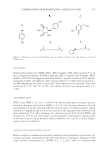
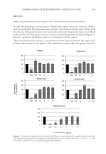
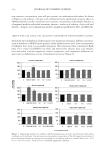
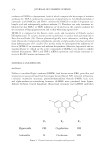
J. Cosmet. Sci., 65, 377–388 (November/December 2014) 377 The mixture of different parts of Nelumbo nucifera and two bioactive components inhibited tyrosinase activity and melanogenesis SU-YOUNG JUNG, WON-SEOK JUNG, HO-KYUNG JUNG, GYEONG-HWAN LEE, JUNG-HEE CHO, HYUN-WOO CHO, and IN-YOUNG CHOI, Clinical Trial Center for Functional Foods, Chonbuk National University Hospital, Jeonju (S.-Y.J.), and Jeonnam Development Institute for Korean Traditional Medicine, Jangheung-gun, Jeonnam 529-851 (W.-S.J., H.-K.J., G.-H.L., J.-H.C., H.-W.C., I.-Y.C.), Republic of Korea. Accepted for publication August 17, 2014. Synopsis Melanin is the pigment responsible for the color of the eyes, hair, and skin in humans. Tyrosinase is well known to be the key enzyme in melanin biosynthesis. JKTM-12 is composed of the fl owers, roots, seeds, and receptacles of Nelumbo nucifera (lotus). In this study, JKTM-12 was investigated for its inhibitory effects on tyrosinase activity and melanin biosynthesis in B16F10 melanoma cells. Moreover, two main bioactive com- pounds (hyperoside and astragalin) were found from the receptacles of N. nucifera, which are used as the main material of JKTM-12. JKTM-12 was shown to inhibit tyrosinase activity and melanin biosynthesis in alpha- melanocyte-stimulating hormone–stimulated B16F10 melanoma cells. Hyperoside and astragalin, which are the main bioactive compounds of JKTM-12, not only inhibited tyrosinase activity and melanogenesis but also tyrosinase-related protein 1 and tyrosinase-related protein 2 mRNA expression without cytotoxicity at various experiment doses (0.1, 1, and 10 μg/ml). These results suggest that JKTM-12 has the potential for skin whitening with hyperoside and astragalin as the main bioactive compounds. INTRODUCTION Melanogenesis is the process primarily responsible for the production of melanin, which is related to the color of the skin and hair, and for its role of protection against ultraviolet radiation. However, excessive accumulation of melanin causes hyperpigmentation such as melisma, post-infl ammatory melanoderma, and solar lentigo, which result in various clinical and cosmetic concerns (1–3). Melanin synthesis is regulated by melanogenic en- zymes including tyrosinase, tyrosinase-related protein 1 (TRP-1), and tyrosinase-related protein 2 (TRP-2) (4,5). Tyrosinase is the rate-limiting enzyme for melanogenesis and catalyzes the hydroxylation of L -tyrosine to 3,4-dihydroxyphenylalanine (DOPA) and the Address all correspondence to In-Young Choi at iychoi@wonkwang.ac.kr.
Purchased for the exclusive use of nofirst nolast (unknown)
From: SCC Media Library & Resource Center (library.scconline.org)