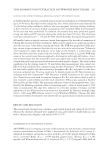
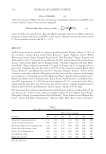
RISK ASSESSMENT OF HEAVY METALS IN COSMETICS IN NIGERIA 235 heated to dryness. Then, 20 ml deionized water was added, stirred, and the mixture was fi ltered. The fi ltrate was made up in a standard volumetric fl ask and lead, cadmium, chro- mium, cobalt, and nickel concentrations were assayed with atomic absorption spectro- photometry at 205 Å. The limit of detection (LOD) for Cd, Cr, As, Hg, Mn, and Ni was 0.001 whereas the LOD of Pb was 0.01 ppm, with blank values reading as 0.00 ppm for all the metals in deionized water with electrical conductivity value of lower than 5 μS/cm. Samples were analyzed in triplicate. The human health risk models including carcinogenic and noncarcinogenic ones raised by USEPA were adopted. These models and their threshold values were employed to as- sess the potential human health risks posed by heavy metal pollution for this study. Hu- man beings could be exposed to heavy metal pollution from cosmetic products via dermal contact with cosmetic particles. The daily dermal exposure to Pb, Cd, Cr, As, Hg, Mn, and Ni was calculated using the equation, according to EPA (16): dermal CS SA AF ABS EF ED CDI BW AT × × × × × ×CF = × , (1) where CDI is chronic daily intake, CS is exposure point concentration: mg/kg (mg/l), EF is exposure frequency: 350 350 days a year, ED is exposure duration: 30a, AT is averaging time for noncarcinogens: 365 × EDd (Exposure Duration dermal), AT is averaging time for carcinogens: 365 × 70 d, BW is body weight : 70 kg, SA is exposed skin area: 5700 cm2, AF is adherence factor: 0.07 mg/cm2, ABS is dermal absorption fraction: 0.03 (As) and 0.001 (other metals), and CF is units conversion factor: 10−6 kg/mg. The risk effect is made up of carcinogenic and noncarcinogenic risk assessments for all the metals through dermal exposure pathway. Cancer risk can be evaluated from the follow- ing formula: Cancer risk = CDE × SF, (2) where cancer risk represents the probability of an individual lifetime health risks from carcinogens CDE is the chronic daily exposure of carcinogens (mg/kg/d) SF is the slope factor of hazardous substances (mg/kg/d), slope factor was calculated using the formula: slope factor = 1/6 (ED10) (16). The total cancer risk due to cadmium, chromium, and arsenic were calculated. The cumulative cancer risk can be calculated from: CDE k k Total cancer risk due to heavy metal SF n k =1 = , (3) where CDEk is the chronic daily intake (mg/kg/d) of substance k (i.e., in a given cos- metic), SFk is the slope factor for substance k (kg/d/mg) (i.e., the sum of the calculated slope factor for the heavy metals detected in a given cosmetic), whereas total cancer risk is “exposure times toxicity” and hazard index (HI) is the “exposure divided by threshold value” where threshold value is the highest safe dose. The sum of all the individual ingre- dient values is then obtained. The acceptable or tolerable risk for regulatory purposes is within the range of 10−6–10−4. The noncarcinogenic risk from individual heavy metal can be expressed as the hazard quotient (HQ):

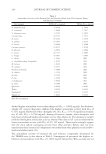
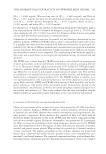
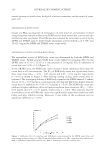
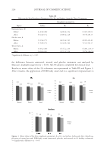
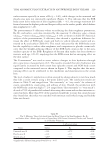
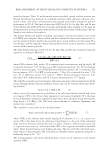
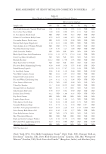
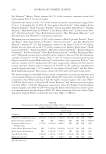
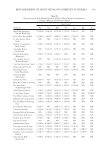
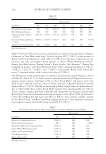
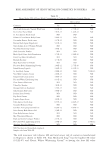
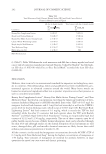
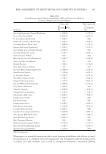
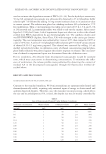
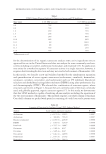
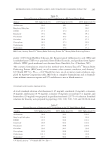
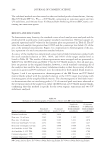
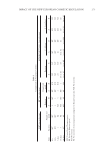
JOURNAL OF COSMETIC SCIENCE 236 HQ = CDE/RFD, (4) where the noncancer HQ is the ratio of exposure to hazardous substances and RFD is the chronic reference dose of the toxicant (mg/kg/d). CDE k k Hazard index due to heavy metals RFD n k =1 = , (5) where the HI is the sum of more than one HQ for multiple substances, CDEk is the daily exposure of heavy metal (k), and RFDk is the chronic reference dose for the heavy metal k. The acceptable value for the HI is 1 (17). RESULTS Table I shows the heavy metals in cosmetics manufactured in Nigeria. About 57.14% of the cosmetics, namely Royal Gold Cortex Remover® (Lagos, Nigeria), Classic White Whitening Cream® (Lagos, Nigeria), Royal Acrylic Nail Dissolver® (Lagos, Nigeria), and Ballin Glycerin Oil® contained no lead whereas 42.86% namely Beauty Fair Complexion Lotion®, Beauty Fair Multi-Active Toning Cream® (Onitsha, Nigeria), and Tura Medi- cated Soap® (Lagos, Nigeria) contained 0.13 mg/l, 0.28 mg/l, and 1.32 mg/kg lead, re- spectively. Cadmium was not detected in 28.57% of the cosmetics namely Royal Gold Cortex Remover® and Ballin Glycerin Oil® (Onitsha, Nigeria) whereas 71.43% of the cosmetics contained cadmium. Manganese was detected in all the cosmetics with highest concentration (1.49 mg/kg) seen in Tura Medicated Soap®. Royal Gold Cortex Remover®, Beauty Fair Multi-Active Toning Cream, Royal Acrylic Nail Dissolver®, and Ballin Glyc- erin Oil® representing 57.14% had no nickel whereas 28.57% contained nickel. Chro- mium and mercury were not detected in any of the cosmetic samples manufactured in Nigeria. Royal Gold Cortex Remover® had an arsenic content of 0.002 mg/l. The heavy metals in cosmetics manufactured outside Nigeria is shown in Table II. Lead was not detected in 31.43% of the cosmetics samples namely St. Ives Apricot Facial Scrub® (Hangzhou, China), Cucumber Extract Facial Cleanser®, Chris Adams Active Woman Per- fume®, Fruity Lip Balm (Strawberry)® (Jackson, MS), Mary Kay Crème-to-Powder® Table I Heavy Metals in Cosmetic Manufactured in Nigeria Cosmetic Metal content (mg/kg) Pb Cd Mn Ni Cr Hg As Beauty Fair Complexion Lotion 0.13 0.06 0.90 0.13 ND ND ND Royal Gold Cortex Remover ND ND 1.28 ND ND ND 0.002 Beauty Fair Multi-Active Toning Cream 0.28 0.03 0.76 ND ND ND ND Classic White Whitening Cream ND 0.01 0.36 0.42 ND ND ND Royal Acrylic Nail Remover ND 0.04 0.50 ND ND ND ND Tura Medicated Soap 1.32 0.58 1.49 4.53 ND ND ND Ballin Glycerin Oil ND ND 0.52 ND ND ND ND ND: Not detected.
Purchased for the exclusive use of nofirst nolast (unknown)
From: SCC Media Library & Resource Center (library.scconline.org)