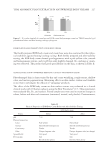
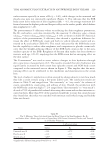
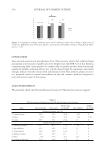
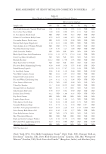
THAI AROMATIC PLANT EXTRACTS IN ANTIWRINKLE BODY CREAMS 223 CLINICAL EVALUATION OF WRINKLE-REDUCING CAPACITY OF EOB BODY CREAM A double-blinded, placebo-controlled clinical study was performed on 29 healthy females aged 20–60 years. All subjects were allergy free for 1 week and had not used steroids for 4 weeks before study enrollment. Subjects who were pregnant, lactating, dieting, smoking, or have a history of excessive alcohol consumption were excluded. Other skin treatments on the test area were prohibited. In addition, the treated areas were protected against strong sun light and UV exposure during the study that lasted 28 days. The treatment room was controlled at 25° ± 1°C and 40–60% relative humidity during the measurements. All enrolled subjects signed a written consent form approved by the ethical committee of Chiang Mai University before enrollment. Subjects were asked not to apply any products onto the test areas 3 days before starting the study. The EOB was proposed for body mas- sage creams in spa treatments, therefore the test area was on the volar forearm. Volunteers were requested to apply the products twice daily on the forearm, 2 inches below and above the elbow and wrist, respectively, for 4 weeks. Approximately 0.2 g of the EOB body cream or the control cream base was applied to the forearms with right–left balance. A por- tion of each forearm was left untreated to serve as an additional control. The test areas were cleaned with mild soap and rinsed with water and towel wiped to dryness. The subjects then equilibrated in the waiting room for 30 min before skin measurements were carried out. Effects on skin condition were evaluated using the Skin Visiometer® SV 600 for analysis of the skin surface profi le with three parameters [roughness (Ra, Rz) and surface] at the three test sites (untreated site, N active-cream site, A placebo-cream site, B). Skin moisture was evaluated with the Corneometer® (CK Electronic GmbH, Germany) at the same tested sites. Paired t-tests were used to examine changes in Ra, Rz, and surface values as well as skin moisture content (before and after each treatment). Effi cacy was assessed at baseline (D0) and for 28 days (D28). The percentage effi ciency values of all parameters were calcu- lated by the following equation: (value at measuring point − value at initial point) × 100/ value at initial point. The data were subjected to a two-way analysis of variance and the signifi cance of the differences between means was determined by Duncan’s multiple range test (p 0.05) using SPSS software version 17.0. for Windows (SPSS Inc., Chicago, IL). After testing was fi nished, all volunteers were asked to fi ll out a questionnaire on product satisfaction. RESULTS AND DISCUSSION The essential oils obtained were colorless to pale yellow liquids and yielded 0.16–0.87%, whereas the absolutes obtained were slightly viscous, pale yellow to dark brown in color with a characteristic fragrance and yielded 0.06–0.47%. DETERMINATION OF ANTIOXIDANT ACTIVITIES The DPPH radical scavenging activities of the essential oils and absolutes compared with reference antioxidants are shown in Table I. For essential oils, holy basil oil (O. sanctum L.) exhibited the highest antioxidant activity with IC50 of 0.6294 mg/ml followed by Phlai oil (Z. cassumunar Roxb., IC50 = 1.0599 mg/ml), ginger oil (Z. offi cinale, IC50 = 4.385 mg/ml), and Wan-sao-long root oil (A. uliginosum, IC50 = 5.2725 mg/ml). Holy basil oil

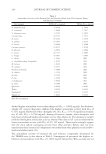
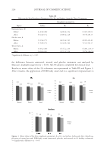
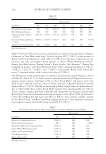
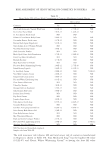
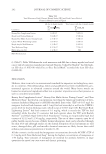
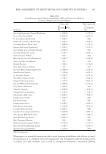
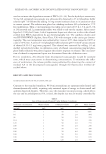
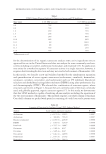
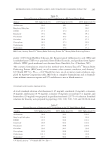
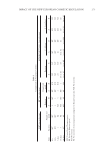
JOURNAL OF COSMETIC SCIENCE 224 showed higher antioxidant activity than thyme oil (IC50 = 1.0002 mg/ml). For absolutes, saraphi (M. siamensis Kosterm.) exhibited the highest antioxidant activity with IC50 of 0.3271 mg/ml followed by white chempaka (M. alba, IC50 = 0.7155 mg/ml) and temple tree (P. alba, IC50 = 1.0766 mg/ml). Among all extracts, saraphi, white chempaka, and holy basil oil showed higher antioxidant activity than thyme oil. The absolute of saraphi exhibited the highest antioxidant activity, whereas Phai-dam oil (Z. ottensii) exhibited the lowest antioxidant activity with IC50 of 30.1142 mg/ml. These results strongly suggest that the main radical scavenging activity from these aromatic fl owers does not arise merely from their essential oil components but rather from other phenolics such as fl avo- noids and anthocyanins (11). The antioxidant activity of essential oils and reference compounds determined by the TBARS assay is also shown in Table I. Lemongrass oil presented the highest in- hibition of peroxidation with IC50 of 1.0665 mg/ml followed by Wan-sao-long leaf oil Table I Antioxidant Activities of the Essential Oils and Absolutes From Some Thai Aromatic Plants and Reference Standards Test samples DPPH (IC50, mg/ml) TBARs (IC50, mg/ml) A. uliginosum, leaf 6.9438 1.4000 Z. cassumunar 1.0599 1.7017 A. uliginosum, root 5.2725 1.4814 Curcuma longa 24.1751 1.7071 Z. ottensis 30.1142 2.1419 A. galanga 24.7664 2.5125 O. sanctum 0.6294 1.9388 Curcuma aromatica 24.6113 1.9158 Z. offi cinale 4.3852 2.1094 C. citratus 26.7727 1.0665 C. mangga 26.1832 2.2993 C. odorata 1.4264 ND A. salviifolium subsp. hexapetalum 1.6765 ND M. hortensis 1.6139 ND M. siamensis 0.3271 ND Gardenia jasminoides 5.3689 ND A. scholaris 3.1725 ND M. alba 0.7155 ND P. alba 1.0766 ND S. thaipingensis 5.9394 ND Q. indica 8.1580 ND Quercetin 0.0059 0.0383 Trolox 0.0105 0.4014 Kaempferol 0.0113 0.1212 Thyme oil 1.0002 0.2303 ND: Not determined.
Purchased for the exclusive use of nofirst nolast (unknown)
From: SCC Media Library & Resource Center (library.scconline.org)