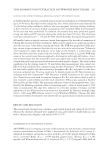
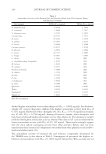
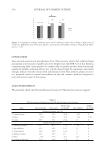
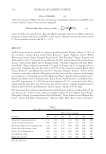
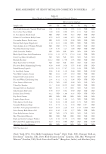
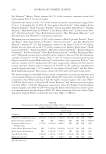
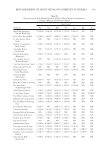
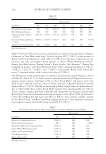
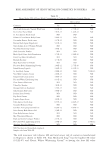
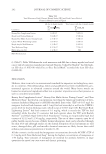
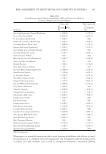
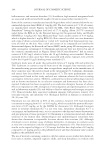
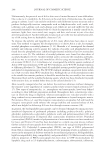
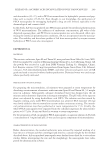
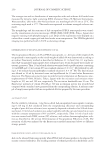
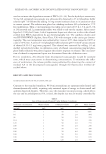
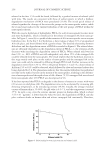
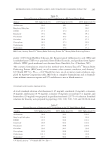
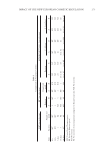
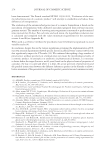
Table I Comparaison of Acceptance Criteria Time USP1(log reduction) EP2(log reduction) AFNOR NF T75-611 (log reduction) Bacteria Fungal and mold Bacteria Fungal and mold Bacteria C. albicans A. brasiliensis A B A B A B A B A B 6 h NT3 NT 2 NT NT NT NT NT NT NT NT NT 24 h NT NT 3 1 NT NT NT NT NT NT NT NT 7 days 1 NI NT 3 2 NT ≥ 3 NT ≥ 1 NT NT NT 14 days 3 NI NT NT NT 1 ≥3 et NI ≥3 ≥1et NI ≥1 ≥0 ≥0 28 days NI 4 NI NR5 NI NI NI ≥3 et NI ≥3 et NI ≥ et NI ≥1 et NI ≥1 et NI ≥0 et NI USP: United State Pharmacopoeia EP: European Pharmacopoeia NT: Not tested NI: No increase of microorganisms compared to the previous time NR: No recovery. IMPACT OF THE NEW EUROPEAN COSMETIC REGULATION 273

JOURNAL OF COSMETIC SCIENCE 274 been demonstrated. The French standard NF ISO 11930:2012, “Evaluation of the anti- microbial protection of a cosmetic product” will attempt to standardize and reduce these differences of interpretation: The evaluation of the antimicrobial protection of a cosmetic formulation is based on the inoculation of formulation with calibrated inoculum (prepared from relevant microor- ganisms strains). The number of surviving microorganisms is measured at predetermined time intervals for 28 days. For each time and each strain, the logarithmic reduction rate is calculated and compared with the values minimum requirements for the assessment criteria A and B (see Appendix B). When used as a reference method, the procedures must be followed scrupulously to avoid variable results (4). In conclusion, despite bias in the various regulations governing the implementation of CT, our own research departments showed specifi c factors as pH and water content (aw) factors that signifi cantly impact the CT results (14). We confi rmed that spiking a large number of preservatives without specifi city in a formula does not ensure the microbiological safety of a cosmetic product. As antiseptics or antibiotics in pharmaceutical domain, it is necessary to better defi ne the target (bacteria, mold, yeast) based on the physicochemical properties of a product, the way it is used and where it is kept, the action spectrum of preservatives and the possible interactions between the different substances present in the formula to allow a better assessment of the preservative system for product preservation and consumer security. REFERENCES (1) AFSSAPS, Produits cosmétiques (COS) [online] consulted 02/05/2011. (2) M.D. Lundov, J.D. Johansen, C. Zachariaz, and L. Moesby, Low-level effi cacy of cosmetic preservatives, Int J Cosmet Sci, 33, 190–196 (2011). (3) Intertek France, Santé and Beauté Analyse Microbiologique des Produits Cosmétiques, challenge test, Intertek Group plc (2010). (4) Afnor, norme NF T75-611 Cosmétiques, Microbiologie, Evaluation de la protection antimicrobienne d’un produit cosmétique, (2007). (5) Fuursted K., Hjort A., and Knudsen L., Evaluation of bactericidal activity and lag of regrowth (postantibi- otic effect) of fi ve antiseptics on nine bacterial pathogens, J Antimicrob Chemother., 40, 221–226 (1997). (6) Alexander Müller, Schülke and Mayr GmbH, Preservatives in cosmetic products, ECORE European Cosmetic Regulation Seminars, Germany (2011). (7) Krebs Hans A., Wiggins D., and Stubb M., Studies on the mechanism of the antifungal action of benzo- ate, Biochen J., 214, 657–663 (1983). (8) Azza Deeb M.M., and H.F. Ahmed, Effect of potassium sorbate and/or probiotic bacteria on spoilage bacteria during cold storage of soft cheese, Global Veterinaria, 4, 483–488. (9) Berger F.M., Hubbard C.V., and Ludwig B.J., The antimicrobial action of certain glycerol ethers and related compounds, Appl Microbiol., 1, 146–149 (1953). (10) Kinnunen T. and Koskela M., Antibacterial and antifungal properties of propylene glycol, hexylene glycol and 1,3-butylene glycol in-vitro, Acat Derm Venereoll., 2, 148–50 (1991). (11) Shepherd J. A., Waigh R.D., and Gilbert P., Antibacterial action of 2-bromo-2-nitropropane-1,3-diol (bronopol), Antimicrob Agents Chemother., 32, 1693–1698 (1988). (12) Cashman A.L. and Warshaw E.M., Parabens: A review of epidemiology, structure, allergenicity and hormonal properties, Dermattits., 16, 1–10 (2005). (13) M.D. Lundov, J.D. Johansen, C. Zachariaz, and L. Moesby, Low-level effi cacy of cosmetic preservatives, Int J Cosmet Sci., 33, 190–196 (2011). (14) H. Berthele, O. Sella, M. Lavarde, C. Mielcarek, A.M. Pense-Lheritier, and S. Pirnay, Determination of the infl uence of factors (ethanol, pH and Aw ) on the preservation of cosmetics using experimental de- sign, Int J Cosmet Sci., (2013). (Epub ahead of print.)
Purchased for the exclusive use of nofirst nolast (unknown)
From: SCC Media Library & Resource Center (library.scconline.org)