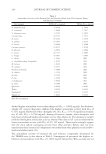
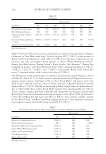
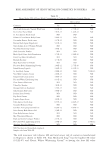
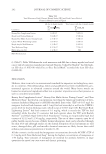
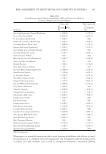
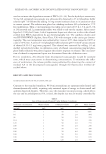
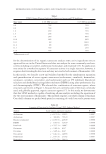
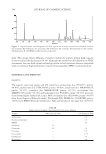
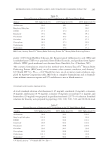
RELEASE OF L-ASCORBIC ACID ENCAPSULATED IN POLY NANOCAPSULES 251 used to estimate the degradation extent of PECA (32–34). For the hydrolysis extent test, 50 mg AA entrapped nanocapsules was ultrasonically dispersed to 25 ml phosphate buffer solution (pH 7.0) followed by adding 3.6 mg enzyme esterase (closes to its saturation value in current system). The solution was placed in a shaking incubator (60 cycles/min) at 37°C for equilibration. Then a 4 ml suspension was taken out at times of 0.5 h, 1.5 h, and 3–9 h at 2-h intervals and 2 g ammonium sulfate was added to salt out the enzyme. After centri- fuged at 12,300g for 10 min, 3 ml of supernatant liquor was taken out to detect the ethanol yielded from PECA degradation by gas chromatography test. The capillary column used was HP-INNOWAX (Agilent, Santa Clara, CA) with nitrogen as the carrier gas chroma- tography. The oven temperature was isothermal for 3 min at 30°C, then ramped to 180°C at a rate of 10°C/min. A series of 5 ml phosphate buffer solutions (pH 7.0) with various amount of ethanol (0.25–2.5 mg) were prepared. The ethanol was extracted by adding 1.0 ml methyl tertiary-butyl ether. A calibration curve of ethanol concentration (mg/ml phos- phate buffer solution) was plotted against the relative response to ethanol. The concentra- tion of ethanol in supernatant liquor was determined from the calibration curve. For its instability, AA released from decomposed nanocapsules would be oxidized soon, which may cause errors in determining concentration. To minimize the infl u- ence of oxidization, the release profi les were performed by detecting the content of residual AA in the decomposed nanocapsules through the fl uorescence method de- scribed above. RESULTS AND DISCUSSION CHARACTERIZATION OF PECA NANOCAPSULES Contrary to the standard emulsion, W/O microemulsions are spontaneously formed and thermodynamically stable, requiring only minimal input of energy to obtain small and uniform dispersed droplets. Therefore, once the monomer inventory rating, which affects the size and its polydispersity (30), is fi xed, the droplet size may be mainly controlled by Table I Size of Nanocapsules Prepared Under Different Conditions Surfactant concentration Water volume n-Hexane volume pH Mean diameter (mg/ml) (ml) (ml) (nm) 72 1 50 2.0 1081 84 1 50 2.0 984 96 1 50 2.0 570 114 1 50 2.0 316 120 1 50 2.0 733 108 1 50 2.0 256 108 1 50 3.0 380 108 1 50 4.0 450 108 1 50 5.0 910 108 1 100 2.0 670 108 1 120 2.0 753

JOURNAL OF COSMETIC SCIENCE 252 three variables including the surfactant concentration, pH value of the dispersed aqueous phase, and the aqueous fraction of the microemulsion. The mean diameters of the empty PECA nanocapsules prepared under different conditions are listed in Table I. As shown in Table I, a signifi cant decrease in particle diameter from 1081 nm to 256 nm could be observed when the surfactant concentration was increased from 72 to 108 mg/ml at pH 2.0, ECA 20 mg, and W/O 1/50 (v/v). At low surfactant concentration, when the amount of oil and aqueous phases are fi xed, the surfactants trend to form large emul- sifi ed droplets with smaller total surface area to ensure that there are suffi cient surfactants adsorbed on the oil–water interface for emulsifi cation. As a result, polymeric particles with large size are formed. Increasing the surfactant concentration in a certain range, the number of emulsifi ed droplets increases whereas the size decreases, resulting in small polymeric nanocapsules. When the surfactant concentration increased to 108 mg/ml, the smallest nanocapsules with about a 256 nm diameter were obtained. However, large particles emerged again by further increasing the surfactant concentration more than 108 mg/ml. It’s well known, above the critical micelle concentration, increasing surfac- tant concentration not only varies the morphology of emulsifi ed particles from spherical micelles to cubic, hexagonal, and even lamellar phase, but also increases the aggregation number, accompanied with the size expanding. The volume expansion of the emulsifi ed particles fi nally gives rise to a rapid increase in polymeric particle size. The effects of original pH value of the dispersed aqueous phase on the particle size are also shown in Table I. The surfactant concentration and W/O ratio were maintained at 108 mg/ml and 1/50 (v/v), respectively. Raising original pH value of dispersed aqueous phase from 2.0 to 5.0 brought about a fi ve times increase in size and formed large particles with diameter of 910 nm. PECAs were prepared based on anionic polymerization mechanism, which was initiated by nucleophilic attack on β carbon of the monomer resulting in a reactive carbanion. The reaction is initiated by hydroxyl ions and terminated by protons (35–37). Therefore, at higher pH of the dispersed aqueous phase, more hydroxyl ions are generated to encourage the chain initiation. Meanwhile, the lowered proton concentra- tion at higher pH reduces the probability of chain termination. As a result, the polymers with higher molecular weight were produced, leading to the thickening of the capsule wall. Because the size of the aqueous core in capsule was fi xed, the size of the whole par- ticle was then correspondingly increased. The investigation on current system shows that the original low pH value of dispersed aqueous phase is more suitable for preparing small-sized nanocapsules. Another variable effect on the particle size is the aqueous fraction in the system. The re- sults listed in Table I show that the particle size decreased from 753 to 256 nm as the W/O volume ratio varied from 1/120 to 1/50 with constant surfactant concentration at pH 2.0, indicating a size decrease with increasing aqueous fraction. This is in agreement with Reference 30 in which the same surfactant mix with different weight fraction was applied (30). The larger fraction of aqueous media was used, the smaller capsules could be formed. Increasing water fraction would form more emulsifi ed droplets (38) and decrease the mass of available monomer per unit interfacial area, resulting in nanocapsules with a thinner polymer wall and hence a smaller size. According to the above discussion, the optimized polymerization condition for prepar- ing the particle with minimal size was determined at pH = 2.0, W/O = 1/50 (v/v), and 108 mg/ml surfactant mix.
Purchased for the exclusive use of nofirst nolast (unknown)
From: SCC Media Library & Resource Center (library.scconline.org)