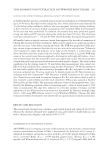
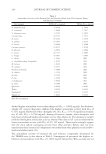
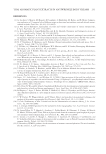
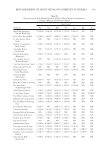
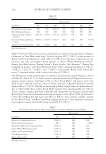
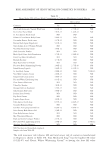
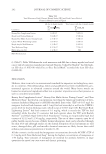
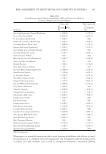
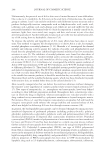
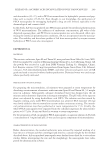
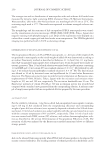
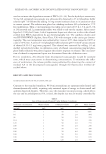
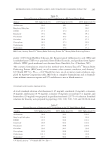
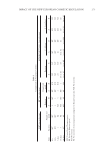
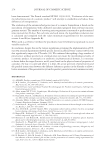
RISK ASSESSMENT OF HEAVY METALS IN COSMETICS IN NIGERIA 243 Table VIII Total Noncancer Risk [Chronic Hazard Index (HI)] and Total Cancer Risk of Cosmetics Manufactured Outside Nigeria Cosmetics Chronic HI CDE k RFDk n k =1 Total cancer risk CDE k k SF n k =1 Fem Tight Antiseptic Vaginal Wash Soap 2.40E-08 2.37E-11 Face to Face Facial Mask 8.86E-09 4.40E-12 St. Ives Apricot Facial Scrub 1.36E-07 ND Palmer’s Cocoa Butter Body Cream 1.49E-07 2.60E-13 Cucumber Extract Facial toner 7.98E-08 1.17E-12 Fantasy Body Spray (Rapsberry) 1.59E-07 5.21E-13 Chris Adams Active Woman Perfume 4.45E-08 ND Veet Hair Removing Cream 7.51E-07 3.90E-12 Sleek Concealer Powder ND ND Black Opal Crème Stick Foundation 3.59E-07 2.29E-10 Fruity Lip Balm (Strawberry) ND ND Baolishi Eyeliner 7.78E-07 4.77E-09 Mary Kay Crème-to-Powder ND ND Far Away Body Shimmering Powder 6.54E-08 2.23E-10 Island Beauty Lipstick 7.15E-08 5.95E-11 St. Ives Body Cream 2.79E-07 4.17E-12 Vovi Milk Complex Cream 2.37E-07 2.60E-13 Empire Fade Cream Lotion 1.23E-07 3.90E-13 Fair and White Exfoliating Soap 1.08E-06 9.37E-12 Clear Essence Maxi-tone 2.18E-07 ND Ushas Eye Shadow 3.93E-06 7.81E-13 Bouquet Roll-on Deodorant 3.01E-07 1.30E-13 Sally Hansen Nail Color 1.60E-07 3.90E-13 Jordana Loose Powder 1.16E-07 ND Pop Facial Cream ND ND Jennifer Lopez Secret 5.02E-07 4.95E-11 Eden Apricot Scrub Soap 3.15E-08 2.47E-11 Crusader Medicated Soap 8.68E-07 ND Lentheric Anti-perspirant Roll-on 3.06E-08 3.04E-11 Swiss Luxury Bath Shower Gel 4.48E-07 3.38E-12 Dove Body Fairness Lotion 2.08E-07 ND Mac Waterproof Mascara ND ND Dark and Lovely Compact Powder 5.03E-06 2.47E-12 Bio Claire Body Lightening Lotion 2.27E-07 4.17E-12 Absolute Juicy Lip Shimmer 1.12E-07 ND ND: Not detected. Manganese is a powerful neurotoxin that causes learning disabilities and defi cits in intel- lectual function in children (20) and manganism and manganese-induced parkinsonism in adults (21) and children (22) as well as compulsive behaviors, emotional lability,

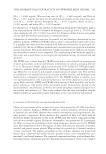
JOURNAL OF COSMETIC SCIENCE 244 hallucinations, and attention disorders (23). In addition, high maternal manganese levels are associated with low fetal birth weight (24) and increased infant mortality (25). Some of the cosmetics manufactured outside Nigeria have nickel contents below the rec- ommended exposure limit (REL) of 1 mg/kg (26). The lead content in 37.14% of cosmet- ics manufactured outside Nigeria exceeded the REL, with Black Opal Crème Stick Foundation® having the highest lead level of 17.34 mg/kg. About 28.57% contained nickel below the REL set by the National Institute for Occupational Safety and Health (NIOSH) as 1 mg/kg (26). Tura Medicated Soap® had a nickel content of 4.53 mg/kg, which is higher than the 1 mg/kg REL (26). Skin contact by nickel can cause dermatitis and a type of chronic eczema known as “nickel itch” resulting from hypersensitivity reac- tions of nickel on the skin. Also, nickel and certain of its compounds are listed by the International Agency for Research on Cancer (IARC) under group 2B carcinogens as pos- sibly carcinogenic to humans (13). Chromium and mercury were not detected in any of the cosmetics manufactured in Nigeria. Royal Gold Cortex Remover® had an arsenic content of 0.002 mg/l, which is below the 10 μg/l drinking water standard. However, increased levels of skin cancer have been associated with arsenic exposure, even at levels below the 10 ppb (10 μg/l) drinking water standards (27). Cadmium levels were all under the permissible limits of 3 mg/kg (26) and within the TLV. Cadmium in cosmetics may be from one of the inorganic base materials used in the manufacturing process rather than as ingredients employed in the manufacture of these cosmetics since the metal is found in the environment (5). Cadmium, chromium, and arsenic have been shown to be carcinogenic (17). The most predominant cancer- causing metal found in this study analyzed was cadmium whereas the least occurring carcinogenic metal was arsenic. Hitherto, cadmium has no known physiologic function and no known mechanism for its selective transport and homeostasis has been docu- mented. Cadmium has been recognized as an endocrine disruptor because of adverse effects on reproduction (28), disruption of steroidogenesis and spermatogenesis in vivo and in laboratory animals (29), and ability to bind to androgen and estrogen receptors (30). Clinical studies have associated cadmium exposure with prostate toxicity (31), testicular toxicity, and infertility (32). Biological half-life in humans is estimated at 20–30 years (14). Chromium was not detected in 80% of the cosmetics, however 20% had chromium concentration ranging from 0.11 to 9.81 mg/kg, which exceeded the permissible expo- sure limit of 0.05 mg/kg, set by the NIOSH for chromium (33). Although chromium metal or trivalent chromium (Cr3+) is not very toxic, hexavalent chromium (Cr6+) is carcinogenic and moderately toxic as it is corrosive to the skin and causes denaturation and precipitation of tissue proteins (14). Chromium is a transition metal and a known sensitizer of the human skin. Dermatological and epidemiological researchers have shown that chromium is responsible for most adverse skin reactions (34). Although chromium is not a primary cause of allergic dermatitis, its presence in cosmetics even at very low concentration could be of pathological importance (35). Our observation is similar to the report by Hepp et al. (36) except lead that has a high value of 42 mg/kg compared to 14 mg/kg given in the published article and that chromium value is much higher in the published article. The use of mercury-containing cosmetics calls for caution as case studies have shown ef- fects such as tremors, impaired cognitive skills, and sleep disturbance in workers with
Purchased for the exclusive use of nofirst nolast (unknown)
From: SCC Media Library & Resource Center (library.scconline.org)