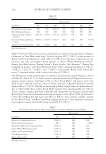
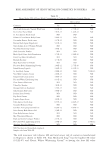
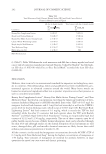
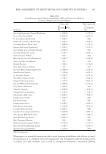
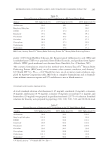
THAI AROMATIC PLANT EXTRACTS IN ANTIWRINKLE BODY CREAMS 225 (IC50 = 1.4000 mg/ml), Wan-sao-long root oil (IC50 = 1.4814 mg/ml), and Phlai oil (IC50 = 1.7017 mg/ml), but all of the oils exhibited antioxidant activity lower than quer- cetin (IC50 = 0.0383 mg/ml), kaempferol (IC50 = 0.1212 mg/ml), thyme oil (IC50 = 0.2303 mg/ml), and trolox (IC50 = 0.4014 mg/ml). For absolutes, at 15 mg/ml, the absolute of dwarf ylang-ylang showed the highest inhibi- tion of peroxidation (58.81%) followed by Rangoon creeper (Q. indica L., 58.16%) and white champaka (M. alba, 53.46%), but all of the absolutes exhibited lower antioxidant activity than the reference antioxidants as mentioned above. Comparison of antioxidant capacities of essential oils and absolutes determined by two different methods, DPPH and TBARS, did not show a relationship between the results. It is possible that these activities resulted from different mechanisms. As previously de- scribed (2,12), the use of different methods and concentrations is necessary in antioxidant activity assessment. This study shows that a single assay may not be suffi cient to estimate the antioxidant activity of a test compound. The combination of two methods, applied in this study, was a good choice to investigate the antioxidant activity of essential oils and absolutes. The DPPH assay is faster than the TBARS assay and it can be helpful for investigation of novel antioxidants to obtain preliminary information on radical scavenging abilities (13,14). This assay is simple, rapid, and needs only a UV–visible (UV-VIS) spectropho- tometer to perform, which probably explains its widespread use in antioxidant screen- ing. Moreover it is sensitive and requires a small amount of sample (12). This method is considered to be mainly based on an electron transfer reaction, and hydrogen atom abstraction is a marginal reaction pathway (15). The TBARS method is sensitive to in vitro lipid peroxidation (16). Lipid peroxidation is one of the important causes of skin aging. Both methods, DPPH and TBARS allow testing of both lipophilic and hydro- philic substances. The results of the antioxidant power measurement depend on the chosen method, concentration, as well as the nature and physicochemical properties of the studied antioxidants (12). This study confi rms that the same antioxidant samples exhibited different antioxidant values depending on the concentration and method. GC ANALYSIS OF THE ESSENTIAL OILS AND FLOWER ABSOLUTES Chemical constituents of the essential oil were characterized by GC-MS with direct injection, whereas headspace-SPME-GC-MS was used for absolutes. Chemical groups of essential oils and fl ower absolute were mostly monoterpenes and sesquiterpenes. Be- sides aromatic components, fl ower absolutes also consisted of fatty acid. Holy basil oil showed the highest antioxidant activity in the DPPH assay. The volatile components of holy basil oil were methyl eugenol, β-elemene, α-humulene, and germacrene D. Lemongrass oil, Wan-sao-long oil, and absolute from ylang-ylang gave potent activity for TBARS assay. The components found in lemongrass oil were citral, myrcene, limonene, citronellal, geraniol, and geranyl acetate, whereas Wan-sao-long oil consisted of p-(1-butenyl) anisole as a major constituent. The highest antioxidant activity of fl ower absolutes was found with ylang-ylang, composed of p-methyl anisole, geranyl acetate, trans-caryophyllene, ger- macrene D, and benzyl benzoate. The terpenoid compounds and fatty acids in fl ower abso- lutes may promote antioxidant activities. Essential oils and aromatic extracts are complex

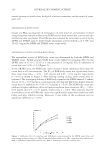
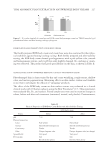
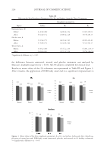
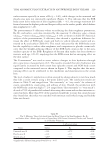
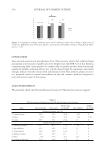
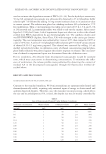
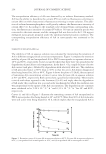
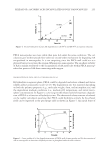
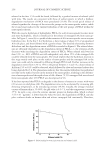
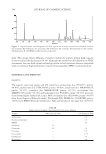
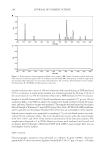
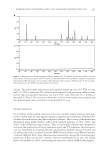
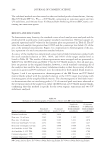
JOURNAL OF COSMETIC SCIENCE 226 natural mixture in which their biological activities sometimes are the result of syner- gism (12). ANTIOXIDANT ACTIVITY OF EOB Ginger oil, Wan-sao-long leaf oil, lemongrass oil, holy basil oil, and absolute of dwarf ylang-ylang were selected to blend into EOB based on their antioxidant activity and odor satisfaction (data not shown). The EOB was also evaluated for antioxidant activity by the DPPH and TBARS assay. It showed high antioxidant activity with IC50 of 6.3487 and 10.9215 mg/ml by DPPH and TBARS assays, respectively. ANTIOXIDANT ACTIVITY OF THE EOB BODY CREAM The antioxidant activity of EOB body cream was determined by both the DPPH and TBARS assays. Freshly prepared EOB body cream exhibited scavenging effect by the DPPH assay of 43.30 ± 1.61% at a concentration of 20 mg/ml. The % inhibition of cream base was 33.06 ± 1.14 (Figure 1). In the TBARS assay, the EOB body cream showed a better inhibitory effect than the cream base at all concentrations. The IC50 of EOB body cream was signifi cantly lower than cream base (IC50 = 4.24 ± 0.05 mg/ml and 4.93 ± 0.04 mg/ml, respectively, p 0.05) as shown in Figure 2. After heating-cooling cycling, both creams were re- evaluated. The scavenging abilities of EOB body cream for the DPPH showed % inhibi- tion of 41.52 ± 2.67 mg/ml at a concentration of 20 mg/ml, which was higher than the cream base (% inhibition of 35.56 ± 0.52 mg/ml, p 0.05). The EOB body cream also exhibited a higher inhibitory effect on lipid peroxidation than cream base (IC50 = 3.98 ± 0.05 mg/ml and 4.71 ± 0.27 mg/ml, respectively, p 0.05). This indicates that the antioxidant activity of EOB body cream was signifi cantly higher than cream base both before and after stability testing. Moreover, it was stable in the accelerated test (no signifi cant difference, p 0.05). Figure 1. Inhibitory effect of cream base and EOB body cream measured by the DPPH assay, before and after heating-cooling cycling test. (CB1: Cream base before stability test, CB2: cream base after stability test, BMC1: EOB body cream before stability test, BMC2: EOB body cream after stability test).
Purchased for the exclusive use of nofirst nolast (unknown)
From: SCC Media Library & Resource Center (library.scconline.org)