RELEASE OF L-ASCORBIC ACID ENCAPSULATED IN POLY NANOCAPSULES 249 and doxorubicin (25–27), and in W/O microemulsions for hydrophilic proteins and pep- tides such as insulin (23,28–30). Even though, to our knowledge, the applications of PECA nanocapsules for entrapping hydrophilic drug are still limited, especially in the dermatological and cosmetic fi eld. In this work, AA was encapsulated into PECA nanocapsules by interfacial polymerization of W/O microemulsions. The infl uences of surfactants concentration, pH value of the dispersed aqueous phase, and W/O ratio on nanocapsules size were discussed. After opti- mizing the interfacial polymerization conditions, AA was incorporated into the nanocap- sules. The stability and the release profi les of AA from nanocapsules by enzyme esterase hydrolysis of PECA were also investigated. EXPERIMENTAL MATERIALS The nonionic surfactants, Span 80 and Tween 80, were purchased from Fluka (St. Louis, MO). ECA was supplied by courtesy of Zhejiang Jinpeng Chemical Co., Ltd. (Zhejiang, China). AA dry powder was received as a gift from DSM Vitamins Trading Co. (Shanghai, China), Ltd. Enzyme esterase (10 U/mg) was purchased from Sigma (Santa Clara, CA). Ethanol, n-hexane, N,N-dimethylformamide (DMF), and other solvents and agents were all AR grade and used as received without further purifi cation. Deionized water was used except where specifi cally indicated. PREPARATION OF NANOCAPSULES For preparing the microemulsion, oil mixtures were prepared at room temperature by dissolving certain amount of nonionic surfactant mix (Span 80 and Tween 80, 3:2 weight ratio) in n-hexane. Subsequently, adequate deoxidized water was dropped into the oil mixture under ultrasonic dispersion in nitrogen atmosphere. The pH value of the aqueous phase was adjusted by using hydrochloric acid (HCl). The solution was then mixed by magnetic stirring, and a stable W/O microemulsion was achieved. ECA monomer (20 mg) was slowly added to the microemulsion system under continuous stirring. The interfa- cial polymerization was then performed at room temperature for 15 h. Finally, the white PECA nanocapsules were separated from the colloidal suspension by ultracentrifu- gation at 1677g for 10 min and dried in vacuum at room temperature. For the preparation of AA-encapsulated PECA nanocapsules, an aqueous solution of AA with a concentration of 3 mg/ml and pH 2.0 was used as aqueous component of microemulsions. CHARACTERIZATION OF NANOCAPSULES Before characterization, the residual surfactants were removed by repeated washing of at least twice in n-hexane and then centrifuged and dried to a constant weight by the method described above. AA-encapsulated nanocapsules were further freeze-dried for in vitro release studies. Before investigating the size and the morphology, the nanocapsules were redis- persed by ultrasonication in water.

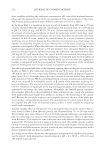
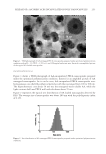
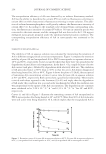
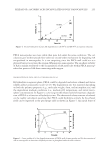
JOURNAL OF COSMETIC SCIENCE 250 The average size and its distribution of nanocapsules with and without AA loaded were measured by dynamic light scattering (DLS) (Zetasizer Nano ZS Malvern Instruments, Worcestershire, UK) with a He–Ne laser beam at a wavelength of 633 nm at 25°C. The scattering angle used is 175º. The results are expressed in volume-averaged scales as uni- mode. The morphology and the structure of AA-encapsulated PECA nanocapsules were visual- ized by transmission electron microscope (TEM) (JSM-2100F, JEOL, Tokyo, Japan) after negative staining with phosphotungstic acid. Drops of the suspensions were dripped on a carbon fi lm–coated copper grid and dried under room temperature. The TEM bright fi eld imaging was performed with 120 kV accelerating voltage. DETERMINATION OF ENCAPSULATION EFFICIENCY OF AA The encapsulation effi ciency of AA in PECA nanocapsules, i.e., the ratio of the weight of AA encapsulated in nanocapsules to the initial weight of added AA was determined according to an indirect fl uorimetry method as described in Reference 31. In brief, fi rst, 0.1 mg freeze- dried AA-encapsulated nanocapsules were redispersed into 10 ml deionized water under ul- trasonic generator. Then 1.0 ml of such solution was mixed with a prefab mixture containing 1.0 ml DMF and 1.0 ml cerium (IV) ion standard solution (3.0 × 10⁻⁴ M), followed by add- ing 1.0 ml sodium hexametaphosphate standard solution (1.0 × 10⁻³ M). The fi nal mixture was diluted to 10 ml by deionized water and equilibrated for 30 min before fl uorescence detection. The fl uorescence spectra were recorded at room temperature on fl uorescence spec- trophotometer (F-4500, Hitachi, Tokyo, Japan) with the excitation and emission wave- lengths at 303 nm and 340 nm, respectively. The excitation bandwidth was 10 nm. The fl uorescence intensity of cerium (IV)-AA at 340 nm in emission spectra was recorded and compared with a standard curve generated from the corresponding solution. A reference sam- ple of empty nanocapsules with no encapsulated AA was prepared by the same procedure. AA STABILITY TEST For the stability evaluation, 1 mg freez e-dried AA-encapsulated nanocapsules (contain- ing 0.116 mg of AA calculated from the encapsulating effi ciency) and corresponding weight of pure AA (as a reference) were separately dispersed or dissolved in 100 ml deion- ized water, 10 ml of each solution was sealed carefully with the caps and stored in an oven with the constant temperature of 40° and 80°C, respectively. Then 1.0 ml of such solu- tion was treated with DMF, cerium (IV) solution, and sodium hexametaphosphate solu- tion as described in the section Determination of Encapsulation Effi ciency of AA. The retention of AA was analyzed by the fl uorescence method mentioned above at different storage periods. DEGRADATION OF PECA AND IN VITRO RELEASE OF AA AA can be released from nanocapsules when PECA wall of nanocapsules is decomposed by enzyme esterase hydrolysis. The yielding amount of ethanol produced in hydrolysis can be
Purchased for the exclusive use of nofirst nolast (unknown)
From: SCC Media Library & Resource Center (library.scconline.org)