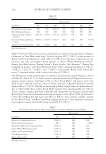
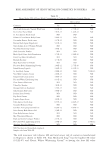
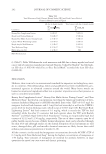
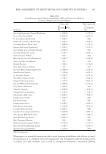
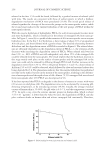
RISK ASSESSMENT OF HEAVY METALS IN COSMETICS IN NIGERIA 245 chronic exposure to mercury vapor even at low concentrations in the range 0.7–42 μg/m3 [equivalent of 7.0 × 10⁻¹⁰ mg/l (kg) to 4.2 × 10⁻⁸ mg/l (kg)] (37,38). Similarly, NAF- DAC’s Directorate of Registration and Regulatory Affairs Guidelines for Registration of Imported Cosmetics in Nigeria states that mercury and its compounds are not permitted in cosmetic products because mercury is reported to cause dermatitis and its cumulative toxicity causes damage to kidneys, which could manifest as hypertension and fatal kidney failure (39). Arsenic was not detected in most of the cosmetics manufactured outside Nigeria. The total noncarcinogenic HIs for both the cosmetic manufactured in and outside Nigeria fall below the hazard threshold value of 1 set by the USEPA (16). This confers a mea- sure of safety and no toxicological concern. Similarly, the total cancer risk value for both the cosmetic products manufactured in and outside Nigeria was less than the acceptable or tolerable risk level of 10−6–10−4 set by USEPA (16). This implies that the amount of these carcinogenic metals to which users of these cosmetics are exposed to from a single day use is unlikely to cause cancer but chronic exposure may however be of public health concern. In this study, the values for total cancer risk and HI subsist entirely of the risk contributed by the heavy metals and do not contain any risk that may be contributed by other hazardous substances. Actual risk indices may be higher if possible additional fac- tors are included. REFERENCES (1) J. W. Hill, Chemistry for Changing Times, 6th Ed. (Macmillan, New York, 1992), pp. 610–615. (2) J. A. Omolaoye, A. Uzairu, and C. E. Gimba, Heavy metal assessment of some eye shadow products imported into Nigeria from China. Arch. Appl. Sci. Res., 2, 76–84 (2010). (3) O. Oyelakin, J. Saidykhan, P. Secka, A. Adjivon, and H. B. Acquaye, Assessment of the level of mercury present in soaps by the use of cold vapour fl uorescence spectrometric analysis—A Gambian case study. Ethiop. J Environ. Stud. Manage., 3, 8–12, (2010). (4) World Health Organization, Mercury in Skin Lightening Products, WHO, Geneva, Switzerland, 2011, accessed October 10, 2013, http://www.who.int/ipcs/assessment/public_health/mercury/en/index.html. (5) A. A. Adepoju-Bello, O. O. Oguntibeju, R. A. Adebishi, N. Okpala, and H. A. B. Coker, Evaluation of the concentration of toxic metals in cosmetic products in Nigeria. Afr. J. Biotech., 11, 16360–16364 (2012). (6) O. E. Orisakwe and J. O. Otaraku, Metal concentrations in cosmetics commonly used in Nigeria. Sci. World J., 959637 (2013). doi:10.1155/2013/959637. (7) Safe Cosmetics, Lead and Other Heavy Metals. The Campaign for Safe Cosmetics, 2011, accessed December 6, 2014, http://safecosmetics.org/article.php?id=292. (8) C. C. Sun, T. T. Wong, Y. H. Hwang, K. Y. Chao, S. H. Jee, and J. D. Wang, Percutaneous absorption of inorganic lead compounds. Am. Ind. Hyg. Assoc. J., 63, 641–646 (2002). (9) F. L. Filon, F. D’Agostin, M. Crosera, G. Adami, M. Bovenzi, and G. Maina, In vitro absorption of metal powders through intact and damaged human skin. Toxicol. In Vitro, 23, 574–579 (2009). (10) H. L. Needleman, L. Herbert, A. Schell, D. Bellinger, A. Leviton, and E. N Allred, The long-term ef- fects of exposure to low doses of lead in childhood. An 11-year follow-up report. N. Engl. J. Med., 322, 83–88 (1990). (11) S. C. Amit, B. Rekha, K. S. Atul, S. L. Sharad, K. C. Dinesh, and S. T. Vinayak, Determination of lead and cadmium in cosmetic products. J. Chem. Pharm. Res., 2, 92–97 (2010). (12) S. Manahan, Toxicological Chemistry, 1st Ed. (Lewis Publishers, Chelesa, MI, 1989), pp. 43–48. (13) International Agency for Research on Cancer, IARC Monograph, (IARC, Geneva, Switzerland, 1990), Vol. 49, pp. 3–7. (1 4) P. Patnaik, A Handbook of Inorganic Chemicals, 1st Ed. (Mcgraw Hill Publishers, New York, 2003), pp. 140–609. (15) C. Ferreccio and A. M. Sancha, Arsenic exposure and its impact on health in Chile. J. Health Popul. Nutr., 24, 164–175 (2006).

JOURNAL OF COSMETIC SCIENCE 246 (16) USEPA. Section 2.4.1.1, Pages 51589–51590 of the HRS Rule, 2011, accessed October 8, 2014, http:// www.epa.gov/superfund/training/hrstrain/htmain/s2411.htm. (17) X. Liu, Q. Song, Y. Tang, W. Li, J. Xu, J. Wu, F. Wang, and P. C. Brookes, Human health risk assess- ment of heavy metals in soil–vegetable system: A multi-medium analysis. Sci. Total Environ., 463–464, 530–540 (2013). (18) H. Fu and H. Boffeta, Cancer and occupational exposure to inorganic lead compounds: A meta-analysis of published data. Occup. Environ. Med., 52, 73–81 (1995). (19) J. J. Hostynek, Factors determining percutaneous metal absorption. Food Chem. Toxicol., 41, 327–345 (2003). (20) B. C. Henn, L. Schnaas, A. S. Ettinger, J. Schwartz, H. Lamadrid-Figueroa, M. Hernàndez-Avila, C. Amarasiriwardena, H. Hu, D. C. Bellinger, R. O. Wright, and M. M. Téllez-Rojo, Associations of early childhood manganese and lead coexposure with neurodevelopment. Environ. Health Perspect., 120, 126–131 (2011). (21) M. Aschner, K. M. Erikson, E. Herrero Hernández, and R. B. Tjalkens, Manganese and its role in Parkinson’s disease: From transport to neuropathology. Neuromolecular Med., 11, 252–266 (2009). (22) V. Sahni, Y. Léger, L. Panaro, M. Allen, S. Giffi n, D. Fury, and N. Hamm, Case report: A metabolic disorder presenting as pediatric manganism. Environ. Health Perspect., 115, 1776–1779 (2007). (23) R. Solís-Vivanco, Y. Rodríguez-Agudelo, H. Riojas-Rodríguez, C. Ríos, I. Rosas, and S. Montes, Cogni- tive impairment in an adult Mexican population non-occupationally exposed to manganese. Environ. Toxicol. Pharmacol., 28, 172–178 (2009). (24) A. R. Zota, A. S. Ettinger, M. Bouchard, C. Amarasiriwardena, J. Schwartz, H. Hu, R. O. Wright, Maternal blood manganese levels and infant birth weight. Epidemiology, 20, 367–373 (2009). (25) A. H. Spangler and J. G. Spangler, Groundwater manganese and infant mortality rate by county in North Carolina: An ecological analysis. Ecohealth, 6, 596–600 (2009). (26) United States Environmental Protection Agency. Health Assessment Document for Chromium. (USEPA, Washington, DC, 1984), pp. 301–305. (27) L. M. Knobeloch, K. M. Zierold, and H. A. Anderson, Association of arsenic-contaminated drinking- water with prevalence of skin cancer in Wisconsin’s fox River Valley. J. Health Popul. Nutr., 24, 206–213 (2006). (28) A. Waye and V. L. Trudeau, Neuroendocrine disruption: More than hormones are upset. J. Toxicol. Environ. Health B Crit. Rev., 14, 270–291 (2011). (29) S. Benoff, K. Auborn, J. L. Marmar, and I. R. Hurley, Link between low-dose environmentally relevant cadmium exposures and asthenozoospermia in a rat model. Fertil. Steril., 89, 73–79 (2008). (30) A. Kortenkamp, Are cadmium and other heavy metal compounds acting as endocrine disrupters? Met. Ions Life Sci., 8, 305–317 (2011). (31) C. C. Wu, Y. S. Pu, H. C. Wu, C. Y. Yang, and Y. C. Chen, Reversed association between levels of pros- tate specifi c antigen and levels of blood cadmium and urinary cadmium. Chemosphere, 83, 1188–1191 (2011). (32) E. R. Siu, D. D. Mruk, C. S. Porto, and C. Y. Cheng, Cadmium-induced testicular injury. Toxicol. Appl. Pharmacol., 238, 240–249 (2009). (33) F. L. Petril and G. A. Ross, Metabolic reduction of chromium by alveolar macrophages and its relation- ships to cigarette smoke. J. Clin. Invest., 77, 17–24 (1986). (34) T. Menne and M. I. Maibach, Nickel allergic contact dermatitis. A review. J. Am. Coll. Toxicol., 8, 1271–1273 (1989). (35) E. J. Feuerman, Chromates as the cause of contact dermatitis in housewives. Dermatologica, 143, 292– 297 (1971). (36) N. M. Hepp, W. R. Mindak, J. W. Gasper, C. B. Thompson, J. N. Barrows, Survey of cosmetics for arsenic, cadmium chromium, cobalt, lead, mercury and nickel. J. Cosmet. Sci., 65, 125–145 (2014). (37) C. H. Ngim, S. C. Foo, K. W. Boey, and J. Keyaratnam, Chronic neurobehavioral effects of elemental mercury in dentists. Br. J. Ind. Med., 49, 782–790 (1992). (38) Y. X. Liang, R. K. Sun, Y. Sun, Z. Q. Chen, and L. H. Li, Psychological effects of low exposure to mer- cury vapor: Application of computer-administered neurobehavioral evaluation system. Environ. Res., 60, 320–327 (1993). (39) Nigeria Nursing World, NAFDAC Alert Notice on Banned Products, 2012, accessed October 10, 2013, http://www.nursingworldnigeria.com/…/nafdac-alert-notice-on-banned-products.
Purchased for the exclusive use of nofirst nolast (unknown)
From: SCC Media Library & Resource Center (library.scconline.org)