J. Cosmet. Sci., 66, 247–259 (July/August 2015) 247 The stability and controlled release of l-ascorbic acid encapsulated in poly (ethyl-2-cyanoacrylate) nanocapsules prepared by interfacial polymerization of water-in-oil microemulsions SU-NING ZHANG, TAO CHEN, YI-GUANG GUO, JIAN ZHANG, XIAOQIU SONG, and LEI ZHOU, School of Perfume and Aroma Technology, Shanghai Institute of Technology, Shanghai (S. Z., J. Z., X. S., L. Z.), Shanghai Key Laboratory of Advanced Polymeric Materials, Key Laboratory for Ultrafi ne Materials of Ministry of Education, School of Materials Science and Engineering, East China University of Science and Technology, Shanghai (T. C), and R&D Center, Shanghai Jahwa United Co. Ltd. China, Shanghai (Y. G), China. Accepted for publication June 8, 2015. Synopsis The L -ascorbic acid (AA) was encapsulated into biodegradable and biocompatible poly(ethyl-2-cyanoacrylate) (PECA) nanocapsules by interfacial polymerization of water-in-oil (W/O) microemulsions. The infl uences of surfactant concentration, pH value of the dispersed aqueous phase, and W/O ratio on nanocapsule size were discussed. The stability and in vitro release of encapsulated AA were also investigated. The results show that nanocapsules could be obtained under the conditions with low pH value, high fraction of aqueous phase, and appropriate surfactant concentration. The encapsulated AA was protected by nanocapsules from oxidation and presented superior storage stability in aqueous medium than pure AA. Releasing AA from the inner core of nanocapsules could be controlled by adjusting the enzyme hydrolysis extent of the PECA wall. INTRODUCTION L -Ascorbic acid (AA), an antioxidant and free radical scavenger, is one of the most popular agents used in various fi elds such as biological, pharmaceutical, dermatological, and cos- metic. It provides photoprotection to protect tissues and cells from oxidative damage by free radicals and reactive oxygen–derived species, boosts collagen biosynthesis to improve the elasticity of the skin and resist wrinkle, restrains skin pigmentation and reduces melanin to keep skin white, and enhances the immunity (antivirus effect) (1–5). Address all correspondence to Su-Ning Zhang at zsnlab@163.com.

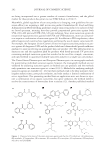
JOURNAL OF COSMETIC SCIENCE 248 Unfortunately, the practical use of AA in skin care is limited because of some diffi culties. One is due to it’s instability. As AA exists in the enol form of α-ketolactone, the enediol group at carbons 2 and 3 can easily be oxidized to yield diketone lactone structure and to produce biologically inactive compounds such as dehydroascorbic acid, oxalic acid, L -threonic acid, L -xylonic acid, and L -lyxonic acid, which are not only ineffective but also potentially harmful to the human body (6). Such decomposition is usually caused by air, moisture, light, heat, trace metal ions, oxygen, and base, and occurs in just a few days after being produced. Another diffi culty for practical use is the low skin penetration abil- ity of AA arising from its hydrophilic character (7,8). To improve the stability and lipophilicity of AA, many efforts have been done in recent years. One method to suppress the decomposition is to derive AA as a salt, for example, ascorbyl phosphate or ascorbyl palmitate (9–11). Morisaki et al. investigated the thermal stability and reducing activity against free radicals of ascorbic acid phosphodiesters and found that the phosphodiesters exhibited high thermal stabilities but low antioxidant activities in vitro (9). The stabilities of ascorbyl palmitate were found less than those of ascorbyl phosphates (10,11). Another method used to overcome the instability and hydro- philicity was to encapsulate and immobilize AA by using microemulsions (W/O, or oil-in-water, O/W) (5,11–13). Gallarate et al. investigated the stability against oxidation of AA in O/W microemulsions, O/W and W/O emulsions, and a W/O/W multiple emulsion at different pH values (5). They found all emulsifi ed systems provided protection for AA and slowed its degradation rate. The W/O/W multiple emulsion can provide better stabil- ity of AA over time than aW/O emulsion does. Although the use of microemulsions seems to be suitable for cosmetic products, it should be noted that they are usually a low-viscosity Newtonian fl uid, and the suitable thickening agents, which may have drawbacks for people with sensitive skin, are needed before they can be utilized directly (13). More recently, nanoparticles that can deliver the nutrition substance without damaging the sensitive active ingredient of cosmetic products have attracted much attention (14– 17). Two types of nanoparticles, i.e., nanospheres and nanocapsules, have been defi ned according to their different preparation method. Nanospheres have a matrix-type struc- ture in which the drug is dispersed, whereas nanocapsules are vesicular systems with a drug confi ned cavity surrounded by a polymeric membrane or layered inorganic matrix. For instance, Choy et al. used the inorganic nanocapsule to encapsulate AA and found the inorganic nanocapsule could enhance the storage stability and sustained release of AA, which was helpful in delivering AA into skin through stratum corneum (18). In general, the biodegradable nanocapsules can be obtained through two main processes: interfacial dispersion of preformed polymers including poly(D,L-lactide), poly(D,L- glycolide), poly(lactide-co-glycolide), poly(lactic acid), and poly(cyanoacrylate) (19), and interfacial polymerization of dispersed alkyl cyanoacrylate monomers (20,21). Poly(alkyl cyanoacrylate) (PACA) interfacial polymerization of microemulsions was fi rst introduced by Gasco and Trotta (22) and has been developed as a simple one-step process without further isolation of nanocapsules from the reaction matrix by using biocompatible micro- emulsions (23). Poly(ethyl-2-cyanoacrylate) (PECA), one type of PACA polymerized from ethyl-2-cyanoacrylate (ECA), has produced very promising results as polymeric sub- strates in the nanoparticle delivery system for its mechanical properties, biodegradability, high biocompatibility, drug compatibility, and permeability (24). Much research on drug delivery properties of PECA nanocapsules has been done in O/W microemulsions for lipophilic drug such as 5,5-diphenylhydantoin, carbamazepine, ethosuximide, idebenone,
Purchased for the exclusive use of nofirst nolast (unknown)
From: SCC Media Library & Resource Center (library.scconline.org)