JOURNAL OF COSMETIC SCIENCE 206 INTRODUCTION The skin is one of the most important parts of the body because it interfaces with the environment and is the fi rst line of defense from external factors. The skin plays a key role in protecting the body against pathogens (1) and excessive water loss (2). Skin wounds are susceptible to infection because of the loss of sterility of the innate bar- rier function of the skin and dermal appendages, facilitating the development of micro- bial communities within the wound environment (3,4). A wound infection can cause delayed healing and if infection is not controlled it may lead to cellulitis, bacteraemia, and septicaemia (5). It is reported that antiseptic solutions can reduce infection in trau- matic lacerations (6) and are commonly recommended in current clinical practices (7). Benzalkonium chloride has been used safely and effectively as an antiseptic for wound management for several decades. Marple et al. reviewed 18 studies on the safety of benzal- konium chloride in nasal solutions and concluded that benzalkonium chloride appeared “safe and well-tolerated for both long- and short-term clinical use” (8). The Food and Drug Administration has found benzalkonium chloride to be generally recognized as safe and effective/Category I for products to clean skin wounds (short duration use) under fi rst-aid antiseptic and consumer antiseptic monographs at concentrations between 0.1 and 0.13% (9). It is a Category III ingredient under health care antiseptic monograph for most other uses because of the lack of enough data to determine safety or effi cacy (10). In China, there are several products including 0.1% benzalkonium chloride approved by the health authorities as wound antiseptics in the market. BACTROBAN® disinfectant spray (GlaxoSmithKline, Nanjing, China), marketed in China since July 2011, is a skin wound disinfectant containing 0.13% benzalkonium chlo- ride in an aqueous solution. Consumer insight into market research identifi ed that deliver- ing a cooling sensory benefi t together with the existing attributes of the current formulation could provide an enhanced product experience for consumers. A prototype wound wash product formulation using a cooling technology was developed to include a cooling agent (menthol derivatives) and a solubilizer into the currently marketed formulation. Menthol and related cooling compounds are widely used in food and pharmaceutical in- dustries (11). It is widely used in dermatologic practice in topical antipruritic, antiseptic, analgesic, and cooling formulations (12). Menthol has been demonstrated to activate the transient receptor potential melastatin type 8, a recognized thermo-receptor expressed in sensory nerves and/or skin cells, the physiological role of which as a transducer of gentle cooling is widely accepted (13–15). The sensory impact of menthol when applied to skin depends on the concentration of menthol. Low concentrations give a cool sensation whereas high concentrations of 2–5% menthol cause irritation. Menthol has also been reported to be associated with allergic contact dermatitis (11,12) therefore, the level of menthol in the formulation was selected to provide optimum cooling versus minimal irritation. A sensory evaluation in an expert panel with healthy skin successfully demonstrated that the prototype disinfectant spray formulation could deliver more cooling sensation than the currently marketed product (a sensory study conducted by MMR Research World- wide, China data on fi le). The sensory study was performed on healthy skin rather than the product’s indication of wounded skin therefore, it is not necessarily indicative of the prototype product’s performance in real use because the penetration of the topically applied product will be faster on wounded skin. Therefore, to understand the sensory

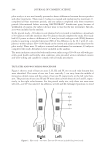
EVALUATE SKIN DISINFECTANT SPRAY 207 impact of the prototype formulation in its intended use, it was considered necessary to evaluate the prototype formulation on wounded skin. Since there are multiple issues as- sociated with conducting clinical studies on subjects with wounded skin (recruitment, evaluation, and timing), the use of an experimental wound methodology offered a conve- nient and clinically relevant approach to evaluate product-use experience, irritation potential, and sensory factors. This article describes two clinical studies (the pilot and the pivotal study) to evaluate the sensory characteristics and irritation potential of a prototype disinfectant spray in sub- jects with experimental wounds compared with reference and control products. The ex- perimental wounds were generated using sequential tape strippings of the forearm skin before product application. The wound model used was a modifi cation of the method reported by Pagnoni (16) (adapted from the method of Bashir (17)). Pagnoni reported that they were able to use 40 strippings of the Transpore® tape (3M Health Care, St. Paul, MN) to disrupt the stratum corneum barrier to successfully demonstrate the sensory re- sponses from a fi rst-aid formulation applied to experimental wounds. In recent years, the Corneofi x® (Courage & Khazaka Electronic GmbH, Cologne, Germany) tape ( 2 × 1.95 cm) is much more frequently used than the Transpore® tape in clinical practice in China. Informed by the pilot study results and the MMR sensory research outcomes, the pivotal study was conducted to further explore the sensory performance as well as the tolerability of prototype formulations. Some modifi cations to the study design were made for the pivotal study based on learning’s from the pilot and additional sensory studies conducted on healthy skin. MATERIALS AND METHODS The pilot study was a single center, “replicated latin square design”, randomized, and double-blinded. The pivotal study was a single center, randomized, controlled, cross- over, and double-blinded study, following a direct comparison test design of the study products. For both studies, the screening and treatment took place at the fi rst visit and follow-up visits occurred on Day 4 and Day 8, where the test sites were assessed visually. In the pilot study, the transepidermal water loss (TEWL) values were measured before and after wounding on Day 1 to ensure disruption of skin barrier and again on Day 4 and 8 to evaluate skin integrity restoration. The TEWL after wounding will be measured three times, and the arithmetic mean value will be taken as the TEWL value. Both studies were conducted at the Guangzhou Landproof Testing Technology Co., Ltd. (Guangzhou, China). The pilot study was conducted between August 12 and 19, 2013, and the pivotal study between May 16 and June 10, 2014. The study protocols and consent forms were reviewed and approved by the Guangdong Cosmetics Institutional Review Board. SUBJECT SELECTION In the pilot study, ~15 subjects were planned to be screened to randomize a maximum of 12 subjects with the intention that 10 subjects complete the study. There were no statis- tical considerations taken into account in the selection of the sample size as this was a
Purchased for the exclusive use of nofirst nolast (unknown)
From: SCC Media Library & Resource Center (library.scconline.org)