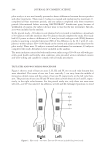
JOURNAL OF COSMETIC SCIENCE 210 site for 15 s, and there was at least 10 min interval between the study product applica- tions. In the pivotal study, the product was applied by spraying twice onto the experi- mental wound from a distance of ~10 cm within 2 min of wound creation. There was at least a 30 min interval between the product applications. The product application in the pivotal study used spray instead of fi lter paper to more accurately refl ect real-life use. The examiner conducting the skin assessments had no involvement in product applica- tion and remained blinded to the identity of the investigational product. All the products were identical in appearance and packaging to maintain blinding. The subjects were also blinded to the treatment identity. ASSESSMENT TEWL MEASUREMENT (PILOT STUDY ONLY) The TEWL was measured (g/m2/h) by means of a Tewameter TM300® (Courage & Khazaka Electronic GmbH) under standard conditions, and the probe of the Tewameter TM300® was warmed up to 30.0° ± 1.0°C. Subjects were in a temperature- and humid- ity-controlled room (19°–21°C and 45–55% relative humidity) for 15 min before each TEWL measurement. SUBJECT PERCEPTION In the pilot study, subjects rated their response to the perceived product performance (cooling/fresh and pleasant feeling intensities), tolerability (stinging/burning and itching intensities), and overall rating of the product liking using a questionnaire containing fi ve-point categorical scales. For the pivotal study, subjects were asked to rate their per- ceived cooling intensity using a 100 mm VAS at four time points (immediately 3, 5, and 15 min after product application) and to rate their overall sensory liking of the product using a nine-point categorical scale. The VAS rating in millimeter (mm) was measured and recorded by one member of the site staff. SAFETY Safety was assessed through adverse events spontaneously reported by subjects or ob- served by the investigator and the TEWL measurements (pilot study only). Changes in performance and tolerance variables, e.g., cooling, burning, and itching intensities, were not classifi ed as adverse events. STATISTICAL METHODS PILOT STUDY The proportions of subjects within a treatment experiencing cooling/fresh sensation, pleasant feeling, stinging/burning, and itching sensation during 15 s of test product

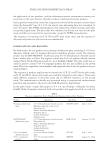
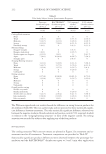
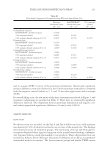
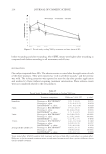
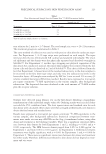
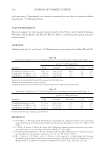
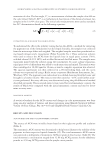
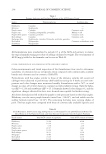
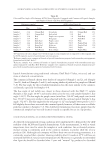
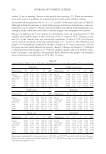
EVALUATE SKIN DISINFECTANT SPRAY 211 application were presented, and the corresponding 95% confi dence intervals were calcu- lated using one-sample exact binomial test. The intensity of each reported cooling/fresh sensation, pleasant feeling, stinging/ burning, and itching sensation was summarized using suitable summary statistics and compared using the Wilcoxon signed-rank test. The statistical signifi cance level for all statistical tests was 0.05 as this was an exploratory study with a very small sample size no adjustment for multiplicity was used. All p-values should be considered as an indicator of a trend but not a confi rmation of a difference be- tween products or a confi rmation of a trend. PIVOTAL STUDY Cooling sensation VAS at each assessment time (immediately 3, 5, and 15 min after each study product application) and overall product liking score were analyzed using the mixed effect analysis of variance (ANOVA) with product use and assessment site as fi xed effects and subject as random effect. Product differences together with p-values and 95% Confi dence Intervals (CIs) were provided. The assumption of residual normality was investigated and considered as satisfi ed. Cooling sensation area under effect-time curve (AUEC) over 15 min was calculated for each subject on each test. An average AUEC (AUEC/15) was analyzed using the same mixed effect ANOVA model as used in the primary analysis. RESULTS DEMOGRAPHICS AND BASELINE CHARACTERISTICS In the pilot study, a total of 12 Asian subjects were included in the randomized popula- tion consisting of six females (50%) and six males (50%). The mean age was 39.3 ranging from 21 to 53 year. In the pivotal study, a total of 50 Asian subjects were included in the randomized popula- tion consisting of 25 females (50%) females and 25 (50%) males. The mean age was 40.0 ranging from 21 to 59 year. EFFICACY RESULTS PILOT STUDY Table II summarizes the frequency of responses to the questionnaire containing fi ve-point categorical scales (1, 2, 3, 4, and 5), where subjects rated their responses to the treatments in terms of perceived performance (cooling/fresh and pleasant feeling intensities), tolera- bility (stinging/burning and itching intensities), and overall rating of the product liking from the pilot study. For overall rating, the proportion of subjects indicating they liked the product was 58% for the prototype disinfectant spray, 64% for the BACTROBAN® disinfectant spray, 33% for 70% v/v isopropyl alcohol, and 42% for 0.9% w/v sodium chloride solution (saline).
Purchased for the exclusive use of nofirst nolast (unknown)
From: SCC Media Library & Resource Center (library.scconline.org)