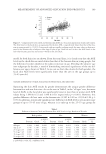
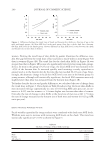
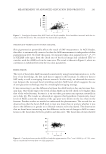
J. Cosmet. Sci., 68, 219–231 (May/June 2017) 219 Development of a preclinical surfactant skin penetration assay to refl ect exposure times typical of consumer use NICOLE MCCARDY, RYAN THOMPSON, MATTHEW MILLER, PETER STYCZYNSKI, STEPHANIE VENTURA, ROBERT GLENN, and GERALD B. KASTING James L. Winkle College of Pharmacy, University of Cincinnati, Cincinnati, OH (N.M., M.M., S.V., G.B.K.), and Research and Development Department, The Procter & Gamble Company, Cincinnati, OH (R.T., P.S., R.G.). Accepted for publication May 30, 2016. Synopsis Mixed surfactant and surfactant–polymer compositions have been reported to decrease surfactant deposition onto and penetration into the skin relative to single surfactant compositions, potentially improving the mildness of the product. Previous workers in this area [see Moore et al., J. Cosmet. Sci. 54:29–46 (2003), and subsequent publications] employed a procedure in which excised porcine skin was exposed to a surfactant solution containing radiolabeled sodium dodecyl sulfate (14C-SDS) for 5 h. We have developed an improved SDS penetration assay using excised human skin that refl ects typical consumer exposure times for rinse-off products. Using the new protocol, we were able to see a signifi cant decrease in 14 C-SDS penetration from a sodium lauryl sulfate (SLS)/polyethylene oxide composition applied to excised skin for either 2 or 10 min, as compared to SLS only. Furthermore, differences between the SDS penetration patterns on porcine skin and human skin were seen with a second SLS/polymer system consequently, we do not recommend porcine skin for routine mildness screening by 14 C-SDS penetration. INTRODUCTION Surfactants are amphiphilic molecules that adsorb at air–liquid, liquid–liquid, and liquid– solid interfaces, reducing surface and interfacial tensions, respectively. Surfactants have multiple industrial uses as emulsifying and cleansing agents, especially in the cosmetic and personal care industry. Human skin can be exposed to surfactants from short periods of time (for rinse-off cleansers) to long periods of time (for leave-on emulsions). Depend- ing on how long the skin is exposed, a surfactant can penetrate to a greater or lesser extent into the layers of the skin. This penetration has been linked to skin irritation (1–3). Sodium dodecyl sulfate (SDS) is a common anionic surfactant often found in cleansing products. It has been shown that with increasing concentrations of SDS above the critical Address all correspondence to Gerald B. Kasting at Gerald.Kasting@uc.edu. Present address for Nicole McCardy, Dermazone Solutions, St. Petersburg, FL 33713.
Purchased for the exclusive use of nofirst nolast (unknown)
From: SCC Media Library & Resource Center (library.scconline.org)