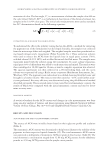
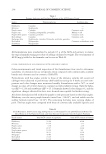
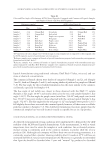
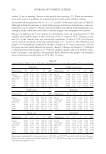
JOURNAL OF COSMETIC SCIENCE 220 micelle concentration (CMC), there is a dose-dependent increase in the amount of SDS measured in the skin (1). When certain polymers are added to SDS and other surfactant systems, SDS penetration is reduced (1,3,4). Polymers can interact with surfactant micelles and modify the adsorption behavior of the surfactant (1,3,5,6). For such interaction, a “pearls on a string model” has been proposed, where surfactants self-assemble around the hydrophobic portions of the polymers to form hemimicelles (5,6). In general, for water- soluble polymers, the more hydrophobic the polymer, the stronger the interaction (6). In the case of SDS, the ionic repulsion between the “micellar pearls” leads to an expansion of the polymer chain, which causes an increase in blob size (i.e., the size/length of the poly- mer molecule). This model has been validated through viscosity measurements and neu- tron scattering. When the surfactant concentration is above the CMC, micelles can begin to form. A widely accepted view of surfactant penetration through the skin, as reviewed by Moore et al. (1), is that “at surfactant concentrations that exceed the CMC, where surfactant micelles fi rst form, only surfactant monomers can penetrate into the skin, because the surfactant micelles are not surface active, or they are too large to penetrate into the stratum corneum (SC).” This theory is known as the monomer penetration model (7) it is largely based on clinical observations using surfactant mixtures. This view was challenged in 2003 by the Blankschtein group at the Massachusetts Insti- tute of Technology (1), who showed that addition of polyethylene oxide (PEO, MW ~8000) to SDS solutions reduced the penetration of 14 C-radiolabeled SDS into porcine SC at levels well above the CMC (1). The Moore et al. study (1) and subsequent publications from this group (3) employed a 5-h exposure time of the skin to the surfactant solution. The objectives of the present study were to confi rm the effects of polymer addition on SDS penetration into human skin and to determine whether the exposure time could be further reduced to refl ect conditions closer to consumer usage of rinse-off products. We furthermore sought to simplify the assay and maximize its sensitivity. Because the envi- sioned use of the assay was to screen prototype rinse-off product formulations, we used commercial-grade surfactants and polymers rather than highly purifi ed materials. A lim- ited study of the solution properties of these materials was conducted to provide partial characterization. Notably, the bulk surfactant was sodium lauryl sulfate (SLS), which contains a natural mixture of alkyl chain lengths as well as residual impurities, whereas the radiolabeled marker was the purifi ed C12 homolog, SDS. We will maintain this dis- tinction throughout the article. Experimental SDS penetration trials on human skin were then conducted using exposure times of 10 and 2 min. A simplifi ed protocol, in which the tape-stripping step was eliminated, was employed for the 2-min exposure protocol fur- thermore, a random controlled block design, followed by a two-way analysis of variance of log10-transformed data, was employed to increase sensitivity (8). The report presents the details of these studies and provides a recommendation for further use of this assay. MATERIALS AND METHODS Aqueous solutions of SLS (50 mM), SLS with 2% polyethylene glycol (PEG 8000, here- after referred to as PEO) and SLS with 2% polyvinyl alcohol (PVA) were provided by the Procter & Gamble (P&G) Company (Cincinnati, OH). The SLS sample was a commercial- grade material showing evidence of surface-active impurities. The PVA raw material had

PRECLINICAL SURFACTANT SKIN PENETRATION ASSAY 221 an average molecular weight of 30,000 Da and 17% of unhydrolyzed acetate groups. Common commercial PVAs have an acetate content of 4–12% (9). Radiolabeled SDS (14C-SDS, 55 mCi/mmol) was obtained from American Radiolabeled Chemicals (St. Louis, MO). Tritiated water (3H2O, 1.0 mCi/ml) and the tissue-dissolution reagents Sol- uene®-350 and Solvable™ were obtained from Perkin Elmer (Waltham, MA). Dulbecco’s phosphate-buffered saline (PBS) and sodium azide were obtained from Fisher Scientifi c (Pittsburgh, PA). Deionized (DI) water was prepared by ultrafi ltration. D-Squame™ tapes were obtained from CuDerm (Dallas, TX). Pig skin was obtained from a local slaughter house and dermatomed to a thickness of ~800 μm. Human cadaver skin, der- matomed to a thickness of 300–400 μm, was obtained from the New York Firefi ghters Skin Bank (New York, NY). A different donor was used in each experimental trial. The source and identity of each human donor skin sample (age, ethnicity, gender, date of death, and cause of death) was documented. The pig skin studies were approved by the P&G Institutional Animal Care and Use Committee, and work on de-identifi ed human tissues was exempted from human subjects’ categorization by the University of Cincin- nati Academic Health Center Institutional Review Board. PREPARATION OF SKIN MEMBRANES Human skin was stored at -80°C until use. On the morning before the study, the skin was thawed rapidly by immersing the sealed packet in warm water. It was then rinsed with distilled water and cut into 2 × 2 cm pieces using a scalpel. Porcine skin taken from the belly area was obtained from a slaughterhouse, stored in chilled saline, and used within 24 h of collection. IN VITRO STATIC DIFFUSION CELLS The skin membranes were mounted in Franz diffusion cells (0.79 cm2) (10) with the SC facing the donor chamber. The receptor solution (~5 ml) was Dulbecco’s PBS (pH 7.4) to which 0.02% w:v sodium azide had been added to retard microbial growth. The receptor fl uid was continuously stirred using a magnetic stir bar. The cells were maintained at 37°C in a thermostatted aluminum block, yielding a skin-surface temperature of 32°C. Low glass tops with no occlusion were used for this study. HUMAN SKIN MEMBRANE INTEGRITY ASSESSMENT The integrity of each of the human skin membranes was assessed by 3 H2O penetration (8). The skin was mounted and allowed to equilibrate for about 1 h. A 150 μl aliquot of 3 H2O (0.4 μCi/ml) was applied using a pipette and allowed to remain on the skin surface for 5 min. It was then removed with a cotton-tipped swab, which was placed on the skin surface for 30 s. The receptor solution was collected 60 min after dose and replaced with PBS. The collected samples were analyzed for 3 H in Ultima Gold XR cocktail (Perkin Elmer, Waltham, MA) by liquid scintillation counting (LSC) using a Beckman LS 6500 counter (Beckman Coulter, Inc., Indianapolis, IN). They were counted for 1 min, and the results
Purchased for the exclusive use of nofirst nolast (unknown)
From: SCC Media Library & Resource Center (library.scconline.org)