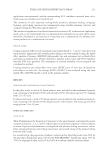
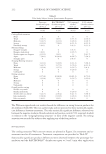
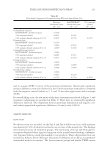
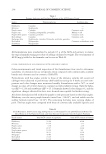
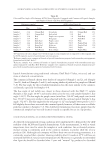
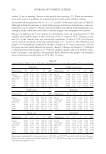
JOURNAL OF COSMETIC SCIENCE 238 All formulations were standardized to include 0.5 g of the ACN-rich extracts to mimic the typical manufacturing procedure of adding colorants by weight. The total amount of ACN (mg/g) added to the formulas can be seen in Table II. COLOR COMPARISON OF ACN-FORMULAS WITH REFERENCE SAMPLES Color measurements and visual inspection of the formulations were used to determine suitability of coloration for use in lipsticks when compared with commercially available brands and colorants used in cosmetics (Table III). Formulations with hue angles similar to those of the reference samples (all except red cabbage) were subjected to preliminary shelf-stability testing for 6 weeks at room tem- perature and color changes were monitored weekly. Formulations with a ΔE*, or total change in color, of 1 were chosen to continue on with stability testing. Only the hibis- cus (ΔE* = 12.8) and strawberry (ΔE* = 15.1) formulas showed color changes 1, and the signifi cant changes observed for these were deemed unacceptable for further testing. All chosen formulations fell within the purple to red spectrum based on their hue angles. Elderberry was the most purple formula (initial hue: 318.64°), and red radish was the reddest formula (initial hue: 14.34°). The remaining formulas were varying shades of pink. The hue angles were compared with those of commercially available lipsticks and Table I Primary Aglycones and Acylation Patterns of the ACN Sources Tested Source Primary aglycone Acylation type Elderberry Cyanidin — Hibiscus Delphinidin — Purple carrot Cyanidin Cinnamic acids Purple corn Cyanidin, pelargonidin, petunidin Malonic acids Purple sweet potato Cyanidin, peonidin Cinnamic acids Red cabbage Cyanidin Cinnamic acids Red grape skin Delphinidin, cyanidin, Petunidin, malvidin, peonidin, — Red radish Pelargonidin Cinnamic acid/malonic acids Strawberry Pelargonidin — Table II Total Monomeric ACN Content (mg ACN/g Extract) as Determined by the pH-Differential Method for Dried Extracts of the Pigments Tested, and Total Amount Incorporated into the Lipstick Formulas Dried extract Total ACN content of pigments Total ACN content in formula Elderberry 32.96 16.48 Hibiscus 14.24 7.12 Purple carrot 4.38 2.19 Purple corn 22.27 11.14 Purple sweet potato 19.20 9.6 Red cabbage 26.31 13.16 Red grape 29.86 14.93 Red radish 24.20 12.10 Strawberry 18.36 9.18

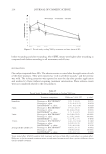
ANTHOCYANINS AS NATURAL ALTERNATIVES TO SYNTHETIC COLORS FOR LIPSTICK 239 lipstick formulations using traditional colorants: D&C Red #7 lakes, mica red, and car- mine at identical concentrations. The commercial brands chosen were shades of orange/red (Sample 1 and 2), red (Sample 3 and 4), dark red (Samples 5 and 6), and varying shades of pink-red to purple-red (Brand 7–9). The hue angle for the red radish formulation was the most similar to the commer- cial brands, especially for Samples 4–6. The hue angle of red radish was closest to those observed with the D&C #7 sample (Sample 2, hue angle: 20.05°) and nearly identical to the mica red sample (Sample 6, hue angle: 14.43°). The hue angles for purple carrot (initial hue: 354.44°) and purple corn (initial hue: 350.45°) were very similar to those observed with the carmine lipstick (Sample 9, hue angle: 352.03°). The hue angles for the red grape (1.42°) and purple sweet potato (1.61°) fell slightly above those seen with the carmine lipstick however, all three were a reddish- pink hue similar to Samples 7–9. The elderberry formulation was more purple than the commercial samples but was still deemed visually acceptable for use in a lip product. COLOR CHANGES DURING AN ACCELERATED ENVIRONMENTAL TESTING Accelerated environmental testing conditions were implemented to help predict the shelf stability of the ACN-based lipstick formulations. Color measurements, as well as visual inspections, were used to assess the samples at each condition. An accelerated environ- mental testing is commonly used in the cosmetic industry to predict shelf life of new products (24). Although each company will have their own set of testing parameters, it is commonly assumed that a product showing stability after 10 weeks at 45°C will have an estimated shelf life of 2 year at room temperature (26). Moreover, it is generally recommended that lipsticks should be discarded after 2 year and “natural” lip products be discarded Table III Color and Hue Angle of Preliminary ACN-Colored Lipsticks Compared with Commercial Lipstick Samples and Samples Colored with Non-ACN Pigments Reference samplesa ACN-colored lipsticks Hue Color Hue Color ΔE* Sample 1 21.4 Orange/Red Strawberry 18.2 Orange/Red 15.1 Sample 2a 20.1 Orange/Red Red radish 14.9 Red 0.7 Sample 3 15.8 Red Purple sweet potato 1.6 Pink/Red 0.2 Sample 4 15.4 Red Red grape 1.4 Pink/Red 0.3 Sample 5 14.5 Dark Red Purple carrot 354.4 Pink 0.4 Sample 6† 14.4 Dark Red Purple corn 350.5 Purple/Pink 0.6 Sample 7 8.0 Berry Red Hibiscus 349.1 Purple/Pink 12.8 Sample 8 6.8 Pink/Red Elderberry 318.3 Purple 0.4 Sample 9‡ 352.0 Pink/Purple Red cabbage 298.3 Purple/Blue — ΔE* represents the color change over 6-weeks storage at room temperature as compared to their original color for ACN-lipsticks as part of a preliminary selection process. a Reference samples were commercial brands or lipstick formulations prepared with nonanthocyanin pigments formulated with D&C Red #7. b Reference samples were commercial brands or lipstick formulations prepared with nonanthocyanin pig- ments formulated with Mica Red.cReference samples were commercial brands or lipstick formulations pre- pared with nonanthocyanin pigments formulated with Carmine.
Purchased for the exclusive use of nofirst nolast (unknown)
From: SCC Media Library & Resource Center (library.scconline.org)