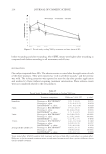
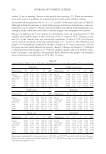
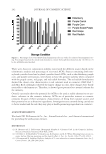
JOURNAL OF COSMETIC SCIENCE 236 directly into the hot lipstick base and gentle stirred until a uniform color was achieved. The lipstick formulas were then poured directly into the lip balm containers and allowed to cool at 4°C until completely solid. ACCELERATED ENVIRONMENTAL TESTING The parameters used for the shelf-stability testing were based on the guidelines set by The European Cosmetic, Toiletry and Perfumery Association (23), and Cannel (24). The six formulations tested for shelf stability were formulas using elderberry, purple corn, red carrot, grape skin, purple sweet potato, and red radish as their pigment sources, respectively. Once the formulas were allowed to cool, 0.5 g of each was secured between two glass slides for use in the stability testing. The formulas were stored in the dark at each temperature in triplicates. The temperatures tested were 20°, 37°, and 45°C. A baseline color measure- ment was taken on day 0. Color measurements were taken then on day 1 to account for any changes that may have taken place in the initial 24 h period. Color measurements were then taken on a weekly basis until the conclusion of the testing for each temperature at 12 weeks. In addition, the formulas were subjected to two different temperature cycles. The fi rst cycle was 20°–37°C. One cycle included being held at 20°C for 24 h and then subse- quently placed in 37°C for 24 h. The second cycle aimed to test the formulation stability to freeze/thaw abuse. One cycle included being held at -20°C for 24 h and then subse- quently placed in 20°C for 24 h. Color measurements were taken after the completion of each 48-h cycle. The cycles were repeated six times for all samples. The six formulations tested for shelf stability were decided on the preliminary data at 20°C. After the incuba- tion period at each temperature, the samples were collected and placed at -20°C until further analysis. COLORIMETRIC ANALYSIS A colorimetric analysis was performed to determine objectively the color characteristics of the initial color of the formulations prepared in the lab and to compare them with the color of commercial products purchased. Color analyses were also used to monitor color changes during different conditions of accelerated environmental testing. Formula color was measured using a refl ectance specular included mode, with a D65 light source and 10° observer angle, on a Color Quest XE (Hunter Associates, Inc., Keswick, VA). Equal amounts of sample (0.5 g) were presented to the colorimeter encased between two glass slides, to ensure uniformity between the samples. All readings were replicated (n = 3) and reported in the Hunter CIELab system using Easy Match Software Ver3.62 (Hunter As- sociates, Inc.). Color measurements were then averaged after each color reading. Changes in L*, a*, b*, c*, h, and ΔE* were recorded against the baseline measurements taken on day 0. L*, is the measurement of the lightness of a sample, with higher values (0–100 scale) indicating a lighter sample. The a* scale is the measurement of red versus green, where a positive number indicates a red color. Conversely, b* is a measurement of blue versus yellow, where a negative number indicates a blue color. c*, or chroma, is a measurement of intensity or

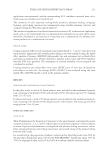
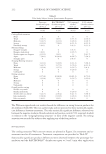
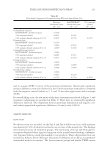
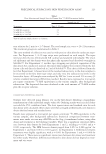
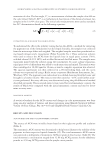
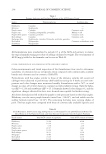
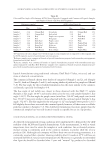
ANTHOCYANINS AS NATURAL ALTERNATIVES TO SYNTHETIC COLORS FOR LIPSTICK 237 saturation of color. The hue angle, h°, is a measurement of where the sample color falls on the color wheel. Delta E, ΔE*, is a mathematical description of the distance between two samples in the L*a*b* color space. The initial color measurements were used as standards for ΔE* determination based on the following equation: ΔE 2 2 2 * * * * * * 0 0 i i i0 L L a a b b ¯ ¡ ° ¢ ± (2) EXTRACTION OF ACNS FROM THE FO RMULATIONS To understand the effects the stability testing had on the ACNs, a method for extracting the pigments out of the formulations was developed. Initially, the samples were collected from the microscope slides and weighed. The weighed samples were then powderized us- ing liquid nitrogen and a tissuemeizer (Fisher Scientifi c Inc.). Three extraction solvents were used to extract the ACNs from the lipstick base in equal parts: acetone (70%), acidifi ed ethanol (0.01% HCl), and acidifi ed deionized distilled water. The samples were vigorously mixed with the solvents using the tissuemeizer. To cause a phase separation, equal parts (v/v) of chloroform was added to each extraction and mixed. The extracts were then centrifuged at 10,000 rpm for 10 min, or until a complete separation was achieved. The aqueous supernatant was then collected in a-250-ml boiling fl ask, and the excess solvent was evaporated off using a Büchi rotary evaporator (Brinkmann Instruments, Inc., Westbury, NY). The pigments were redissolved in acidifi ed deionized distilled water and brought to a known volume. The extracts were then stored at -20°C until further analy- sis was performed. Recovery effi ciency was determined using the pH-differential method described previously. The recovered extracts were tested for total monomeric content, the results of which were compared with the initial monomeric content and used to deter- mine recovery rates. STATISTICAL ANALYSIS A statistical analysis for the ACN content and changes in color measurements was done using one-way analysis of variance and linear regressions using Minitab Statistical Software Version 16 (State College, PA). (α = 0.05) and GraphPad Prism Version 6 (La Jolla, CA). RESULTS AND DISCUSSION ACN SOURCES AND THE TOTAL MONOMERIC CONTENT The sources of ACN were initially chosen based on their aglycone profi le and acylation (Table I). The monomeric ACN content was determined to help better illustrate the stability of the pigments in their respective lipstick formulas (25). The total monomeric ACN content was expressed as milligrams of monomeric ACN per gram of dried extract (Table II). The total monomeric concentration ranged from 32.96 mg ACN/g extract for the elderberry powder to 4.38 mg ACN/g extract for the purple carrot powder.
Purchased for the exclusive use of nofirst nolast (unknown)
From: SCC Media Library & Resource Center (library.scconline.org)