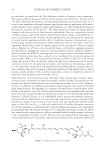
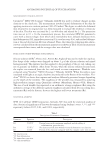
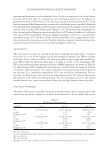
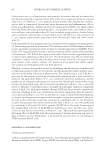
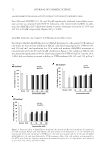
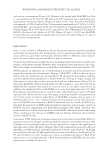
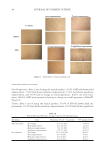
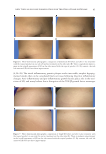
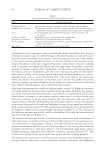
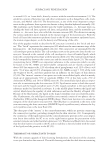
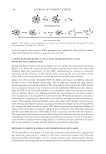
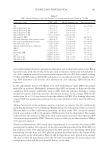
JOURNAL OF COSMETIC SCIENCE 86 pathway may be involved in striae formation (15,29). Decreased expression of collagen and fi bronectin genes has also been associated with striae (30). Vi tamin C has also been shown to work well on stretch marks in prior literature (14,20). Vitamin C is an antioxidant used extensively in topical cosmeceuticals and moisturizers to prevent UV damage and improve skin quality (31). There is very strong evidence from an immunohistochemistry level that vitamin C is a potent stimulator of collagen and elastin production in the treatment of stretch marks (20). Vitamin C also stimulates col- lagen synthesis, which promotes wound healing. In scar treatments, topical application of vitamin C, in combination with silicone or HA, has also been shown to improve scar appearance (23,32,33). HA has been shown to improve SD in prior literature (17). It is also implicated in fetal scarless healing. In fetal wounds, there is a prolonged elevation of high–molecular weight HA, whereas in adult wounds, there is transient elevation of low–molecular weight HA. Furthermore, HA receptor expression is elevated 2- to 4-fold in fetal fi broblasts, suggest- ing HA helps facilitate rapid fi broblast migration, which can help in improving SD as it does with scars (34). Al oe vera has also been shown to improve SD (12,16). It has a long history of use in traditional medicine as a “healing plant” (35). Animal and clinical studies have shown that treat- ment with whole aloe vera gel or extracts leads to accelerated wound healing (35–37). Figure 8. Three-dimensional photo g raphic comparison of buttock SD before and after 1-mo treatment with the topical product on one side (A) and no treatment on the other side (B). There is mild improvement in the overall appearance of SD on the side treated with the topical product (C). By contrast, the side left untreated (D) does not show improvement.

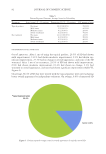
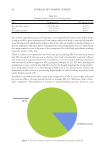
NEW TOPICAL SILICONE FORMULATION FOR TREATING STRIAE DISTENSAE 87 Aloe brings about its effect by promoting infl ammatory cell infi ltration, angiogenesis, extracellular matrix deposition, and epithelialization (35). La st, Centella asiatica is very effective in wound healing and also has been shown to improve SD (18,19). It is used in traditional medicine as a treatment for wounds and scars (38). When applied to wounds, the extract increases cellular hyperplasia, collagen production, epithelization, and angiogenesis, which accelerate collagen cross-linking, reepithelialization, wound maturation, and wound contraction, thus shortening the wound-healing process (39). On a molecular level, asiaticoside, an active ingredient of Centella asiatica extract, suppresses fi broblast proliferation, type I and type III collagen and mRNA expression, and TGF-βRI and TGF-βRII expression and increases Smad7 protein expression, which collectively suppress excessive scarring. Altho ugh our formulation shows an improvement in SD, it does not completely eradicate them. Invasive procedures such as lasers, microneedling, and radiofrequency devices can potentially improve the appearance of SD more so than topical creams. However, there are downsides to such procedures such as the need for repeated procedures, high costs, discom- fort or even pain during the procedure, and postprocedure complications such as swelling, redness, and PIH. Dover et al. (40) reported over 87% improvement in the appearance of SD in those who underwent six repeated sessions of radiofrequency treatment. However, postprocedure erythema and edema remained an issue (6,8). Other studies report up to 90% improvement in SD with either nonablative or ablative CO2 fractional laser during three treatment sessions. However, nearly 82% reported PIH after procedure in the abla- tive CO2 fractional group and experienced, on average, moderate pain during the proce- dure (11). Such high incidence of unwanted procedural sequela further supports the use of topical creams as a fi rst-line agent to improve SD. There are limitations to this study. The fi rst limitation is that the participants were not blinded to treatment, which could lead to a bias toward the treated side. However, our two independent evaluators were both blinded, which increased the validity and reliabil- ity of the study, and saw an improvement in the side treated with the topical formulation similar to what the patients reported. In ad dition, we did not evaluate whether patients would have a reduction in formation of new SD while using the cream. We only evaluated the improvement of their current stretch marks over time. We are aware of prior studies that showed a reduction of SD in pregnant women. Mallol et al. (18) demonstrated a reduction in SD from 56% in preg- nant women who did not use the product to 34% in those who used the topical formula- tion that included Centella asiatica. A reduction in the intensity of SD that were seen in those who were using Centella asiatica was also noted in this study. Another study com- pared topical aloe vera to a placebo-based cream in pregnant women and found that the side on which aloe vera was used had only an 8% progression of SD in comparison to 65% progression of SD during pregnancy with base cream (16). This is an area of interest for future studies using our product. Altho ugh that we did not evaluate our product in pregnant women, our topical product has been shown to be safe in our study. Furthermore, silicone cream and our other ingredients have all been shown to be safe in patients in prior studies with no adverse sequelae. This product should have no contraindications for pregnant women and young adults with SD. We on ly had 1-mo follow-up period, but our study showed that there was a signifi cant improvement in just 1 mo of using the topical product. Furthermore, nearly 90.9% of
Purchased for the exclusive use of nofirst nolast (unknown)
From: SCC Media Library & Resource Center (library.scconline.org)