JOURNAL OF COSMETIC SCIENCE 90 (33) I. S. Yun, H. S. Yoo, Y. O. Kim, and D. K. Rah, Improved scar appearance with combined use of silicone gel and vitamin C for Asian patients: a comparative case series, Aesthet. Plast. Surg., 37(6), 1176–1181 (2013). (34) A. Leung, T. M. Crombleholme, and S. G. Keswani, Fetal wound healing: implications for minimal scar formation. Curr. Opin. Pediatr., 24(3), 371 (2012). (35) A. Atiba, H. Ueno, and Y. Uzuka, The effect of aloe vera oral administration on cutaneous wound heal- ing in type 2 diabetic rats, J. Vet. Med. Sci., 73, 583–589 (2011). (36) S. W. Choi , B. W. Son, Y. S. Son, Y. I. Park, S. K. Lee, and M. H. Chung, The wound-healing effect of a glycoprotein fraction isolated from aloe vera, Br. J. Dermatol., 145(4), 535–545 (2001). (37) P. Chithra, G. B. Sajithlal, and G. Chandrakasan, Infl uence of aloe vera on the healing of dermal wounds in diabetic rats, J. ethnopharmacology, 59(3), 195–201 (1998). (38) W. B ylka, P. Znajdek-Awiżeń, E. Studzińska-Sroka, A. Dańczak-Pazdrowska, and M. Brzezińska, Cen- tella asiatica in dermatology: an overview, Phytother Res., 28(8), 1117–1124 (2014). (39) S. S. Hong, J . H. Kim , H. Li, and C. K. Shim, Advanced formulation and pharmacological activity of hydrogel of the titrated extract of C. asiatics, Arch. pharmacal Res., 28(4), 502–508 (2005). (40) J. S. Dover, K. Rotha us, and M. H. Gold, Evaluation of safety and patient subjective effi cacy of using radiofrequency and pulsed magnetic fi elds for the treatment of striae (stretch marks), J. Clin. Aesthet. Dermatol., 7(9), 30 (2014).

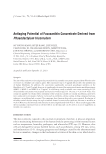
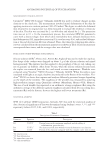
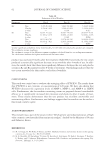
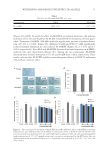
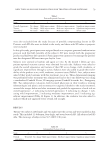
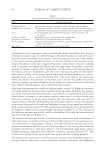
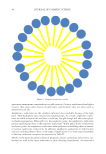
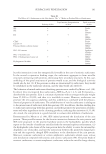
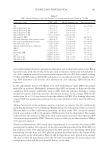
J. Cosmet. Sci., 71, 91–109 (March/April 2020) 91 Penetration of Surfactants into Skin LIMENG LIU , College of Pharmacy, Shenyang Pharmaceutical University, Shenyang Shi 110016, China Accepted for publication October 26, 2019. Synopsis Surfactants possess the ability to reduce surface tension at low concentrations, resulting in emulsifi cation, foaming, wetting, and solubilizing. As a versatile industrial material, surfactants can be widely used as additives in the industrial fi eld as different as textile, metal processing, mineral processing, new materials, industrial cleaning, construction, and pharmaceuticals. The most extensive application of surfactants perhaps is in the household and cosmetic industries, such as laundry detergents, dishwashing detergents, facial and body cleansers, and preparation of emulsions and creams. However, the extensive use of detergents, cleaners, and cleansers on skin may cause itching, redness, and dryness termed as surfactant-induced irritation, which is at least, partially due to surfactant penetration into skin. To understand how surfactants penetrate into skin, this review summarizes the penetration models proposed by researchers in the past two decades, including the surfactant monomer penetration model, the surfactant micelle and submicelle penetration model, and the recently proposed surfactant charge density and penetration correlation model that demonstrates the correlation between the surfactant charge density and skin penetration. INTRODUCTION Surfactants are usually constituted of hydrophilic polar groups and hydrophobic nonpolar hydrocarbon chains (or rings). Because of the special amphiphilic structure, they can reduce surface tension and facilitate foaming, emulsifying, dispersing, wetting, and osmosis, all of which contribute to their extensive applications in the chemical industry. The specifi c applications are presented in Table I. SURFACTANTS Surfactants, an abbreviation for surface active agent, are amphiphilic or amphipathic molecules which could orient themselves at the boundary of two immiscible phases. The hydrophilic or water-loving portion of the surfactants would be soluble in the aqueous solution. Conversely, the hydrophobic or water-hating portion of them would be absorbed in the nonaqueous solution (as the oleaginous phase or air) (1,2). Address all correspondence to hufanandyhu@gmail.com or hufan.gatech@edu.viax.org.
Purchased for the exclusive use of nofirst nolast (unknown)
From: SCC Media Library & Resource Center (library.scconline.org)