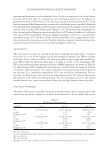
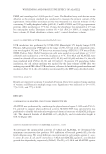
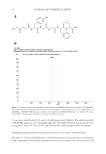
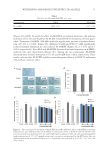
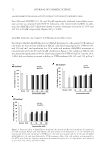
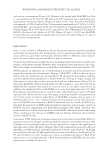
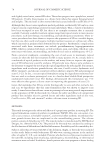
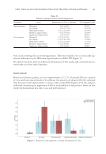
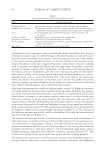
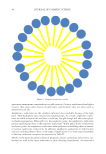
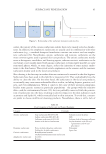
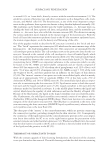
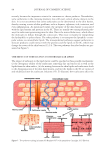
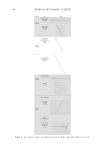
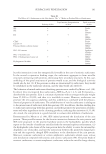
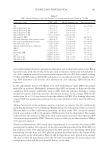
JOURNAL OF COSMETIC SCIENCE 92 On adsorption of the surfactants to the two immiscible phases, the repellent force between the phases is reduced, and, also, the free energy at the phase boundary is reduced. As more and more surfactants gather at the interface, the free energy per unit area of the interface or the surface tension gradually decreases (1). To stay steadily at the boundary of two immiscible phases, a surfactant is supposed to possess a characteristic structure, enabling itself to integrate two immiscible phases into one single phase. Generally, a surfactant monomer is mainly composed of (i) a hydrophilic part that contacts the aqueous phase in the solution and (ii) a hydrophobic part that rejects the aqueous phase (3). The hydro- philic part is usually a polar group. On the other hand, the hydrophobic part is often a nonpolar group, such as a long-chain hydrocarbon. Take water and oil, two immiscible phases, for instance the surfactants in the water and oil mixture will gather along at the water–oil interface, and the hydrophilic section of the surfactant is dissolved in the water layer, whereas the hydrophobic side is immersed in the oil layer. Only surfactant monomers are capable of reducing surface tension (1). When the concentra- tion of the surfactant increases and is saturated at the two-phase boundary, the aggrega- tion of the surfactant monomers referred to as the micelle is usually formed. Take air and liquid phases as example in the aqueous solution, when there is no space for the extra surfactant monomers at the air–liquid interface, the extra monomers will enter into the aqueous solution and their hydrophobic parts will gather together to reject the aqueous environment, forming micelles with the hydrophobic groups facing inward and the hydro- philic groups orienting outward (1). The concentration of surfactants above which micelles are formed is defi ned as the critical micelle concentration (CMC) (1,4). The diagram of the surfactant monomer and micelle, and the relationship of the surfactant monomers and micelles are described in Figures 1–3. The functions of surfactants include (i) emulsifi cation—surfactants work as emulsifi ers to reduce the water–oil interfacial tension, forming stable emulsion (5) (ii) wetting action (iii) solubilization (iv) detergency—rollup is one of the mechanisms describing how sur- factants remove sebum and dirt (6) and (v) foaming. Based on the various physicochemical properties of surfactants, they have extensive civil and industrial applications, such as laundry detergents, emulsifi ers, food additives, cosmetics, and drug delivery (5,7). This review article mainly focuses on the surfactants used in the skin-cleaning products. The classifi cation of surfactants can be based on the structure of the hydrophilic parts, con- sisting of anionic surfactants, cationic surfactants, nonionic surfactants, and amphoteric Table I Specifi c Applications of Surfactants in Different Fields Field Specifi c applications Washing industry Soap, kitchen detergent, shampoo, laundry detergent, and decolorizer Pharmaceutical industry Wetting agent, adhesive, lubricant, coating material, slow/controlled release formulation, dispersing agent, solubilizer, emulsifying agent, and germicide Food Food emulsifying agent, food defoaming agent, thickening agent, and preservative Cosmetics industry Emulsifi able paste, wetting agent, and foaming agent Petrochemical industry Lubricating oil, anticorrosive agent, and sealant, Textile industry Fluorescent whitening agent, antistatic agent, softening agent, emulsifying agent, and detergent, Agriculture Pesticide dispersing agent and wetting agent

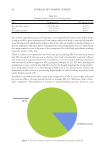
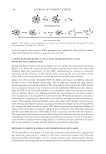
SURFACTANT PENETRATION 93 surfactants (2,8). Anionic surfactants account for the vast majority of surfactants used in cleaning products, including (i) soap surfactants: soap surfactants can be prepared by hydrolysis of triglycerides (TS) into a mixture of various long-chain carboxylates, and this process is called saponifi cation. Soap has strong cleaning and foaming abilities, but it is not gentle to skin. Other drawbacks of soap surfactants include high pH (usually greater than 10) use condition and incompatibility with hard water. Soap precipitates at low pH or forms precipitations with magnesium and calcium ions in hard water (8) (ii) synthetic sulfate, sulfonate, and isethionate surfactants, such as sodium dodecyl sulfate (SDS), sodium lauryl sulfate (SLS), sodium laureth sulfate, sodium C14-16 olefi n sulfo- nate, and sodium lauroyl isethionate. They are slightly milder to the skin than soap surfactants, especially for isethionate surfactants. Unlike soap, they can be used in hard water and in a wide pH range of 3–11 and (iii) amino acid–derived surfactants, espe- cially acyl glutamate and acyl glycinate, which are popular ingredients in mild skin- cleansing products. Nonionic surfactants are the second largest surfactant class. They are not ionized in the solution, and thus are not sensitive to the ions in hard water, are not easily affected by pH, and have good compatibility with other types of surfactants, such as anionic surfactants, to formulate skincare products or cleaning detergents (8). Fatty alcohol ethoxylates or CmEn is one of the most important types of nonionic surfactants. They possess stable chemical structures and strong cleaning abilities. One of the most important or interesting features of fatty alcohol ethoxylates is that they exhibit reverse solubility versus temperature behavior in water, i.e., they have cloud point—the temperature at which the solution becomes cloudy. The cloud point generally increases when the hydrophilic part or the number of oxyethylene units becomes larger and is strongly dependent on cosolutes in- cluding electrolytes and polyols (1). Cationic surfactants, the third largest group of surfactants, are actually not as much used as anionic and nonionic surfactants in skin care. They are often added to skin products as preservatives, softener, and conditioner (6). The hydrophilic parts of the cationic surfactants are usually amine and quaternary ammonium based. The amines only function as a surfac- tant in the protonated state, and thus they are not compatible with high pH, whereas Figure 1. Diagram of surfactant monomer.
Purchased for the exclusive use of nofirst nolast (unknown)
From: SCC Media Library & Resource Center (library.scconline.org)