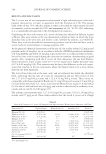
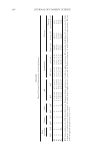
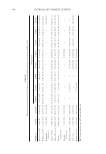
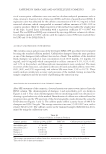
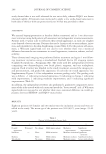
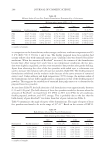
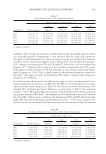
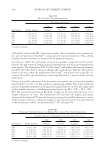
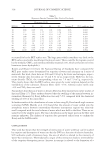
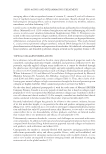
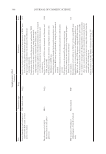
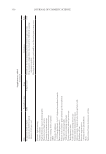
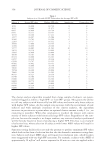
JOURNAL OF COSMETIC SCIENCE 300 of RiceSorb® affected the MC of loose face powders. This is probably due to greater sur- face areas of particles of RiceSorb® causing greater moisture absorption. Thus, adding suitable moisture absorbers are essential for the preparation process. According to Table VII, pH values of loose face powders range from 6.90 to 8.62. Overall, the pH values of freshly prepared formulations and the stored formulations were similar. The formulation FT0 (0% RiceSorb®) had higher pH than the formula- tion FT4 (80% RiceSorb®) owing to alkaline pH of talcum (see Table II). The pH was found to decrease when the proportion of RiceSorb®, which had weak acidic pH, in- creased. The pH of the formulations containing RiceSorb® is more suitable for skin application. Tes ting of insoluble substances in boiling water was another test for loose face powders based on TIS 443-2525 (11). The results are summarized in Table VIII. It was found that percent of insoluble substances in boiling water ranged from 3% to 39%. The range order of the insoluble substances in boiling water was found to be FT4 FT3 FT2 FT1 FT0. The increased proportion of RiceSorb® resulted in the increased percentage of in- soluble substances in water. The formulation FT4 provided the highest percentage, whereas the formulation FT0 gave the lowest percentage of insoluble substances in water. Under storage conditions, signifi cant changes in this parameter were obviously detected in the formulations which contained RiceSorb®, FT1 through FT4. Table VIII Percentage of Insoluble Substances in Boiling Water of Loose Face Powder Formulations Formulation Insoluble substances in boiling water (% w/w),(mean ± SD, n = 3) Freshly prepared 1 mo 1 mo 2 mo 2 mo Ambient 45 ± 2°C Ambient 45 ± 2°C FT0 5.97 ± 3.88 3.35 ± 0.78 3.35 ± 1.31 3.84 ± 1.55 4.97 ± 1.58 FT1 3.19 ± 0.15 7.81 ± 3.32 7.29 ± 1.11 7.81 ± 1.38 7.29 ± 1.11 FT2 22.34 ± 6.31 9.75 ± 5.95 20.42 ± 3.36 12.42 ± 0.91 20.42 ± 3.36 FT3 32.52 ± 2.58 25.88 ± 6.20 21.39 ± 7.65 26.88 ± 2.94 21.39 ± 7.65 FT4 38.64 ± 5.96 32.52 ± 2.13 22.52 ± 0.64 32.53 ± 2.13 22.52 ± 0.64 n: number of samples. Table VII pH of Loose Face Powder Formulations Formulation pH, (mean ± SD, n = 3) Freshly prepared 1 m 1 mo 2 m 2 mo Ambient 45 ± 2°C Ambient 45 ± 2°C FT0 8.62 ± 0.12 7.91 ± 0.09 7.53 ± 0.12 8.09 ± 0.11 7.50 ± 0.11 FT1 7.75 ± 0.07 7.69 ± 0.06 7.53 ± 0.04 7.78 ± 0.05 7.55 ± 0.06 FT2 7.67 ± 0.06 7.75 ± 0.02 7.47 ± 0.02 7.75 ± 0.05 7.54 ± 0.04 FT3 7.27 ± 0.08 7.26 ± 0.04 7.31 ± 0.04 7.35 ± 0.06 7.40 ± 0.05 FT4 6.90 ± 0.06 7.07 ± 0.03 7.22 ± 0.03 7.34 ± 0.09 7.28 ± 0.02 n: number of samples.

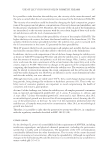
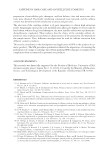
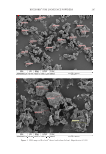
RICESORB® FOR LOOSE FACE POWDERS 301 CONCL USIONS AND FUTURE WORK In th e current study, RiceSorb® was introduced to be used as a talcum substitute in loose face powder preparation. First, the general physiochemical properties of single talcum and RiceSorb® were examined. These included morphology, bulk density, fl ow property, and pH. It was found that the physicochemical properties of RiceSorb® and talcum were distinctly different. The SEM image revealed that the surfaces of RiceSorb® were rather smooth with almost spherical shapes, whereas talcum had rough surfaces. In addition, the sizes of RiceSorb® (about 6 μm) were markedly smaller than those of talcum (25 μm). The bulk density, angle of repose, and pH of talcum were obviously greater than those of RiceSorb®. After that, the preparation of loose face powders which contained talcum and RiceSorb® at various ratios (4:0, 3:1, 1:1, 1:3, and 0:4) was formulated and tested for their physicochemical characteristics. The colors of the prepared loose face powders were creamy yellow with melanin index between 0.6 and 0.8. The physicochemical properties of loose face powders depended on the proportion of RiceSorb® in the formulations. The changes were clearly observed in the formulations which contained only talcum, FT0, or only RiceSorb®, FT4. Overall, the results indicate that RiceSorb® may be used as a tal- cum substitute. Nevertheless, its drawback concerning moisture absorption should be solved. To keep the RiceSorb®-containing formulations from moisture, we are planning to add suitable moisture absorbers such as silica to the loose face powders. In addition, a moisture barrier packaging is another alternative. ACKNOWLEDGMENTS We wish to express our deep gratitude and appreciation to the Faculty of Pharmaceutical Sciences, Prince of Songkla University, Thailand, for providing fi nancial support to our group (PHA6204026S). REFERENCES (1) R. Korichi and J. F. Tranchant, “Decorative products,” in Handbook of Cosmetic Sciences and Technol- ogy, 4th Ed., A. O. Barel, M. Paye, and H. I. Maibach. Eds. (CRC Press, Taylor & Francis Group, New York, 2014), pp. 439–451. (2) P. Riley, “Dec o rative cosmetics,” in Poucher’s Perfumes, Cosmetics and Soaps, 10th Ed., H. Butler. Ed. (Kluwer Academic Publishers, London, 2000), pp. 167–216. (3) C. Franka and L . Jorge, An uncommon hazard: pulmonary talcosis as a result of recurrent aspiration of baby powder, Respir. Med. CME, 4, 109–111 (2011). (4) G. Verlynde, E . Agneessens, and J. L. Dargent, Pulmonary talcosis due to daily inhalation of talc pow- der. Images in clinical radiology, J. Belg. Soc. Radiol., 102(1), 12 (2018). (5) J. Marto, I. J o rge, A. de Almeida, and H. M. Ribeiro, “Novel starch-derived topical delivery systems,” in Carrier-Mediated Dermal Delivery: Applications in the Prevention and Treatment of Skin Disorders., 1st Ed., A. Ascenso, H. Ribeiro, and S. Simões. Eds. (Jenny Stanford Publishing, Singapore, 2017), pp. 175–216. (6) RiceSorb® (Rice S tarch oil absorbent), accessed February 2019, http://www.myskinrecipes.com/shop/ attachment.php?id_attachment=222&id_product=64. (7) A. S. Ribeiro, M. Estanqueiro, M. B. Oliveira, and J. M. Sousa Lobo, Main benefi ts and applicability of plant extracts in skin care products, Cosmetics, 2, 48–65 (2015). (8) A. P. P. Menezes, S. C. C. Trevisan, S. M. Barbalho, an d E. L. Guiguer, Tamarindus indica L. a plant with multiple medicinal purposes. J. Pharmacogn. Phytochem., 5(3), 50–54 (2016). (9) S. S. Bhadoriya, A. Ganeshpurkar, J. Narwaria, G. Rai, a nd A. P. Jain, Tamarindus indica: extent of ex- plored potential, Pharmacogn. Rev., 5(9), 73–81 (2011).
Purchased for the exclusive use of nofirst nolast (unknown)
From: SCC Media Library & Resource Center (library.scconline.org)