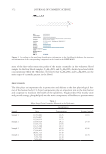
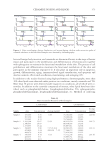
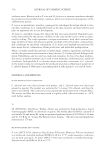
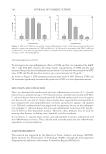
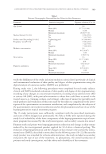
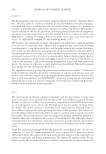
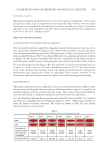
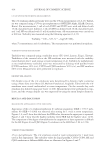
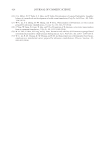
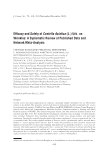
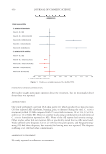
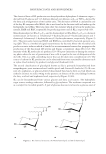
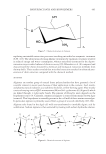
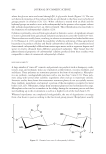
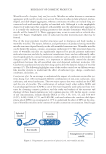
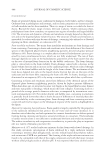
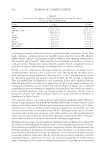
JOURNAL OF COSMETIC SCIENCE 462 calcoaceticus recombination-activating gene 1. They are produced with the aid of hydrocar- bon 14 or ethanol 18 substrates (61). Emulsan culture production can be enhanced with varying ethanol or phosphate concentrations. Phosphate aids in the generation of emulsan by effects on cell metabolism. The hydrocarbon such as ethanol acts as the energy pool. The culture used is primarily batch fermentation followed by fed-batch fermentation so as to vary the carbon and phosphate feeding from controlled to continuous. An appropri- ate kinetic model has to be modeled around the emulsan culture process (62). Liposan is obtained from Candida lipolytica. It comprises 83% carbohydrate and 17% protein (63). The carbohydrate is a heteroglycan that consists of glucose, galactose, galac- tosamine, and galacturonic acid, whereas the protein is most likely a glycoprotein (64). One study cultivated the yeast in soybean oil refi nery residues and glutamic acid. The maxi- mum yeast excreted the biosurfactant into the substrate, which is a hydrocarbon largely during the stationary fermentation phase (65). The Candida species can also be synthe- sized in selected food-grade waste such as canola oil and glucose substrate (66,67). Simi- lar production of biosurfactant can be achieved through the culture of Yarrowia lipolytica in the presence of crude oils and hydrocarbon lipid substrates (68). Mannoproteins are derived from the yeast Saccharomyces cerevisiae. It is the most common fermentation microorganism that can be obtained from fruit fermentation processes in the industry. Mannoproteins are glycoproteins that contain 15–90% mannose (69). However, according to Cameron et al. (70), there exists a second class of mannoproteins with 50–70% mannose and 30–50% protein. The National Center for Biotechnology Information states that the compound mannose is a sugar of the aldohexose carbohydrate. Mannoproteins are commonly extracted for the role of bioemulsifi ers. These emulsifi ers can be extracted via two methods, namely, autoclaving in a neutral buffer and the treatment of bakers’ yeast with Zymolyase enzyme. The fi nal fi ltered emulsifi er obtained from the fi rst method contains approximately 44% carbohydrate and 17% protein (70). Lipomannan is a glycolipid that makes up the cell wall of Mycobacterium that contains a long mannose polymer. It carries an α-linked sugar mannose polysaccharide which Figure 6. C h emical structure of emulsan.

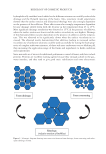
BIOSURFACTANTS AND BIOPOLYMERS 463 involves the addition of mannopyranosyl residues to phosphatidylinositol (71). Alasan is an anionic alanine comprising bioemulsifi er obtained from Acinetobacter radioresistens, a species of bacteria which has a resistance toward radiation (72). Alasan is a complex of the α-amino acid alanine, polysaccharides, and proteins (73). B IODEGRADABILITY B iosurfactants have been long used to treat contaminated media such as water and soil. The amphiphilic nature of biosurfactants enables hydrophobic compatibility, where pollut- ant substrates such as hydrocarbons easily associate into the microbial cells. The mecha- nism of biodegradation was studied by Urum and Pekdemir (74), where it was discussed that biosurfactants followed different biodegradation mechanisms depending on their molec- ular masses. Biosurfactants containing lower molecular mass act in two ways, namely, (i) mobilization and (ii) solubilization (75). Mobilization takes place when the biosurfac- tant’s concentration is lower than the critical micelle concentration (CMC). In this mech- anism, biosurfactants act on the interface between the hydrophobic pollutant and surface by reducing interfacial tension which allows for easier removal of the pollutant. Solubili- zation occurs for concentrations that are greater than the critical micellar concentration. This mechanism involves the formation of thermodynamically stable micellar structures which encompass the hydrophobic pollutants. Biosurfactants of higher molecular masses carry out biodegradation by emulsifi cation of pollutants (76). C ameotra and Singh (77) outlined the uptake of hexadecane by RLs. RLs increased the surface area of the pollutant by breaking it down into smaller particles of 0.22 μm. The microbe engulfed the droplets and slowly began to render the hydrocarbon into its cellular phase by breaking it down metabolically. In addition to RLs, trehalose lipids have been important for soil bioremediation, and it has been proposed that they could also be useful in the treatment of wastewater through micelle formation (78). SLs have been used to degrade open and closed chain hydrocarbons in controlled conditions this was tested in particular for soil bioremediation. It exhibited superior biodegradation capabilities for pollutants such as n-hexadecane, 2-methylnaphthalene, diesel, gasoline, and kerosene (79). There have been several studies of the effect of biosurfactants on n-alkanes such as octadecanes, polyaromatic hydrocarbons, oils, and hydrocarbon residues however, studies on complex hydrocarbon mixtures are scarce. To study the effect on unresolved complex mixtures, Nievas et al. (75) collected marine ship waste known as oily bilge waste, which is a mix- ture of seawater and hydrocarbon residues, and studied the effect of a symbiotic microbial system on its degradation by emulsifi cation. The positive effect of reduction on the com- plex mixture was around 58%. Ap art from their key roles in biodegradation of pollutants, biosurfactants are themselves easily biodegradable. Mohan et al. (80) investigated the biodegradability of RLs under aerobic, anaerobic, and nitrate- and sulfate-reducing conditions. The study revealed that RL was biodegradable against all four conditions with a soluble chemical oxygen demand effi ciency percentage of 74 under aerobic conditions, 47.2 under anaerobic conditions, 34.2 under sulfate-reducing conditions, and 24.6 under nitrate-reducing conditions. Bio- surfactants are also low in toxicity when compared with synthetic surfactants. Within biosurfactant classifi cations, environmental toxicity can vary with the type of strain that they are sourced from, for example, glycolipids synthesized from Rhodococcus ruber exhibits a
Purchased for the exclusive use of nofirst nolast (unknown)
From: SCC Media Library & Resource Center (library.scconline.org)