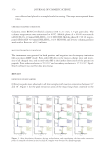
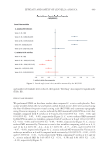
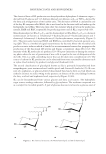
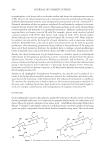
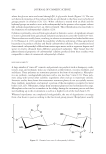
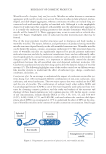
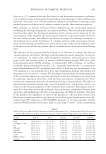
JOURNAL OF COSMETIC SCIENCE 464 toxicity 10 times lower than that of TL (synthesized from R. erythropolis) and 13 times lower when compared with RLs (synthesized from Pseudomonas aeruginosa) (79). Th e aforementioned evidence concludes that biosurfactants display several environmen- tally positive functionalities. There is a strong need for process optimization and feasible production of biosurfactants to commercially adapt them. BI OPOLYMERS Po lymers fi nd widespread use in beauty and personal care products, and a majority of these polymers are synthetic and nonbiodegradable. As a result of its widespread use across the industry, an alarming amount of polymer waste is being generated (81). In response to this increased awareness regarding the toxic effects of certain polymers, various biopoly- mers such as chitosan, alginate, and xanthan gum, and several other polysaccharides have been extensively explored as potential alternatives to the traditionally derived polymers (82–85). Bi opolymers are polymeric biomolecules derived from plants and microorganisms (86). They can be produced or sourced in different ways. Most biopolymers are found in abun- dance in nature and are extracted from plants, algae, or other microorganisms. Examples of such biopolymers include alginate and chitosan. Other methods of production are in vitro synthesis of biopolymers with isolated enzymes and through fermentation (87). Poly- saccharides, also known as carbohydrates, are agro-based polymers. Some of the most common polysaccharides include cellulose, chitin, alginate, xanthan gum, and pectin. CH ITIN AND CHITOSAN Ch itin or poly(β-(1→4)-N-acetyl-D-glucosamine) is one of the most abundant polysac- charides present in nature second to only cellulose. Chitin is primarily extracted from the outer shells of crustaceans such as shrimps, crabs, and squids or the cell wall of fungi and yeast (88). However, at present, chitin is primarily sourced from the outer shells of crabs and shrimps. Thus, this biopolymer is essentially produced by recycling or processing biowastes from marine food industries (89). Chitosan is one of the most signifi cant de- rivatives of chitin obtained by the deacetylation of chitin. On deacetylation, the acetyl groups of chitin are substituted by primary amino groups, resulting in the formation of chitosan (Figure 7) (90). Although chitin is found in abundance in nature, the main natural source of chitosan is limited to certain fungi such as Mucoraceae (91). Pazo et al. (92) reported that crustaceans make up nearly 7% of the marine waste in oceans. Thus, discarded marine biomass has great potential for the production of chitin and chitosan. The waste shells consist of chitin along with various proteins and inorganic salts. As a result, the extraction of chitin from marine waste includes two steps—mainly deproteinization and demineralization. These processes may be achieved by many methods. The most common and conventional method involves chemical treatment. However, this route requires strong alkali and acids at extreme temperatures in addition to high energy consumption and effl uent production (93–96). Furthermore, the extraction of chitin by chemical means only results in a 10% recovery of the raw material (97). This has led to a desire for the optimization of chitin production and the effi cient use of shell waste by

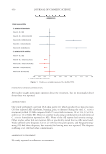
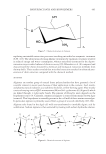
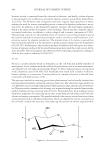
BIOSURFACTANTS AND BIOPOLYMERS 465 exploring sustainable extraction processes involving microbial or enzymatic treatment (8,98–103). The substitution of strong alkaline treatments by enzymatic treatment resulted in reduced energy and water consumption, whereas microbial treatment for the deprot- einization step recorded enhanced chitin recovery (99). Khanafari et al. (8) compared and characterized the chitin obtained by chemical and biological extraction methods from shrimp shells. Their studies revealed that microbial extraction resulted in enhanced pres- ervation of chitin structure compared with the chemical method. ALGI NATE Algi nates are another group of natural linear polysaccharides that have garnered a lot of scientifi c interest in recent years because of their application in the cosmetic, food, textile, and pharmaceutical industries as a stabilizer, thickener, or fi lm-forming agent. They mainly consist of varying ratios of β-D-mannuronate (M) and α-L-guluronate (G) (Figure 8) which are linked through 1-4 glycosidic bonds. The amount of M and G units depends on the biopolymer source (9). Currently, commercial alginate is sourced from marine brown algae (seaweed). This biopolymer is naturally present in the cell wall of these marine macroalgae. In particular, alginate is primarily sourced from a group of seaweed called kelp (103,104). Algina te salts found in the algal cell walls are transformed to insoluble alginic acid by acidifi cation. Sodium alginate is then extracted by treating with sodium hydroxide solution. Figure 7. Che mi cal structure of chitosan. Figure 8. Che mi cal structure of alginate.
Purchased for the exclusive use of nofirst nolast (unknown)
From: SCC Media Library & Resource Center (library.scconline.org)