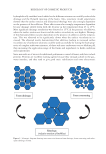
JOURNAL OF COSMETIC SCIENCE 470 fi lm properties based on the molecular interactions between the biopolymers (133). Sev- eral researchers have tried to characterize and determine the properties of the fi lms formed by biopolymers such as chitosan, xanthan gum, alginate, and carboxymethyl cellulose for use in the cosmetic industry (132–134). The fi lm-forming properties of chitosan have been an important area of research (133–137). Chitosan fi lms were found to lack resis- tance to water transmission and have poor structural integrity (135). However, Miranda et al. (137) demonstrated that the incorporation of lipids and plasticizers enhanced the hydrophobic character and mechanical strength of the fi lm. Sionkowska et al. (136) re- ported that it was possible to engineer the mechanical parameters of the biopolymer fi lms by blending two or more polymers. The addition of up to 1 wt% of hyaluronic acid to a mixture of chitosan and collagen led to increased mechanical resistance of the fi lm. Fur- thermore, the application of this three-component polymer blend on hair tresses showed an improvement in the mechanical properties of hair by forming a fi lm on the hair fi bers. Thus, this system shows great potential for use in hair care formulations. The addition of xanthan gum can improve the mechanical parameters like the tensile strength of starch-based fi lms. These enhanced fi lm properties emerge as a result of the development of hydrogen bonds between the starch and gum polymer chains. Xanthan gum easily dissolves in cold or hot water without signifi cant effect on its viscosity because of temperature or pH, which is ideal for fi lm formation (132). Another study reported that the addition of 5 wt% cellulose nanocrystals increased the elastic modulus and ten- sile strength of a mixture of carboxymethyl cellulose and starch by 94.77% and 65.86%, respectively, due to strong interfacial interactions resulting from the formation of hydro- gen bonds between the three components (133). It is clear that although biopolymers have great potential as fi lm formers in the cosmetic and personal care industry, further research needs to be conducted to optimize the mechanical properties of these substances. STABILITY Currently, the emulsifi ers used to stabilize oil-in-water systems include petroleum-derived surfactants or animal-based polysaccharides (138). Manufacturers are however shifting to biosurfactants and plant-derived or microbial biopolymers to decrease the harsh ecologi- cal impact of chemically synthesized ingredients. Biopolymers such as xanthan gum and carboxymethyl cellulose have found widespread uses as emulsion stabilizers in the beauty and personal care industry (83). Most biopolymers act as emulsion stabilizers, and they are not good emulsifi ers as this requires them to be surface active. They are typically used in conjunction with biosurfactants to impart stability to systems on a long-term basis (139). They increase emulsion stability by means of electro- static interactions or steric hindrance. The biopolymer molecules adsorb onto the droplets and steric stabilizes the emulsion by forming a layer around the droplets (139). However, certain biopolymers like chitosan are hydrophobically modifi ed to make them good emulsi- fi ers. Desbrieres and Babak (140) showed that the attachment of hydrophobic moieties like alkyl chains to the polymer backbone makes it amphiphilic, thus enhancing its interfacial properties. Another widely used biopolymer in emulsions is xanthan gum. It stabilizes oil- in-water systems through rheology modifi cation. Xanthan gum improves the viscosity of the aqueous phases, thus stopping or decreasing the rate of creaming of the droplets (141).

BIOSURFACTANTS AND BIOPOLYMERS 471 Biosurfactants are made of a head which is a hydrophile and a tail which is a hydrophobe. The degree of each of these determines the hydrophilic–lipophilic balance which contrib- utes to the biosurfactant’s properties. The physicochemical attributes of biosurfactants can be modifi ed based on application. These properties include surface tension, surface rheology, and interfacial tension. Another important aspect would be to identify the critical micellar concentration values of biosur- factants which helps to study the biosurfactant effi ciency in terms of foaming and cleansing. Biosurfactants arrange themselves into thermodynamically favorable formations at the sur- faces or interfaces of liquids. At CMC, they begin to make up structures known as micelles, bilayers, and vesicles. Thermodynamic arrangements of biosurfactant molecules decrease sur- face and interfacial tension of liquids that are not miscible, and allow for enhanced solubility. Lowering of surface tension also improves foaming and cleaning capabilities (142,143). It is necessary to recognize that low molecular weight biosurfactants are still classifi ed as biosurfactants because of their surface activity however, higher molecular weight struc- tures will fall into the category of bioemulsifi ers and not biosurfactants. These are surface inactive agents which aid in emulsifi cation (36,37). The biosurfactant effects on surface activity have been showcased in various studies. For instance, in the glycolipids groups, RLs can reduce the surface tension of water from 70 mN/m to a lower limit value of 25 mN/m and the interfacial tension of the water/n- hexadecane system to less than 1 mN/m. The CMC of RLs ranges from 10 to 30 mg/L, which ensures easier foaming than synthetic surfactants with higher CMC values. Zhu et al. (144) found that in the binary system of RL/cocamidopropyl betaine and ternary system of RL/CAPB/SL, where CAPB is a common zwitterionic synthetic surfactant, RLs domi- nated at both interfaces. In case of SLs, both acidic and lactonic variants of the biosurfactant can decrease the surface tension of water in a similar fashion—from 72 mN/m to 30 mN/m and the interfacial tension of water/n-hexadecane and water/vegetable oil systems to 1–5 mN/m (145). The low CMC and molecular weight of SL increase the solubility of the oil by micelle formation (146). The surface activity properties were found to be functions of the hydrophobic chain length. If the alkyl ester chain length of the SL increased by the addition of one carbon unit, the CMC decreased by half (147). Similarly, trehalose lipids lower the surface tension to a range between 25 and 40 mN/m, and interfacial tension of the same oil/water system to 1–17 mN/m. The CMC of TL is as low as 2 mg/L. Lipopeptide surfactins have a CMC range of 25–50 mg/L. They reduce the surface tension of water to 27 mN/m and the interfacial tension of oil/water to 1 mN/m (145,147). In lipopeptide groups, surfactin is the most surface active agent (148). The surface properties are proportional to the hydrophobicity and amino acids present (149). Surfactins compared with sodium do- decyl sulfate and BAS have better foaming capabilities because of their low CMC values (150). Bioemulsifi ers bind tightly to hydrocarbons or oils in an emulsion and prevent them from de-stabilizing an emulsion by coalescing/fl occulation/etc. This is performed by increasing their kinetic stability, and an important contributing factor is their chemistry (151,152). The combination of fatty acids, proteins, and occasionally sugar polymers contributes to their stabilizing nature. Emulsan, for example, can emulsify oils even when present in minute weight percentages because of the lipophilic sites of the fatty acids. In case a pro- tein is present, that acts as the hydrophobic site. Uzoigwe et al. (73) have extensively studied and described the different stabilizing mechanisms of emulsan, alasan, manno- proteins, etc.
Purchased for the exclusive use of nofirst nolast (unknown)
From: SCC Media Library & Resource Center (library.scconline.org)