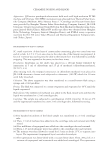
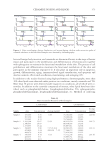
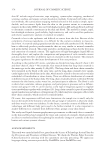
JOURNAL OF COSMETIC SCIENCE 486 Polyme r effect. Neutral polymers and polyelectrolytes are used quite extensively in cosmetic formulations for rheology modifi cations and also to form complex coacervates that enable deposition in formulations where the deposition of certain active ingredients to the sub- strate (i.e., hair/skin) surface is necessary. Therefore, understanding the interactions of polymers and surfactant is a necessary and critical step for the formulation of effi cient cosmetic products. Padasala et Al. (26) reported the effect of polymers on wormlike mi- celles of CTAT and discussed how the size of wormlike micelles can easily be controlled by different polymers. The ion tosylate belongs to the family of hydrotropes, and in the pres- ence of hydrotropes, surfactants present pronounced changes in their viscosity as a result of the micellar growth induced by electrostatic screening which leads to the formation of longer, more fl exible and entangled micelles, a change from linear to branched micelles or an increase in fl exibility of wormlike micelles. CTAT is capable of forming wormlike mi- celles at very low concentrations (27–30) and was combined with a triblock copolymer made up of poly(ethylene oxide) 4000 (PEO 4K) and poly(propylene oxide) 1000 (PPO 1K). These homopolymers are nonamphiphilic in nature and do not self-assemble in aque- ous solution, whereas their block copolymers, that is, PEO-PPO-PEO or PPO-PEO-PPO, form thermoresponsive micelles above their critical micelle temperature because they have distinct hydrophilic (PEO) and hydrophobic (PPO) parts which provide amphiphilic char- acteristics to them (31) and these polymers interact differently with wormlike micelles of CTAT. First, the formation of wormlike micelles at concentrations higher than its CMC (~0.26 mM at 25°C) was studied using SANS measurement, and the presence of wormlike micelles was studied using cryogenic transmission electron microscopy. The effect of tem- perature on solution viscosity of 20 mM CTAT solution was studied. It was reported that a slight increase in temperature results in signifi cant loss in viscosity which becomes nom- inal at elevated temperatures. It was then concluded that an increase in temperature leads to an increase in the charge repulsion between charged head groups and favors demicelliza- tion, resulting in drop in viscosity at elevated temperatures. To gain information on the interaction of CTAT with polymers, surface tension and conductance of CTAT solutions over a wide range of concentrations well below and above the CMC in the presence of 0.1% polymers were carried out. It is reported that hydrophobicity of polymers plays a key role in altering the morphology of wormlike micelles. PEO-PPO-PEO–type triblock co- polymers form core–shell micelles with PPO block as core and hydrated PEO blocks as corona. When such block copolymers are added to solutions containing wormlike CTAT micelles, depending on hydrophobicity, they can lead to demicellization. It was concluded in this report that the extent of demicellization largely depends on the hydrophobicity of block copolymers. This study extensively shows how nonionic polymers control the mi- celle forming and micelle size property of the cationic surfactant CTAT. Effect of shear on wormlike micelles. Shear is used during formulation processing as well as during product application. It is important to have an understanding of how wormlike micelles respond to shear and the implications of high or low shear rates on its rheological properties. Developing this understanding is not simple and requires the utilization of advanced characterization techniques such as SANS. This information further helps in understanding certain processing issues that are observed in wormlike systems such as shear banding (32). Arenas-Gómez et Al. (33) used rheology combined with SANS (rheo- SANS) to determine the local structural order in the 3-[dimethyl (tetradecyl)azaniumyl] propane-1-sulfonate and sodium dodecylsulfate micelle solutions under fl ow and quies- cent conditions. This information is critical in understanding the rheological performance

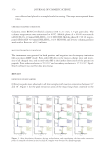
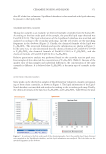
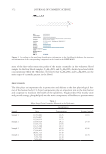
RHEOLOGY OF COSMETIC PRODUCTS 487 and link to the microstructure. As the shear rate increases and the solution is no longer at rest, there exists a shear banding region. At very high shear rates (shear rate 100 s-1), a rate where the micellar solution is supposed to be aligned, it presents two regions: a re- gion where the orientation parameter decays and a second region where this orientation parameter linearly increases again. The origin of these regions is not clear, but the pre- sented possible explanations of why they have been observed are stated. At high shear rate values of 100 s-1 and above, where no shear banding is observed and there are highly oriented micelles (paranematic region), the breaking rate increases because of friction, the contour length decreases, the fl uid slightly thins, or viscosity is almost constant. In this region, micellar breaking is important, and there is an immediate micelle shortening due to the entropic forces that instantaneously forces a coil structure that impacts the ordered fl ow prevalent before the rupture of the wormlike micelles. As a result of this, the orienta- tion parameter decreases, the shortened micelles equilibrate to the local conditions of the surrounding media, elongate again, and realign properly when the shear rate is above approximately 500 s-1, and the system presents shear thinning of the unclear origin. Lamell ar gel network: Hair conditioners. Hair conditioners primarily use a mixture of cat- ionic surfactants and fatty alcohols in an aqueous medium to form a structured mesophase that gives rise to good lubrication properties and performance. These conditioner emul- sions usually have high viscosity, and understanding the viscosity buildup and meso- structure and how it breaks down on dilution is essential for controlling the conditioning performance. The gel network theory of emulsion stability gives a coherent explanation for the manner in which fatty amphiphiles and surfactants combined as mixed emulsifi ers not only stabilize multiphase oil-in-water (O/W) lotions and creams but also control their viscosities. Although most of the early work was performed using long-chain (C16–C18) fatty alcohols, the theory is general, and the same broad principles apply to whichever amphiphile or surfactant (ionic or nonionic) is used. The theory relates the stabilities and physicochemical properties of multiphase O /W emulsions to the fact that the lamellar gel network is mainly an extended, highly interconnected lamellar structure of surfactant bilayers and interlamellar water layers, which is called the lamellar gel phase (Lβ) (34–37). Davies a nd Amin (8) reported that high yield stress values were engineered through formulation variation and observed in the surfactant–fatty alcohol systems with higher ratios of fatty alcohol, that is, at an increased fatty alcohol concentration of 10% w/w and an abundance of surfactant in the system, an increased swelling rate was observed and reported in the aqueous phase. This ultimately dictates the viscosity of the formulation, causing a signifi cant increase in viscosity which also impacts the overall yield stress of the system. This is in accordance with the literature that states that an excess or increase in fatty alcohol in an aqueous phase with surfactants in solution controls and predicts the overall consistency or viscosity of the formulation as the gel phase is formed (38), at a temperature high enough to melt the fatty amphiphile by the swelling of the fatty amphiphile and its ability to incorporate signifi cant quantities of water in the interlamel- lar space. This high yield stress values impacted wet lubrication as a result of higher structural integrity of the microstructure during the dilution process, resulting in both higher viscosity and deposition of larger more interconnected meso-structures on the hair surface, giving rise to a more continuous fi lm. An overall reduced combing force is observed in hair treated with the systems with highest yield stress values, further validating this effect.
Purchased for the exclusive use of nofirst nolast (unknown)
From: SCC Media Library & Resource Center (library.scconline.org)