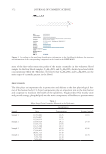
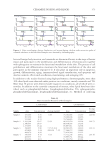
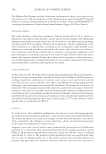
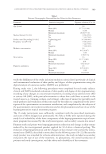
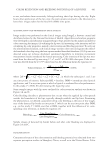
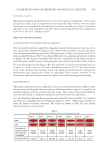
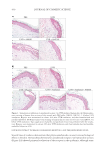
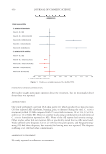
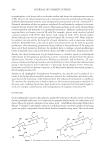
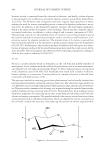
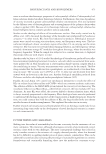
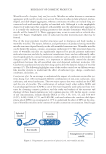
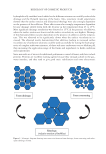
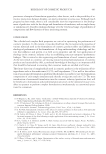
JOURNAL OF COSMETIC SCIENCE 488 FOAM RHE OLOGY Foams ar e generated during in-use conditions for shampoos, body washes, and face cleansers. Ordinary foam is polydisperse and isotropic, and its elastic properties are characterized by its bulk modulus and its shear modulus. There is a range of strain over which the foam is elastic. Beyond the elastic range of strain, the foam is plastic. Under continuous shear, polydisperse foams show a tendency to separate into regions of smaller and larger bubbles (39). The structure and dynamics of foams and emulsions strongly depend on the particle size and on the dispersed phase volume fraction. The structure of foams and emulsions is metastable. It evolves with time because of drainage, coarsening (also referred to as Ostwald ripening in dilute emulsions), or coalescence (40–42). Foam ins tability mechanisms. Two majo r foam instability mechanisms are foam drainage and foam coarsening. Coarsening in foams and emulsions arises from diffusion of the chemical species of the dispersed phase between neighboring particles, driven by Laplace pressure differences (43). Foam drainage is a complex physicochemical hydrodynamic process gov- erned by many simultaneous factors, which are not fully understood. The rate of foam drainage depends not only on the hydrodynamic parameters of the foam system but also on the rate of internal foam destruction by the bubble coalescence. The foam drainage plays a critical role in the foam stability. Foam drainage causes both a decrease in the liquid volume fraction and an increase in the capillary pressure, which are related through the size of the foam bubbles and the height of the foam column. The mechanism of the foam decay depends not only on the liquid volume fraction but also on the types of the surfactant and the foam fi lms separating the foam cells (44). In foams, drainage can be eliminated in microgravity (45) or by using a continuous phase which has a yield stress. Coarseni ng in foams and emulsions arises from diffusion of the chemical species of the dispersed phase between neighboring particles, driven by Laplace pressure differences. When foam dries out, its structure becomes very fragile as the liquid fi lm becomes thinner and more susceptible to breakage, which means the foam collapses. Coarsening leads to a growth of the average particle diameter with time, accompanied by intermittent struc- tural rearrangements (42). For similar droplet and bubble sizes, coarsening in emulsions is generally much slower than that in foams because of differences of internal phase den- sity and solubility in the continuous phase. Foam drainage and foam coarsening are inter- connected and tend to impact on the rheological response of the system as highlighted in the fi gure. Material s for impacting foam performance. Foam qua lity is largely controlled by the properties of the surfactant monolayers that protect the air–water and oil–water interfaces. It is therefore critical that they are both optimized in cosmetic formulations to deliver optimal foaming during cleansing and positive sensorial attributes to consumers. The knowledge of surface tension alone is not suffi cient to understand the foam and emulsion properties. The surface viscoelasticity and compression viscoelasticity, in particular, play an important role in a variety of dynamic processes (46). Marinova et al. (47) studied surfactant mixtures for fi ne foams with slowed drainage. In this study, systematic investigation of foams stabilized by a triple surfactant mixture containing a nonionic alkyl polyglucoside, an ionic sodium lauryl dioxyethylene sulfate, and zwitterionic CAPB was performed. The foaming of the triple surfactant mixture was found to be comparable with that of the single components and with the binary mixture without alkyl polyglucoside at alkaline pH. It was reported that fatty alcohol and/or

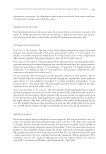
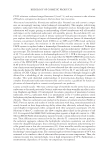
RHEOLOGY OF COSMETIC PRODUCTS 489 hydrophobically modifi ed starch added to the different mixtures successfully reduced the drainage and the Ostwald ripening of the foams. Also, systematic model experiments showed that the surface tension and dilatational rheology were also strongly dependent on the presence of the additives. These effects were also strongly temperature dependent because drainage slowed down with the decrease in the temperature from 25 to 15°C. Most signifi cant drainage retardation was observed at 15°C in the presence of additives, where the surface tension was lowest and the surface viscoelasticity was highest. Drainage of thin horizontal fi lms was also dependent on the presence of additives and the tempera- ture. This was observed to be signifi cantly slower when the surface viscoelasticity in- creased. The obtained results demonstrated that additives leading to increased surface viscoelasticity of surfactant solutions could be used successfully for tuning the foam prop- erties of complex surfactant mixtures, of three and more surfactants even at alkaline pH, thus increasing the application range of the foams and ingredients to harsh conditions and requirements. Some mate rials are of interest for additional performance control of foams, and these include proteins. Proteins are excellent foaming agents because they strongly adsorb to the gas– water interface, and they tend to give good steric stabilization and some electrostatic Figure 2. Schematic d iagram showing interconnection between foam drainage, foam coarsening, and sub s e- quent rheology of foam.
Purchased for the exclusive use of nofirst nolast (unknown)
From: SCC Media Library & Resource Center (library.scconline.org)