JOURNAL OF COSMETIC SCIENCE 490 stabilization, and also the adsorbed fi lm tends to have a reasonably high surface rheologi- cal modulus which is because of interactions between the adsorbed molecules. Proteins adsorb well at the water–air interphase as a result of the hydrophobic patches they possess as a result of the hydrophobic amino acid deposits. Any factor that increases the exposure of the hydrophobic patches to the solvent will increase protein surface activity. Sánchez and Patino (48) show that there is a good correlation between the foaming of caseinate solutions and the rate of diffusion to the interface, which depends on the protein concen- tration and the state of aggregation of the caseinate. Foam as del ivery systems. Foams as de livery systems for actives have gained popularity in both cosmetics and pharmaceutical products because they possess advantages over tradi- tional methods of active or drug delivery such as gels, creams, and ointments. Foams, to a relatively high extent, eliminate negative sensorial attributes such as greasiness or tacki- ness. Although there is no direct connection between good foaming properties and good cleansing, it is important to note that consumers desire good foam generation and uncon- sciously link good cleansing to adequate foaming and any cleansing agent that does not generate adequate foam is termed an ineffective cleanser (49). There exist multiple applications of the foam technology to cosmetic products which include hard fi ne-pore shaving foam which helps uphold the hair during the shaving process. Hair mousse is able to give hair desirable shape and volume (50). For shampoos, good foamability of a shampoo formulation even under a strong fat contamination is of tremendous importance (51). There are also foam compositions for application to the skin as a barrier to skin irri- tants in the prevention of contact dermatitis caused, for example, by sodium lauryl sul- fate. Fowler (52) reported that a protective foam containing dimethicone and glycerine was shown to improve chronic hand dermatitis in individuals with previously uncon- trolled dermatitis, despite continuing their regular occupation. Cosmetic foaming com- positions can also contain keratolytics, lubricating agents, and germicide agents such as triclosan or sunscreens (53). EMULSION RH EOLOGY Emulsions a re heavily used in the cosmetic industry in formulating several kinds of cos- metic products. The composition of an emulsion plays a critical role in its rheological behavior, not only by infl uencing the long-term stability of droplets but also by affecting the kinds of interfacial interactions that exist between droplets through the emulsions’ overall interfacial structure (54). An interest ing aspect of emulsions is that although being composed entirely of viscous liq- uids or solutions, they can be made into soft solids that have tunable rheological properties which depend upon their compositions and fl ow histories. These solid-like properties emerge through crowding of deformable droplets as the droplet volume fraction φ is raised, which can lead to glassy behavior and, ultimately, jamming and deformation of droplets. The positional and interfacial structures of droplets in a concentrated emulsion, which are inherently linked to droplet size distribution through prior emulsifi cation and to be applied fl ow history, are crucial aspects that govern an emulsion rheological properties. Kim and Mason’s (55) review focuses on the important fundamental aspects governing the rheologi- cal properties of concentrated emulsions near and above the jamming transition. Developing a nd establishing a link between emulsion rheology and texture analysis could be really helpful to improve raw material choice for cosmetic formulations (56).

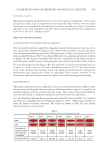
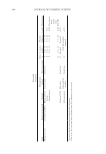
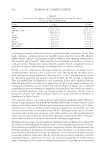
RHEOLOGY OF COSMETIC PRODUCTS 491 Jones et al. (57) examined both the fl ow behavior and the textural properties of pharma- ceutical polymer gels and interpreted textural data using rheology in terms of shear stress shear rate. Also, Lukic et al. (58,59) studied the infl uence of emollients on rheological and textural properties of water in oil cosmetic creams to predict their sensory properties. Effect of po lymers on emulsion rheological behavior. Polymers are one of the main routes of modifying the rheological properties in cosmetic products. This also holds for emulsion- based systems where the rheological properties of the system can be impacted by the concentration of the emulsion and lead to glassy behavior as discussed earlier. However, for more dilute systems, the addition of polymers to impact the rheological response is the preferred route used by formulators. A complete analysis of the various types of poly- mers used for rheological modifi cation is beyond the scope of this review. However, some of the more recent studies on polymer effects on emulsions are discussed in the following texts. The objectiv e of the research work by Gilbert et al. (60) was to evaluate the effect of various polymers on both the rheological and mechanical/textural properties of cosmetic O /W emulsions. To achieve this, eight hydrophilic polymers, natural [Ceratonia siliqua gum (carob) and xanthan gum], or natural modifi ed [hydroxypropyl (HP) guar gum, hydroxypropylmethyl (HPM) cellulose, or hydroxyethyl (HE) cellulose], or synthetic [carbomer, polyacrylamide (PA) (and) C13–C14 isoparaffi n (and) laureth-7, or ammonium acryloyldimethyltaurate/VP copolymer] were selected. Each one was incorporated in an O /W emulsion at a concentration of 1% w/w, and a formulation without any polymer was also prepared to be used as a control. The rheological and mechanical/textural properties of the equivalent dispersions were then investigated, and this assessment was carried out by analyzing continuous shear fl ow, creep recovery, and dynamic oscillatory tests. Pene- tration and compression tests were also performed using a texture analyzer. The effects of experimental parameters (probe type, speed of displacement, and diameter of the con- tainer) on the textural properties of the emulsions were examined. Rheological and tex- tural data were then statistically analyzed, thus uncovering correlations between both approaches and highlighting the effects of incorporating the different polymers. The effect of the polymer was signifi cant on most of the parameters collected from various tests. Emulsions containing synthetic polymers used as gelling agents [ammonium acryloyldi- methyltaurate/VP copolymer–co-VP (AADMT), Laureth-7, C13–C14 isoparaffi n, and PA, carbomer (PAA)] exhibited yield stress, high viscosity, high G′ and G″ values corresponding Table I Values of Viscosity (Means ± SD) Obtained at Different Shear Rates (in s-1) from the Shear F low Test for the Nine O/W Emulsions. Values of Viscosity (Pa.s) are Given in Descending Order for Each Shear Rate Cream η (0.1) η (1) η (10) η (100) η (1000) PAA 748.2 ± 35.2 162.7 ± 9.2 43.8 ± 1.3 7.7 ± 0.1 1.6 ± 0.0 AADMT–co-VP 380.4 ± 13.1 105.7 ± 1.5 25.3 ± 0.1 4.7 ± 0.1 1.0 ± 0.0 PA 136.5 ± 5.7 40.8 ± 0.2 9.3 ± 0.1 1.8 ± 0.0 0.5 ± 0.00 HP guar 108.2 ± 0.4 19.2 ± 0.3 3.6 ± 0.0 0.76 ± 0.00 0.18 ± 0.00 Xanthan 128.4 ± 9.3 20.1 ± 0.4 3.2 ± 0.0 0.44 ± 0.00 0.10 ± 0.00 HE cellulose 101.1 ± 2.5 22.2 ± 0.3 4.8 ± 0.0 1.0 ± 0.0 0.26 ± 0.00 Carob 85.9 ± 4.0 19.2 ± 0.7 4.4 ± 0.1 0.99 ± 0.01 0.25 ± 0.00 HPM cellulose 53.6 ± 2.3 10.5 ± 0.0 2.6 ± 0.0 0.75 ± 0.01 0.24 ± 0.00 Control 42.4 ± 2.3 8.6 ± 0.4 1.5 ± 0.0 0.27 ± 0.00 0.07 ± 0.00
Purchased for the exclusive use of nofirst nolast (unknown)
From: SCC Media Library & Resource Center (library.scconline.org)